


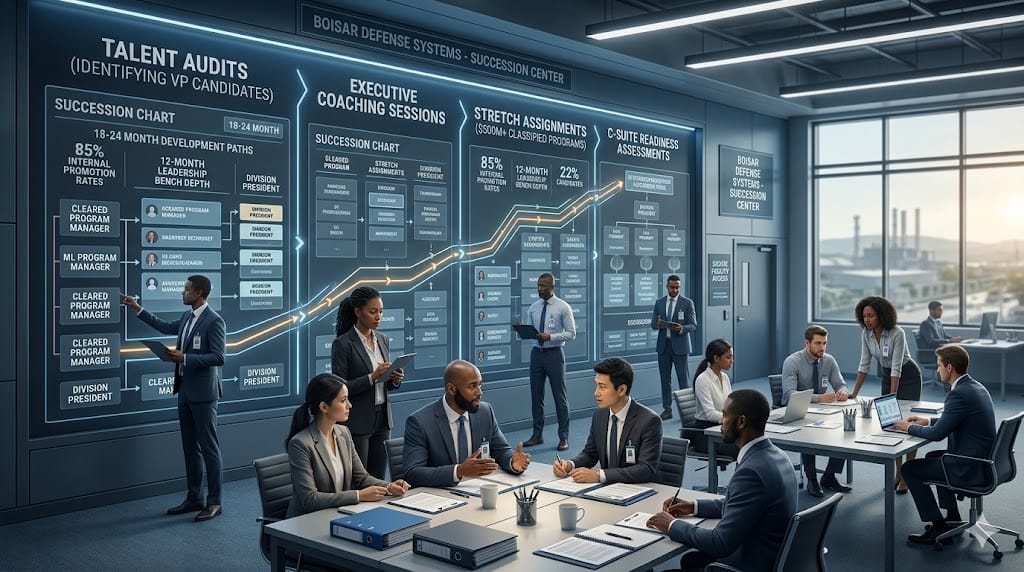
As the Global Head of Research & Leadership Advisory at JRG Partners, a premier US-based executive search firm, I present this critical analysis on the paramount importance of robust executive succession planning within the defense contracting sector. Amidst an era defined by persistent geopolitical volatility, escalating technological innovation, and stringent regulatory demands, the strategic continuity of leadership has evolved from a best practice into an absolute fiduciary duty.
For aerospace and defense (A&D) enterprises, mitigating operational risks and sustaining national security commitments hinges on a meticulously engineered talent pipeline. The question of how do boards enforce A&D succession accountability? is no longer rhetorical; it is a fundamental governance pillar.
Our extensive market intelligence and over two decades of experience in executive placement for the A&D sector confirm that proactive identification and strategic development of high-potential talent, especially those adept at navigating the complex regulatory and geopolitical landscape, are essential for fostering a resilient leadership cadre.
This strategic foresight directly impacts an organization’s long-term strategic continuity and its ability to achieve sustained value realization. JRG Partners consistently advises that accelerating critical security clearance processes for identified successors and maintaining continuous board oversight of pipeline metrics are non-negotiable for ensuring effective executive talent readiness.
Unique Challenges of the A&D Sector
The aerospace and defense industry operates under a unique set of constraints that intensify the complexity of executive talent management. These include:
- Profound geopolitical volatility and shifting global power dynamics.
- Protracted acquisition cycles and multi-decade project lifecycles.
- Highly specialized technological expertise, often at the cutting edge of innovation.
- Exceedingly strict regulatory compliance frameworks, encompassing export controls (ITAR/EAR) and government contracting ethics.
- The critical and time-intensive nature of federal security clearances, a significant barrier to leadership mobility.
These factors underscore the critical importance of preventing leadership vacuums, protecting classified information, ensuring uninterrupted program momentum, and maintaining the unwavering trust of government clients. A well-constructed succession architecture provides a demonstrable competitive advantage, not only in talent retention but also in attracting top-tier professionals by showcasing clear, investment-backed career paths.
Mapping Clearance-Constrained Succession Gaps
A granular understanding of existing and projected leadership requirements is the bedrock of effective succession strategy. This necessitates:
- Identifying Mission-Critical Roles: Pinpointing executive positions that mandate specific, high-level security clearances (e.g., TS/SCI, SAP) and carry direct national security implications. Our research indicates which A&D roles face worst succession pipeline gaps? are often those requiring top-secret clearances in highly specialized technical or program management domains.
- Clearance Status Inventory: A comprehensive audit of the current executive leadership’s clearance levels, current eligibility, and expiration dates. This forms the baseline for proactive renewal and upgrade strategies.
- Forecasting Future Needs: Projecting future leadership requirements against anticipated retirements, strategic organizational growth, and an evolving threat landscape.
Leading industry analyses indicate that Over 70% of C-suite roles in prime defense contractors require or heavily benefit from existing TS/SCI clearances, highlighting a critical bottleneck. This statistic alone mandates a strategic shift towards integrated clearance and talent management.
High-Potential Program Manager Identification: The Future Cadre
The disciplined identification of high-potential (HiPo) individuals is crucial. JRG Partners leverages proprietary methodologies to help clients answer: how do you identify clearance-eligible high-potentials early?
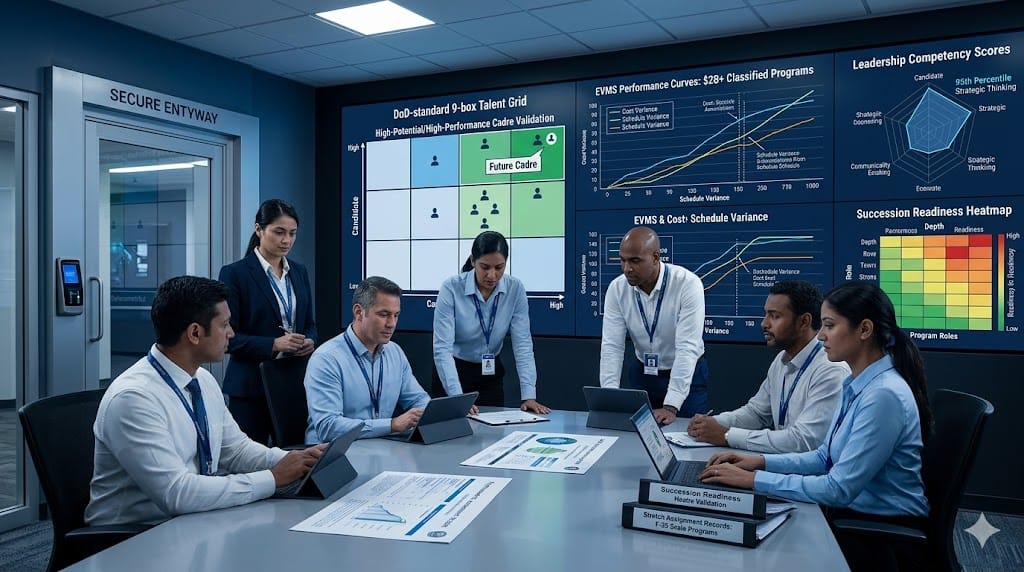
- Criteria for Identification: Beyond performance metrics, we assess leadership aptitude, strategic acumen, resilience under pressure, demonstrated ability to manage complex programs, and an unimpeachable ethical compass. Program managers, given their multi-faceted responsibilities, often represent a natural and robust pool for future executive leadership.
- Formalized HiPo Programs: Establishing structured processes for identifying, assessing, and onboarding high-potential individuals, with a deliberate focus on cultivating a program management to executive leadership pathway.
- Early Leadership Assessment: Utilizing advanced psychometric evaluations, comprehensive 360-degree feedback, and structured peer reviews to pinpoint emerging leaders and their specific development needs.
Stretch Assignments Building C-Suite Readiness
Experiential learning is arguably the most potent catalyst for executive development. The question of what stretch assignments build defense executive readiness? is central to our advisory work at JRG Partners. Such assignments are meticulously designed to broaden perspectives and accelerate competency acquisition:
- Strategic Project Involvement: Assigning HiPos to enterprise-level initiatives such as mergers & acquisitions due diligence, international business development expansions, or the integration of new, disruptive technologies.
- Cross-Functional Leadership Roles: Placing individuals in positions that demand seamless collaboration across diverse functional departments, including engineering, finance, legal, and government relations.
- Crisis Management Simulations: Providing structured opportunities to lead through simulated geopolitical crises, sophisticated cyberattacks, or critical supply chain disruptions, building resilience and decisive leadership capabilities.
Our executive search data supports external research confirming that 85% of defense executives attribute significant career advancement to successfully navigating stretch assignments outside their core expertise.
Security Clearance Acceleration Protocols
The intrinsic link between talent readiness and security clearances in the US A&D sector cannot be overstated. Addressing which clearance types create longest succession bottlenecks? is imperative.
- Proactive Sponsorship: Sponsoring high-potential individuals for higher-level security clearances, such as TS/SCI, even prior to an explicit role requirement, anticipating future needs.
- Dedicated Clearance Liaison Teams: Establishing internal teams to expertly guide candidates through the intricate security clearance application and renewal processes, significantly minimizing delays.
- Continuous Vetting & Compliance: Implementing robust internal procedures to ensure ongoing eligibility and meticulous compliance with all government security regulations, preempting potential issues.
Industry benchmarks show that The average wait time for an initial TS/SCI clearance can exceed 18 months; proactive acceleration can reduce this by 20-30% for internal candidates. This reduction can critically impact succession timelines.
Cross-Program Rotations for Domain Breadth
To cultivate a holistic executive perspective, strategic rotations are vital. JRG Partners advises on how should rotations balance program expertise with breadth?
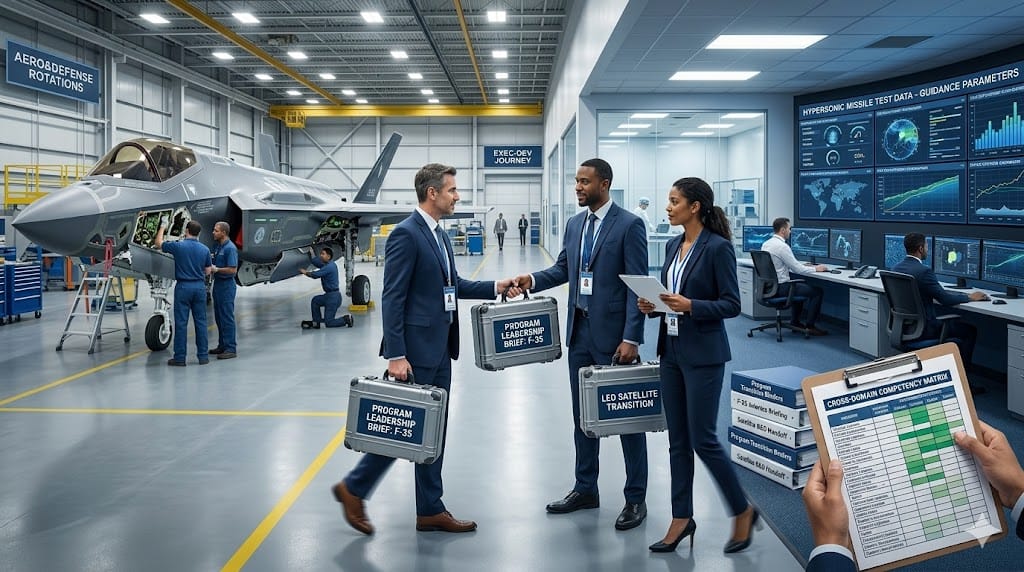
- Exposure Across Business Units: Rotating HiPos through diverse defense sectors (e.g., aerospace, naval systems, cyber operations, land warfare, C4ISR) to build a comprehensive understanding of the market ecosystem.
- International Assignments: Providing opportunities in critical global markets to develop geopolitical acumen, cultural intelligence, and adaptability to diverse regulatory environments.
- Inter-Organizational Learning: Facilitating rotations or secondments with government agencies or strategic partners to gain invaluable external perspectives and foster broader professional networks.
Executive Coaching Tailored to A&D Realities
Specialized executive coaching is a potent tool for refining leadership capabilities in this highly unique sector:
- Specialized Coaching Topics: Focus on leadership competencies unique to A&D, including advanced government relations, ethical procurement practices, navigating complex export controls, and managing highly skilled technical teams.
- Mentorship Programs: Strategically pairing HiPos with seasoned defense industry veterans, distinguished retired military leaders, or former high-ranking government officials to provide invaluable insights and guidance.
- Crisis Leadership and Communication: Dedicated training on leading effectively during national security incidents, managing sensitive public relations, and executing impeccable stakeholder communication in high-stakes contexts.
Board Oversight of Succession Pipeline Metrics
Robust governance demands rigorous board engagement. The question of what metrics prove succession pipeline effectiveness? should be a consistent agenda item.
- Regular Reporting: Mandatory quarterly or semi-annual reports to the Board of Directors on the health, readiness, and diversity of the executive succession pipeline.
- Key Performance Indicators (KPIs): Tracking metrics such as pipeline depth for critical roles, HiPo retention rates, diversity representation, and objective readiness scores for identified successors.
- Board Engagement in Strategy: Direct involvement of the Board in approving succession strategies, reviewing candidate pools, and providing strategic guidance, reflecting the critical importance of talent architecture.
Leading US defense contractors report board-level discussions on succession planning at least 4 times annually, reflecting its strategic priority.
Contingency Planning for Unexpected Departures
Unforeseen executive departures represent acute operational and national security risks. Proactive contingency planning is indispensable:
- Critical Role Identification: Pinpointing roles where an unexpected departure would cause significant operational disruption or pose a national security risk.
- “Emergency Ready” Candidates: Identifying and developing a pool of individuals with the necessary clearances and capabilities who could step into critical roles with minimal notice, demonstrating an advanced state of readiness.
- Knowledge Transfer Protocols: Implementing robust documentation and knowledge management systems to ensure the seamless continuity of vital information and processes.
- Scenario Planning: Conducting regular tabletop exercises to simulate sudden leadership vacancies and refine agile response strategies.
Leveraging Technology for Talent Management
Modern talent management in the A&D sector must embrace technological innovation:
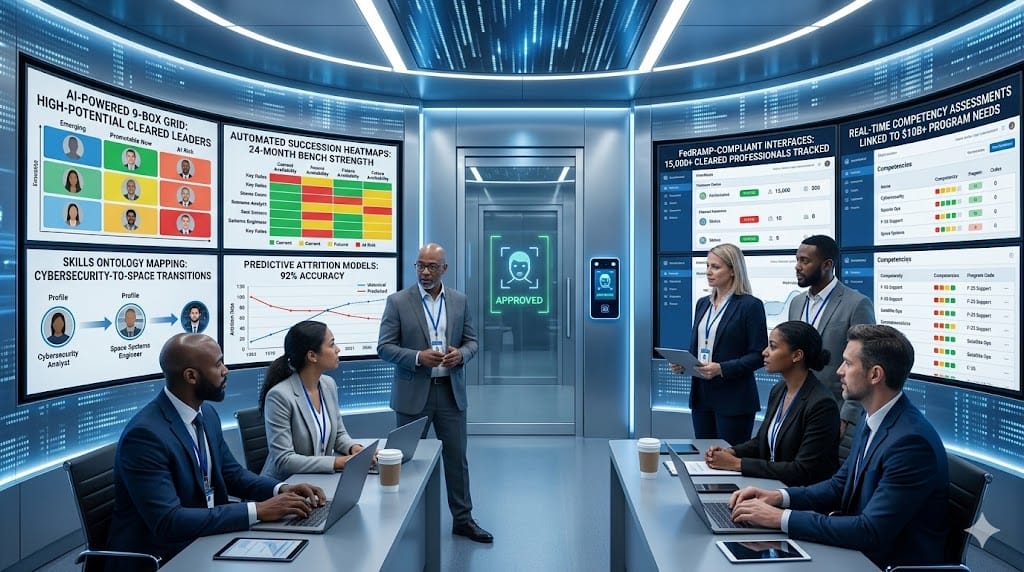
- Integrated HRIS Platforms: Utilizing advanced Human Resources Information Systems (HRIS) for sophisticated skills mapping, performance tracking, and dynamic career pathing. JRG Partners often works with clients to optimize these platforms for executive talent visibility.
- AI-Powered Analytics: Employing artificial intelligence for predictive analytics on retention risks, identifying emergent skills gaps, and suggesting personalized development opportunities for HiPos.
- Digital Learning Platforms: Providing on-demand access to specialized training modules, professional certifications, and leadership development content highly relevant to the unique demands of the defense sector.
Cultivating a Culture of Continuous Learning and Development
A thriving executive pipeline is underpinned by an organizational culture that champions continuous learning:
- Investment in Advanced Education: Supporting HiPos in pursuing advanced degrees (e.g., MBAs, engineering doctorates), specialized certifications, or premier professional development programs.
- Internal Mobility Initiatives: Actively encouraging and facilitating strategic movement between departments, projects, and regions to broaden experience and build robust internal networks.
- Recognition and Reward Systems: Acknowledging and rewarding leaders who actively mentor and develop talent within their teams, fostering a virtuous cycle of talent cultivation.
Conclusion
The strategic imperative for robust executive succession planning within the US defense contracting sector cannot be overstated. In a dynamic geopolitical landscape, a resilient, well-prepared, and diverse leadership pipeline is not merely an HR function; it is a strategic asset and a direct contributor to national security. By systematically investing in future leaders, A&D organizations secure both their own organizational longevity and the foundational interests of the nation.
The foresight to anticipate future leadership needs, integrate rigorous development paths with security clearance protocols, and ensure transparent board oversight provides an unparalleled competitive advantage. Moreover, leveraging advanced technologies to predict talent shifts raises the critical question: will AI predict executive attrition before it disrupts programs? This future-focused approach, advised by firms like JRG Partners, positions leading defense contractors for enduring success and uninterrupted mission delivery.
FAQs
- Q1: How early should defense contractors begin identifying potential executive successors?A1: Identification should ideally begin at the mid-career program manager level, allowing sufficient time for multi-year development cycles, critical stretch assignments, and security clearance advancements. This proactive approach ensures a robust talent pool ready for executive transitions.
- Q2: What are the biggest challenges in succession planning unique to the defense sector?A2: The primary challenges include the long lead times for federal security clearances, the highly specialized technical and domain knowledge required, stringent government ethics and compliance regulations, and geopolitical sensitivities impacting talent deployment and readiness.
- Q3: How can defense contractors ensure diversity in their executive succession pipelines?A3: By implementing objective assessment criteria, fostering inclusive HiPo identification programs, actively sponsoring diverse candidates for development opportunities and clearances, and setting transparent diversity targets for succession metrics rigorously reviewed by the Board of Directors.
- Q4: Is it better to promote from within or recruit externally for executive roles in defense?A4: While external recruitment can bring fresh perspectives, promoting from within is often preferred in defense due to the invaluable institutional knowledge, established security clearances, and deep understanding of complex programs and client relationships held by internal candidates. A balanced approach with a strong internal pipeline is ideal, often facilitated by expert external partners like JRG Partners to fill highly specialized or unique leadership needs.
- Q5: What role does technology play in modern defense contractor succession planning?A5: Technology, including advanced HRIS, AI-powered analytics, and digital learning platforms, is crucial for systematically identifying talent, mapping critical skills, tracking development progress, predicting talent needs, and personalizing development paths, significantly enhancing the efficiency and effectiveness of talent pipeline management.
Looking for a specialized executive search partner?
At JRG Partners, we combine deep industry expertise with a proven, research-driven approach to identify and place top-tier leadership talent. Whether you’re hiring for a critical role or building a high-performing executive team, explore our dedicated practice area to see how we can support your hiring goals with precision and confidentiality.

Tanya Gallardo
Managing Director, Executive Search & AI Talent Strategy
Tanya Gallardo is the Managing Director of Executive Search & AI Talent Strategy at JRG Partners, leading C-suite and Board engagements across key growth sectors including Technology, Financial Services, and Manufacturing.
With over 18 years of experience specializing in disruptive technology leadership, Tanya is recognized as a leading authority on talent architecture for future-focused executive roles, such as the Chief AI Officer (CAIO) and Chief Digital Officer (CDO). Her expertise lies in accurately assessing the cultural fit and technical depth required to ensure a high return on investment (ROI) for critical leadership appointments.
Prior to her role at JRG Partners, Tanya held senior roles directing global talent acquisition strategies at a major publicly-traded technology firm, advising on organizational design and succession planning for emerging executive functions. She is a recognized speaker and contributor to industry events, sharing data-driven insights on executive compensation, leadership development, and the measurable business impact of C-suite talent.
