



The US healthcare ecosystem is undergoing a profound paradigm shift, demanding an evolution in executive leadership. At JRG Partners, our extensive experience in identifying and placing transformational talent across the nation’s most complex healthcare organizations reveals a clear truth: the role of the chief executive has never been more multifaceted. This analysis offers a strategic overview of the critical competencies and strategic foresight required to steer large-scale provider networks through unprecedented market dynamics.
We aim to address fundamental questions such as: What leadership traits define successful health system CEOs through 2030? Success in this environment requires executive leaders to be master strategists, capable of navigating intricate market consolidation while simultaneously driving rapid digital transformation. Their mandate extends beyond traditional financial stewardship to encompass a holistic commitment to patient-centric innovation and operational resilience.
Key Takeaways for Board Consideration
- The modern health system chief executive must be a master strategist, navigating complex market consolidation while simultaneously driving rapid digital transformation.
- Success hinges on a nuanced understanding of scale versus specialization, ensuring technological advancements enhance rather than hinder patient care and physician workflow.
- Establishing robust governance frameworks for AI, cybersecurity, and data is critical to maintaining trust and operational integrity.
- Effective leadership requires deep stakeholder alignment, particularly with clinicians, and a commitment to value-based care architecture that redefines success beyond financial metrics.
- Adaptive executives will lead with vision, empathy, and an unwavering focus on resilient, patient-centric healthcare delivery.
The Evolving Landscape for Health System Leaders
The US healthcare sector confronts unprecedented pressures stemming from economic shifts, rapid technological advancements, and evolving patient expectations. This confluence creates a dual mandate for executive leadership: driving efficiency and growth through strategic consolidation while embracing transformative digital health solutions. The chief executive now acts as the orchestrator of complex ecosystems, balancing the imperative for innovation with the critical need for stability and trust within the community.
Consolidation Imperatives: Scale vs. Specialization Tradeoffs
Consolidation within the US healthcare market is driven by multifaceted forces, including persistent cost pressures, the growing influence of payers, the shift towards population health management, and strategic market expansion. The dilemma for integrated delivery systems is profound: how to achieve crucial economies of scale through larger networks without sacrificing the agility and specialized expertise that smaller, focused units often provide.

Our executive search mandates frequently focus on leaders adept at discerning appropriate strategic approaches, whether horizontal or vertical integration, forming strategic partnerships, or executing focused asset divestitures. Data indicates a significant uptick in this activity, with a 35% increase in health system M&A activity over the past five years. Such growth necessitates expert navigation of regulatory scrutiny, particularly regarding antitrust concerns and market dominance considerations, ensuring fiduciary duty to stakeholders and the public.
Digital Health Integration Across Legacy Systems
One of the most pressing challenges for contemporary healthcare organizations is achieving seamless interoperability across disparate digital assets. This includes connecting varied electronic health records (EHRs), telehealth platforms, remote patient monitoring devices, and administrative systems. JRG Partners frequently places technology leaders capable of bridging these gaps. A substantial portion of the sector faces this hurdle, with 80% of health systems reporting significant challenges with data interoperability.
Strategic approaches for seamless integration demand API-first architectures, robust middleware solutions, and significant investment in enterprise data platforms. Furthermore, the migration to secure cloud environments offers distinct advantages for scalability, enhanced security protocols, and accessibility. Forward-thinking leaders are leveraging emerging technologies, including predictive analytics, intuitive digital front doors, and personalized patient engagement tools, to redefine patient journeys.
Leading Through Hospital System Megamergers
Post-merger integration (PMI) within large US health systems introduces profound complexities, spanning cultural clashes, brand unification challenges, human capital management, and operational standardization. JRG Partners’ advisory services often guide boards through identifying executives with a proven track record in complex PMI. A key consideration in these transformations is addressing the question: What consolidation strategies preserve clinical quality during megamergers? Effective leadership must prioritize maintaining patient trust and continuity of care by communicating changes transparently and minimizing disruption to service delivery.
Beyond cost cutting, the true value realization from these significant transactions lies in achieving synergies that enhance clinical capabilities, expand access to care, and demonstrably improve quality outcomes. The role of executive leadership is paramount in vision setting, meticulous change management, and continuous stakeholder engagement throughout the entire process.
AI Clinical Decisioning Governance Frameworks
The integration of artificial intelligence (AI) into clinical settings presents both immense opportunity and significant ethical considerations. Boards must ensure that AI development and deployment adhere to principles of transparency, accountability, and patient autonomy, rigorously addressing potential biases. Designing robust governance frameworks for AI is not merely an operational task but a strategic imperative. This involves establishing clear guidelines for AI development, validation, deployment, and ongoing monitoring in clinical settings.
The goal is to foster physician-AI collaboration, where AI augments clinical expertise rather than replaces it; indeed, 85% of clinicians believe AI will improve diagnostic accuracy within the next decade. Furthermore, navigating evolving legal and regulatory compliance, particularly concerning data privacy and liability issues in the US context, is a critical executive function. JRG Partners assists in recruiting Chief Medical Information Officers and other senior leaders who possess expertise in this nascent yet critical domain.
Value-Based Care Architecture Design
The imperative to transition from traditional fee-for-service models towards value-based care is reshaping US health system economics. Designing payment models that incentivize outcomes, prevention, and population health management requires profound strategic foresight. This involves building integrated care networks, establishing robust accountable care organizations (ACOs), and nurturing patient-centered medical homes (PCMHs).
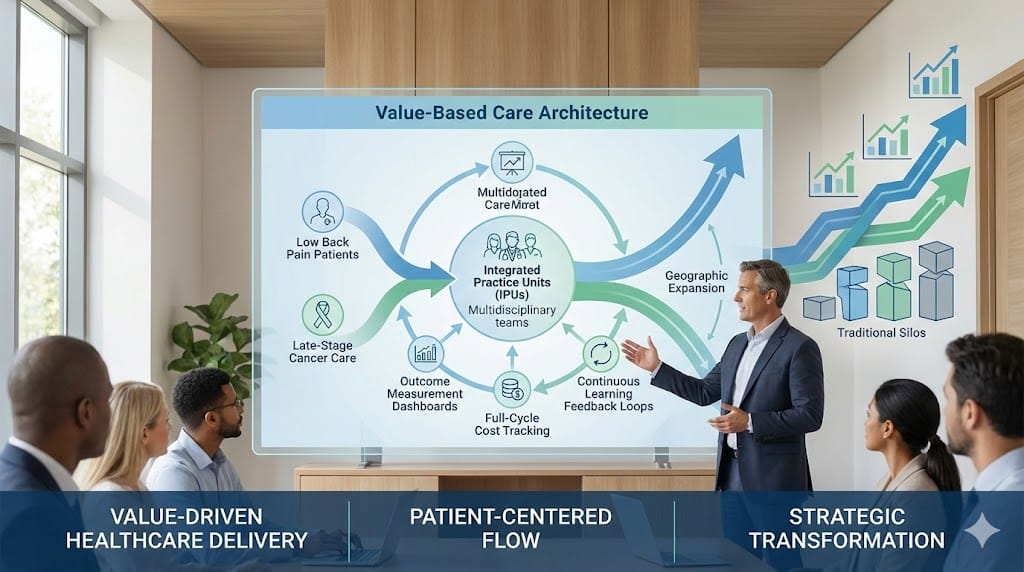
Sophisticated data analytics for risk stratification are essential to identify high-risk patient populations and deploy proactive interventions effectively. Collaborative models for shared savings and risk-sharing with payers are fundamental. Boards must ask: How do value-based contracts reshape system economics? Measuring impact extends beyond financial performance to encompass patient satisfaction, quality of life improvements, and advancements in health equity, demanding a holistic measurement strategy.
Cybersecurity as Strategic Health System Priority
The escalating cyber threat landscape, characterized by ransomware, phishing attacks, insider threats, and sophisticated state-sponsored intrusions, positions cybersecurity as a paramount strategic imperative for US healthcare organizations. The financial and reputational costs of breaches are staggering; the average cost of a healthcare data breach in North America is $10.93 million. Boards must elevate cybersecurity from a mere IT concern to a core fiduciary duty and strategic priority, demanding board-level oversight. Investment in resilient infrastructure, including zero-trust architectures, advanced threat detection systems, and robust incident response planning, is non-negotiable.
Cultivating a pervasive culture of security through comprehensive training and awareness programs for all staff is essential. Strict compliance with HIPAA, HITECH, and other global data protection and privacy regulations is fundamental to operational integrity and patient trust. JRG Partners specializes in identifying Chief Information Security Officers who can not only manage technical risks but also articulate strategic cyber posture to the Board.
Physician Alignment in Digital Transformation
Successful digital transformation within health systems is inextricably linked to deep physician alignment. Engaging clinicians as co-creators from the outset in the design and implementation of new digital tools is vital. Addressing physician burnout and administrative burden is a critical design principle, ensuring technology streamlines workflows rather than adds complexity. Comprehensive training and ongoing education are necessary to support the adoption of new digital health platforms and AI tools.
Incentivizing adoption by linking technology use to improved patient outcomes and quality metrics, rather than merely productivity, fosters engagement. Moreover, bridging the digital divide among physicians with varying levels of technological proficiency is a leadership imperative. Boards should consider: What physician engagement models succeed in digital transitions?

Defining success for digital health and value-based care initiatives requires a holistic perspective that extends far beyond traditional revenue and cost savings. It mandates the incorporation of patient experience, quality of care metrics, and population health improvements. Developing balanced scorecards that integrate clinical efficacy, patient satisfaction, operational efficiency, and financial performance is crucial for comprehensive evaluation.
Boards must adopt a long-term investment perspective, recognizing that many digital health and value-based care initiatives have extended payback periods. Leveraging advanced analytics for impact assessment allows for demonstrating the direct correlation between digital investments and improved health outcomes. Communicating this multifaceted value to all stakeholders—boards, investors, and communities—through clear, compelling narratives is a key executive leadership function.
Cultivating a Resilient Leadership Team
The pace of change within US healthcare demands leadership teams defined by agility, strategic foresight, and profound emotional intelligence. JRG Partners’ core mission is to help organizations develop and recruit such talent. Robust succession planning is critical, ensuring the identification and mentorship of future leaders capable of navigating a rapidly changing environment.
Fostering a culture of innovation, one that encourages experimentation, embraces learning from failure, and commits to continuous improvement, is paramount. Moreover, cultivating diversity, equity, and inclusion (DEI) within the leadership team ensures that the executive suite reflects the communities served and brings a broader range of perspectives to complex strategic challenges, strengthening overall organizational resilience and ethical governance.
Conclusion: The Adaptive CEO as Architect of Future Health
The future of the US health system rests significantly on the shoulders of its chief executives. The critical leadership attributes required are undeniable: strategic agility, technological fluency, an unwavering ethical grounding, and profound people-centricity. These leaders are presented with a unique opportunity to reshape healthcare for greater access, equity, and effectiveness for all Americans.
As organizations grapple with significant questions such as: How will digital health redefine hospital system economics? JRG Partners remains a steadfast partner in identifying and securing the visionary executive talent required for this transformative era. The enduring mission—to improve health outcomes and build healthier communities amidst profound change—is the ultimate measure of their success and fiduciary stewardship.
Frequently Asked Questions for Boards & Executives
- How can we ensure our digital health investments truly improve patient outcomes and not just add complexity or cost?
- What are the critical success factors for integrating acquired systems and cultures post-merger in a way that preserves value?
- How do we balance the urgency of digital transformation with the paramount need to protect patient data from escalating cyber threats?
- What is the most effective way to engage skeptical or change-resistant physicians in new technology and value-based care initiatives?
- How can health systems best demonstrate the long-term value and ROI of non-traditional investments like population health and AI governance to stakeholders?
As the healthcare landscape undergoes a profound structural shift, enterprise leaders must simultaneously manage unprecedented market consolidation and the rapid maturity of virtual delivery networks. At JRG Partners, we have seen that legacy administrative frameworks are fundamentally unequipped to handle the operational friction that arises during large-scale network mergers. To maintain organizational stability while accelerating technological adoption, boards must re-evaluate the core competencies required for the future health system CEO leading through consolidation and digital health. By embedding strategic visionaries capable of unifying disparate hospital systems with scalable, patient-facing software platforms, healthcare networks can eliminate administrative redundancies, protect clinical margins, and ensure long-term corporate effectiveness.

Tanya Gallardo
Managing Director, Executive Search & AI Talent Strategy
Tanya Gallardo is the Managing Director of Executive Search & AI Talent Strategy at JRG Partners, leading C-suite and Board engagements across key growth sectors including Technology, Financial Services, and Manufacturing.
With over 18 years of experience specializing in disruptive technology leadership, Tanya is recognized as a leading authority on talent architecture for future-focused executive roles, such as the Chief AI Officer (CAIO) and Chief Digital Officer (CDO). Her expertise lies in accurately assessing the cultural fit and technical depth required to ensure a high return on investment (ROI) for critical leadership appointments.
Prior to her role at JRG Partners, Tanya held senior roles directing global talent acquisition strategies at a major publicly-traded technology firm, advising on organizational design and succession planning for emerging executive functions. She is a recognized speaker and contributor to industry events, sharing data-driven insights on executive compensation, leadership development, and the measurable business impact of C-suite talent.
