



Introduction: The Executive Interview Trap You’ve seen it before: a candidate sails through interviews, impresses the board with confidence, insight, and charisma—and then underperforms or derails once in the role. It’s frustrating, costly, and avoidable. At , we hear this concern frequently. If your executive hiring success rate is inconsistent, it’s time to rethink your evaluation process.
Category Archives: Executive Search Challenges

28
Jul
Jul
Introduction: The High Stakes of C-Level Hiring C-suite hiring is arguably the most consequential decision a board or executive team can make. Yet, too often, the process remains subjective—driven more by chemistry in the interview room than concrete indicators of future performance. A data-driven assessment scorecard .
Executive Search Challenges
Our Interview Process Relies Too Much on Gut Feel and Not Enough on Objective Data

28
Jul
Jul
Introduction: The Problem with Hiring by Intuition Executive hiring is high-stakes—and often high-pressure. In these moments, it’s tempting to rely on instinct. Charisma, confidence, and rapport can create a strong impression in an interview room. But while “gut feel” may seem like a time-tested shortcut, it’s also a major liability.
Executive Search Challenges
Navigating the Internal Politics That Are Secretly Sabotaging Our Executive Search

28
Jul
Jul
Introduction: The Real Obstacle May Be Inside the Building When an executive search stalls, leadership teams often look outward—blaming market conditions, candidate fit, or recruiter performance. But more often than many admit, the root cause lies within: internal politics that are quietly derailing the process .

28
Jul
Jul
Introduction: When a Near-Miss Becomes a Flight Risk Succession planning is a critical part of leadership continuity—but what happens when your internal heir apparent is passed over in a high-profile CEO or C-level decision?. Often, the result is a high-potential leader who feels undervalued, sidelined, and disillusioned.
Executive Search Challenges, CEO Recruitment
How to Manage a Split Board of Directors During a Critical CEO Search

28
Jul
Jul
Introduction: The High-Stakes Challenge of a Divided Board A CEO search is one of the most consequential decisions a board of directors will make—and when the board is divided, that decision becomes even more complex. Differences in strategic vision, leadership style preferences, or founder loyalties can turn a routine search into a battleground.
Executive Search Challenges
Our Hiring Process Was Used by a Candidate Just for Competitive Intelligence

28
Jul
Jul
Introduction: When Interviews Become a Breach Point Most companies view the executive hiring process as a strategic gateway to attract top leadership. But for some candidates—especially at the C-suite level—the interview is not about landing the job. It’s about gathering competitive intelligence .
Executive Search Challenges
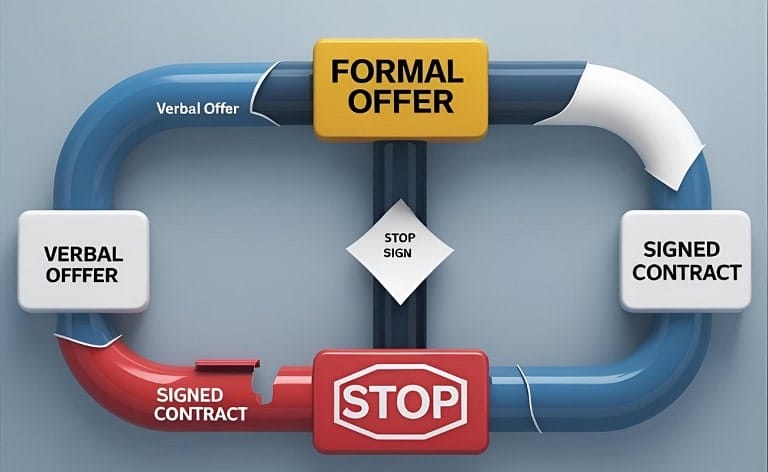
Why Our Verbal Offers for Executive Roles Are Not Leading to Signed Contracts
28
Jul
Jul
Introduction: A Common Yet Costly Bottleneck in C-Level Hiring In the world of executive recruitment, there’s nothing more frustrating than securing a “yes” to a verbal offer —only to watch the process stall or fall apart before the dotted line is signed.
Executive Search Challenges
Navigating a C-Level Negotiation When the Candidate Is Represented by an Agent

28
Jul
Jul
Introduction: The Double-Edged Sword of Agent Representation In today’s high-stakes executive hiring environment, it’s increasingly common for top C-suite talent to be represented by professional agents or executive recruiters. While this adds a layer of professionalism to the process, it can also complicate negotiations, stall decisions, and blur communication lines .
Executive Search Challenges
Our Top Candidate Is Using Our Offer to Leverage a Promotion at Their Current Job

28
Jul
Jul
Introduction: When Your Offer Becomes Their Leverage You’ve invested weeks—sometimes months—courting a top-tier executive candidate. The interviews go well, cultural alignment checks out, and the compensation package is competitive. Or worse: they thank you… and stay put, after securing a promotion at their current company. This scenario is frustrating but common.