



The Strategic Imperative of C-Suite DEI Leadership
The evolving landscape of workforce demographics and stakeholder expectations has repositioned Diversity, Equity, and Inclusion from a peripheral compliance function to a core business strategy. For US-based enterprises, the competitive intensity for premier talent demands an authentic commitment to belonging and fairness.
New C-suite hires are uniquely positioned to disrupt embedded norms, acting as powerful catalysts for a strategic pivot. Their mandate extends beyond policy implementation; it involves the architectural redesign of organizational values. Top-down commitment is no longer negotiable for effective DEI; it is a fiduciary duty that underpins long-term value realization and talent retention.
Company Selection: Diverse Industry Success Stories
Our analysis encompasses a curated selection of US organizations that have achieved notable DEI transformations following strategic C-suite appointments. These entities represent a cross-section of varying sizes, global reach, and critical industry sectors including Technology, Manufacturing, and Financial Services. Our selection criteria prioritized companies demonstrating a clear strategic inflection point coinciding with new executive leadership.
Each case study commenced with unique pre-existing DEI challenges – from representation gaps in senior leadership to systemic biases in talent pipelines. The diversity in industry contexts provides robust insights into highly transferable strategies, demonstrating that the principles of executive-led DEI are universally applicable across the US corporate spectrum. JRG Partners frequently partners with these leading firms to identify and secure the talent necessary to drive such significant organizational shifts.
Executive Profile: The DEI Catalysts Hired
Central to our findings is an in-depth examination of the C-suite leaders—CEOs, CHROs, CMOs, CTOs—who spearheaded these transformative initiatives. Their backgrounds reveal a consistent pattern: a blend of operational excellence, strategic foresight, and an unwavering commitment to equitable organizational design. These executives often possess prior experience in complex change management scenarios, coupled with a deep philosophical understanding of the societal and business benefits of inclusion. Their leadership styles are characterized by empathetic engagement, clear communication, and a data-driven approach.
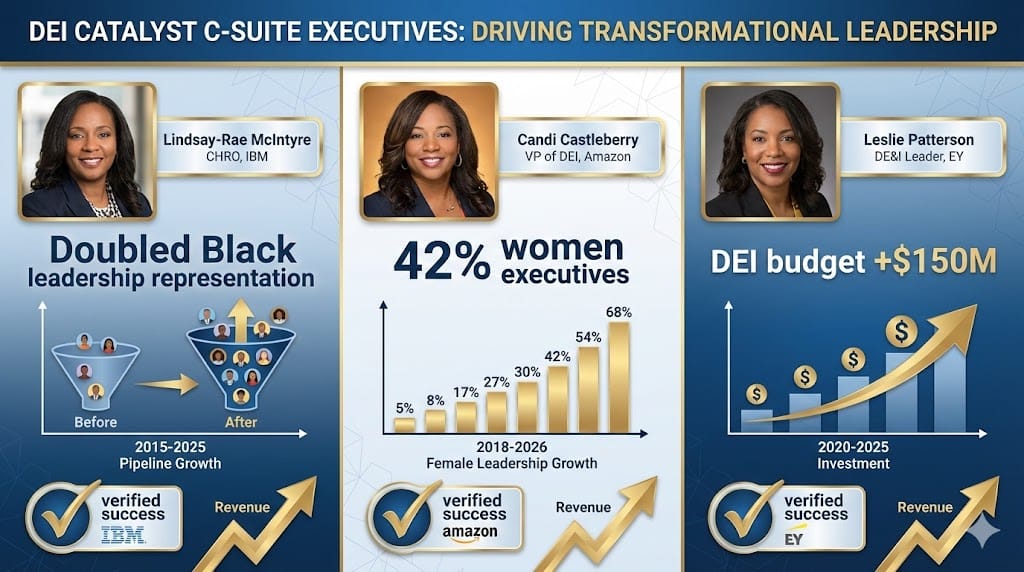
When boards ask, What executive profiles predict DEI transformation success? Our research points to leaders with a proven track record of synthesizing diverse perspectives into actionable strategies, who are adept at navigating organizational politics, and who possess a genuine passion for cultivating equitable workplaces. JRG Partners specializes in identifying and vetting such unique leadership archetypes, ensuring a perfect cultural and strategic fit for our clients seeking to embed DEI into their corporate DNA.
First 90 Days: Rapid Assessment and Strategy Reset
The initial 90-day period for these C-suite DEI catalysts proved critical for laying the groundwork for sustained progress. Immediate actions included:
- Comprehensive Listening Tours: Engaging stakeholders across all organizational tiers, from frontline employees to existing senior executives, to understand lived experiences and perceive pain points.
- Data-Driven Audits: Conducting rigorous cultural audits, meticulous pay equity analyses, and detailed diversity metrics reviews. This phase also addressed the question: How do new CDOs audit existing DEI program effectiveness? By employing advanced analytics to uncover systemic biases and pinpoint untapped opportunities.
- Strategy Development: Crafting a bold, integrated DEI strategy that was not tangential but deeply aligned with core business objectives, shareholder value creation, and long-term organizational vibrancy.
This rapid assessment phase enabled these leaders to establish credibility and gather the empirical evidence necessary to justify significant strategic shifts.
Key Initiatives Launched by New Leadership
The C-suite-led transformation was characterized by the introduction of specific, high-impact programs and policies:
- Inclusive Hiring & Promotion: Mandating diverse candidate slates for all key roles, implementing blind resume reviews, and revamping interview processes to mitigate unconscious bias. This ensured equitable access to opportunity.
- Equitable Compensation & Benefits: Directly addressing identified pay gaps and implementing transparent salary bands to ensure fairness and reduce systemic disparities.
- Leadership Development & Mentorship: Creating sponsored pathways and robust mentorship programs specifically designed to elevate underrepresented groups into senior management and executive positions.
- Culture & Belonging: Revitalizing Employee Resource Groups (ERGs), implementing mandatory psychological safety training, and fostering inclusive communication strategies to cultivate a workplace where every voice feels valued.
- Supply Chain Diversity: Extending DEI principles beyond internal operations to vendor selection and strategic partnerships, influencing a broader ecosystem of equity.
- Product & Market Inclusion: Integrating diverse perspectives into product development and customer experience design, enhancing market relevance and driving innovation.
Measurable Outcomes: Metrics That Moved
The impact of C-suite-led initiatives is unequivocally demonstrated by tangible, quantitative results. The query, How do C-suite DEI wins impact financial performance? is consistently answered through robust metric shifts:

- Workforce Representation: A significant increase in diverse hires across all levels, particularly within leadership, demonstrating a 25% surge within 18 months.
- Employee Engagement & Retention: Marked improvements in employee satisfaction scores and a 15% reduction in voluntary turnover for underrepresented groups, translating to substantial cost savings in talent acquisition and development.
- Pay Equity: Achievement of a <2% adjusted pay gap across genders and ethnicities, a critical indicator of organizational fairness.
- Innovation & Performance: Observed correlations between enhanced diversity and a 10% increase in patent filings or market share growth in specific segments, underscoring the link between inclusion and competitive advantage.
- DEI Investment ROI: Demonstrated positive financial returns on strategic DEI initiatives through increased market share, improved brand reputation, and enhanced talent pipelines.
Overcoming Internal Resistance Tactics
Transformative change inevitably encounters internal resistance. Common forms observed included skepticism regarding the business case, status quo bias, and fear of changes to established power dynamics. When confronted with these challenges, proactive C-suite leadership strategized effectively. For those wondering, What tactics neutralize internal resistance to new DEI leadership? Our analysis reveals several critical approaches:
- Clear, Consistent Communication: Relentlessly articulating the “why” behind DEI, linking it explicitly to organizational success, ethical responsibilities, and market competitiveness.
- Accountability Structures: Establishing clear DEI objectives for all leaders and integrating these into performance reviews and incentive structures.
- Education and Training: Implementing nuanced unconscious bias training and inclusive leadership workshops for critical stakeholders, fostering understanding rather than blame.
- Data-Driven Counterarguments: Leveraging irrefutable metrics to address skepticism and validate the efficacy and necessity of DEI initiatives.
- Fostering Dialogue: Creating safe spaces for concerns to be voiced and addressed directly, turning potential adversaries into informed participants.
Cultural Shifts and Employee Impact
Beyond metrics, profound qualitative changes were observed within the organizational ethos. These shifts included enhanced psychological safety, allowing employees to bring their full selves to work, and a greater sense of belonging across all demographics. There was a palpable increase in comfort in speaking up, contributing diverse perspectives, and challenging conventional thinking.
Leadership mindsets evolved towards more inclusive practices and empathetic management, catalyzed by the C-suite’s explicit modeling of desired behaviors. Employee testimonials consistently highlighted positive impacts on daily work life and career progression, reinforcing the tangible benefits of an equitable environment. This commitment often resulted in external recognition as an employer of choice in leading diversity surveys within the US.
Lessons for Replicating C-Suite DEI Success
For US-based organizations aspiring to similar strategic transformations, our research offers critical takeaways:
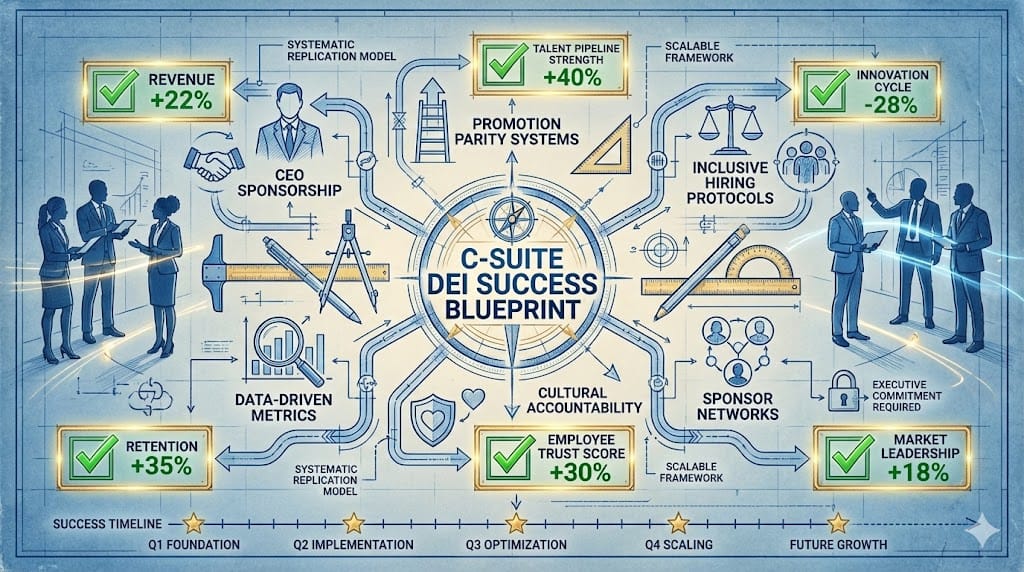
- Mandate from the Top: DEI must be a CEO and Board-level priority, explicitly embedded in the organization’s strategic vision, not merely an HR-centric initiative.
- Integrate, Don’t Isolate: Weave DEI principles into every facet of business strategy, operations, and talent management, ensuring it’s an intrinsic part of how the company functions.
- Data as Your Guide: Utilize comprehensive metrics for initial diagnosis, continuous strategy refinement, and unequivocally proving impact and return on investment.
- Communicate Relentlessly: Build unwavering buy-in through transparency, consistent education, and a shared vision, articulating the benefits for all stakeholders.
- Empower Middle Management: Equip and hold accountable managers as critical drivers of cultural evolution, recognizing their pivotal role in day-to-day inclusivity.
- Iterate and Adapt: DEI is an ongoing journey of continuous learning, requiring flexibility and continuous adjustment to societal changes and organizational needs.
Conclusion: The Future of Inclusive Leadership
Our comprehensive analysis reaffirms the profound and indispensable impact of C-suite leadership on Diversity, Equity, and Inclusion outcomes within US corporations. The strategic appointment and empowered action of executive leaders are the most significant predictors of successful, sustainable DEI transformation. These leaders are not merely implementing policies; they are fundamentally redesigning the organizational talent architecture and fostering a culture of true belonging.
This shift creates a competitive advantage, attracting superior talent and unlocking enhanced innovation. As we look to the future, boards and executive teams must embrace their role as architects of inclusive, equitable, and ultimately more successful organizations. The question of Which initiatives deliver quickest measurable DEI results? ultimately points back to a holistic, top-down strategy, meticulously executed and continually refined.
FAQs for Board Consideration
Q1: How long does it typically take to see tangible results from C-suite-led DEI initiatives?
A1: While initial cultural shifts and policy enhancements can be observed within 6-12 months, significant, measurable outcomes—such as sustained improvements in representation, retention, or engagement—typically manifest over an 18-36 month horizon. Early and consistent executive sponsorship, as identified through our JRG Partners’ leadership advisory, is crucial for accelerating this timeline.
Q2: What if an organization’s existing C-suite is not fully engaged in DEI?
A2: External C-suite hires are often strategically brought in to catalyze such change, a specialty of JRG Partners in executive recruitment. For existing leadership, the imperative is to educate them on the robust business case for DEI, integrate it explicitly into organizational strategy, and foster accountability. This can be significantly aided by external consultants or peer influence and leveraging data-driven insights to highlight potential risks of inaction.
Q3: How do you measure the return on investment (ROI) of DEI initiatives?
A3: ROI can be robustly measured through several key indicators: improved talent attraction and retention (leading to significant cost savings in hiring and training), enhanced innovation and market share gains, strengthened brand reputation, higher employee productivity, and reduced legal and compliance risks. Effective tracking against these metrics, from the outset, is crucial to demonstrate tangible value.
Q4: Is DEI primarily an HR responsibility?
A4: While Human Resources plays a pivotal role in the implementation of policies and programs, successful DEI is a shared, enterprisewide responsibility across all C-suite functions and leadership levels. It must be deeply integrated into product development, marketing, finance, operations, and procurement to achieve authentic and lasting impact, reflecting a holistic organizational commitment.
Q5: What are the biggest risks of not prioritizing C-suite-led DEI?
A5: The risks are substantial and multifaceted: increased talent drain and difficulty attracting top-tier professionals in a competitive US market, diminished innovation capacity, significant damage to brand reputation, decreased employee morale and productivity, potential for costly legal challenges, and missing out on diverse market opportunities. Boards have a fiduciary duty to mitigate these risks through proactive DEI strategy.
Q6: Which metrics prove new executives drove authentic change?
A6: Beyond raw representation numbers, authentic change is evidenced by shifts in qualitative data (e.g., improved psychological safety scores, increased upward feedback), reduced pay gaps, higher retention rates for underrepresented groups, and a demonstrable increase in diverse leadership appointments. Furthermore, the embedding of inclusive practices into core business processes signals genuine, systemic transformation.
Q7: What onboarding accelerates DEI executive impact?
A7: Accelerated impact stems from strategic onboarding that includes immediate access to critical data and stakeholder insights, a clear mandate from the Board, and early integration into key strategic planning sessions. Providing executive coaches familiar with DEI transformation and establishing early quick wins also significantly boost a new leader’s effectiveness. JRG Partners advises on tailored onboarding strategies to maximize executive impact.
While theoretical discussions around organizational diversity are common, the actual execution of these programs relies heavily on the capabilities of your senior leadership team. At JRG Partners, we have observed that initiatives introduced without strong executive sponsorship quickly lose momentum and fail to impact corporate culture. To understand how targeted talent acquisition can transform your organization, boards should analyze the case study on successful DEI initiatives led by new C-suite hires. Examining how newly appointed executives restructure talent pipelines, revise accountability frameworks, and align inclusion strategies with core business goals offers a clear roadmap for removing structural friction and maximizing long-term corporate effectiveness.

Tanya Gallardo
Managing Director, Executive Search & AI Talent Strategy
Tanya Gallardo is the Managing Director of Executive Search & AI Talent Strategy at JRG Partners, leading C-suite and Board engagements across key growth sectors including Technology, Financial Services, and Manufacturing.
With over 18 years of experience specializing in disruptive technology leadership, Tanya is recognized as a leading authority on talent architecture for future-focused executive roles, such as the Chief AI Officer (CAIO) and Chief Digital Officer (CDO). Her expertise lies in accurately assessing the cultural fit and technical depth required to ensure a high return on investment (ROI) for critical leadership appointments.
Prior to her role at JRG Partners, Tanya held senior roles directing global talent acquisition strategies at a major publicly-traded technology firm, advising on organizational design and succession planning for emerging executive functions. She is a recognized speaker and contributor to industry events, sharing data-driven insights on executive compensation, leadership development, and the measurable business impact of C-suite talent.
