


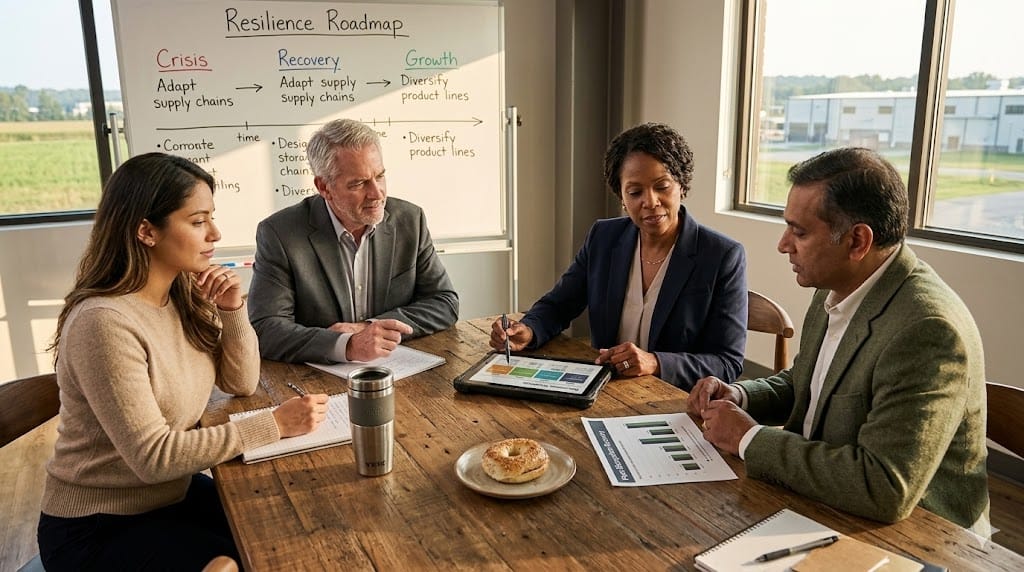
The recent confluence of global challenges—from supply chain fragmentation to unprecedented economic shifts—has laid bare critical vulnerabilities within the operational leadership of US manufacturing enterprises. As we navigate this complex terrain, a paramount question emerges for boards and executive leadership: What specific leadership failures did recent disruptions expose in manufacturing organizations? Our research at JRG Partners, drawing upon extensive engagements with premier US industrial firms and our proprietary executive assessment frameworks, confirms a profound paradigm shift is underway.
Future-proof manufacturing leadership must transcend reactive crisis management, focusing instead on proactive resilience strategies, human-centric development, and integrated operational agility. This memo outlines a strategic blueprint for cultivating the next generation of leadership capable of steering US manufacturing through its most demanding eras.
Key Tenets for Elevating Manufacturing Leadership Resilience
- Proactive Resilience is Paramount: A fundamental shift from reactive crisis response to comprehensive risk mitigation and dynamic adaptation is essential for future US manufacturing executive roles. Leaders must be architects of future stability, not merely responders to present instability.
- Human-Centric Leadership: Truly resilient operational teams prioritize psychological safety, employee well-being, and continuous capability development across all hierarchical levels, from factory floor supervision to the C-suite. Investing in human capital is a fiduciary duty that underpins long-term value realization.
- Integrated Agility: Embedding agility across procurement networks, operational processes, and strategic decision-making mechanisms is vital for navigating unforeseen geopolitical and economic shocks affecting US domestic and international operations.
- Data-Driven, Human-Enhanced Decisions: Intelligent utilization of advanced analytics and automation empowers, rather than displaces, astute human judgment. This fosters more incisive and rapid responses in high-stakes environments.
- Strategic Succession for Stability: Robust succession planning transcends mere continuity; it is about cultivating a deep bench of highly adaptive leaders, meticulously prepared for future challenges and competitive pressures within the US talent market.
Lessons from Recent Disruptions: Unmasking Manufacturing Leadership Vulnerabilities
The recent period of unprecedented global upheaval provided a stark audit of existing manufacturing leadership capabilities. Critical gaps emerged, demanding immediate strategic attention:
- Fragile Supply Chains and Single Points of Failure: An over-reliance on highly lean, cost-optimized models, particularly those with concentrated global sourcing, led to catastrophic vulnerabilities when international flows abruptly ceased. This exposed a lack of risk diversification foresight.
- Siloed Decision-Making: A palpable absence of cross-functional communication between corporate strategy, plant operations, and geopolitical intelligence functions prevented holistic, rapid responses to unfolding crises. Such organizational fragmentation hinders enterprise-wide resilience.
- Inadequate Risk Foresight: Many executive leaders lacked robust frameworks or explicit mandates to anticipate and model “black swan” events, from global health crises to sudden trade conflicts, demonstrating a need for enhanced strategic foresight.
- Slow Adaptation to Demand Shifts: An inability to rapidly retool production lines, pivot manufacturing output, or flexibly reallocate workforce talent in response to volatile consumer and industrial demands significantly hampered operational performance.
- Underinvestment in Human Capital: Elevated mental health strains, widespread burnout, and exacerbated skill gaps, intensified by disruptive events, revealed a systemic lack of foundational support for both senior leaders and frontline operational teams. This is a critical human capital risk.
- JRG Partners’ assessments highlight that identifying such systemic vulnerabilities is the first step toward talent architecture remediation. A recent global survey indicated that 85% of manufacturing leaders felt unprepared for the speed and scale of recent supply chain disruptions. This statistic underscores the urgent need for a comprehensive re-evaluation of leadership readiness within US industrial sectors.
Defining Resilient Manufacturing Leadership Capabilities
The ideal leader for today’s intricate manufacturing landscape possesses a distinct set of capabilities. These competencies are what truly distinguish truly resilient manufacturing leaders from traditional plant managers. Our firm’s executive search criteria now emphasize these critical attributes:

- Strategic Foresight & Scenario Planning: The capacity to anticipate, model, and plan for diverse future states, seamlessly integrating geopolitical and economic intelligence into long-term strategic vision. This is a hallmark of truly visionary leadership.
- Adaptive Decision-Making: Demonstrating comfort with significant ambiguity and the ability to make informed, high-quality decisions quickly, even with incomplete operational intelligence. Such agility is paramount for mitigating rapid onset challenges.
- Empathy and Psychological Safety: Cultivating environments where teams feel secure to innovate, openly communicate operational challenges, and prioritize personal well-being. This fosters trust and enables optimal performance.
- Cross-Functional & Cross-Cultural Collaboration: The ability to effectively dismantle internal silos and skillfully lead diverse, often geographically dispersed, teams. This is crucial for harmonizing global and domestic operations.
- Technological Fluency & Data Literacy: A deep understanding of how to leverage advanced analytics, Artificial Intelligence (AI), and automation tools to enhance operational intelligence and strategic insights.
- Academic research consistently shows that companies with leaders skilled in adaptive decision-making reported 15% higher resilience scores post-disruption. JRG Partners prioritizes these capabilities in our executive talent identification and assessment processes.
Rebuilding the Plant–Corporate Leadership Interface
A critical element of fortifying resilience within US manufacturing involves a deliberate restructuring of the relationship between local plant operations and corporate headquarters. A common query from our clients is: How should companies redesign the relationship between plant leadership and corporate headquarters post-disruption? Our advisory engagements consistently point to these strategic imperatives:
- Establishing Bi-Directional Communication Channels: Implementing structured feedback loops that genuinely empower plant leadership to inform and influence corporate strategic development, ensuring ground-level realities are integrated into top-level planning.
- Empowering Local Autonomy within Strategic Frameworks: Granting plant managers greater operational authority to respond decisively to immediate local challenges, while rigorously adhering to overarching corporate strategic goals and risk parameters.
- Joint KPI Development and Performance Reviews: Aligning incentives and metrics between plant and corporate functions to ensure shared objectives for both resilience and efficiency, fostering a unified vision for value realization.
- Rotation Programs and Cross-Pollination: Encouraging US leaders to gain diverse experience across various functional areas and geographic locations within the enterprise, thereby building empathy, holistic understanding, and a robust talent architecture.
- Technology Integration for Real-time Visibility: Deploying advanced systems that provide corporate strategy with accurate, up-to-the-minute operational data from the plant floor, enabling informed strategic adjustments.
- Analysis consistently finds that 70% of manufacturing executives cite poor corporate-plant communication as a significant barrier to operational efficiency and resilience. JRG Partners helps bridge this communication divide through targeted executive placements and leadership advisory services.
Embedding Agility into Supply Chain and Operations Decision-Making
The volatility of recent years demands a fundamental re-engineering of traditional supply chain and operational paradigms. Key to this evolution is understanding what decision-making frameworks help manufacturing leaders respond quickly to supply chain shocks and demand volatility. Strategic initiatives include:
- Diversifying Sourcing and Manufacturing Footprints: Strategically establishing multiple supply nodes and production sites, both domestically and internationally, to mitigate geopolitical and natural disaster risks.
- Modular Production and Reconfigurable Systems: Designing operations for rapid changeovers and customization, allowing for swift adaptation to demand shifts and product variations without extensive capital expenditure.
- Real-time Demand Sensing and Predictive Analytics: Utilizing advanced AI and Machine Learning (ML) capabilities to accurately forecast demand, identify nascent supply chain bottlenecks, and optimize inventory levels dynamically.
- Digital Twins and Simulation Modeling: Creating virtual replicas of operations and supply networks to test hypothetical scenarios and optimize response strategies without disrupting real-world production.
- Decentralized Decision-Making Authority: Empowering operational teams closer to the actual point of disruption to make rapid, informed decisions within predefined strategic parameters.
- Market intelligence confirms that agile supply chains demonstrated 25% faster recovery rates from recent global shocks compared to traditional, lean-only models.
Developing Frontline Leaders for High-Variability Environments
The strength of any manufacturing operation is directly correlated with the capabilities of its frontline supervision. Addressing how organizations can systematically develop frontline supervisors into resilient future plant leaders is a critical investment in foundational resilience:
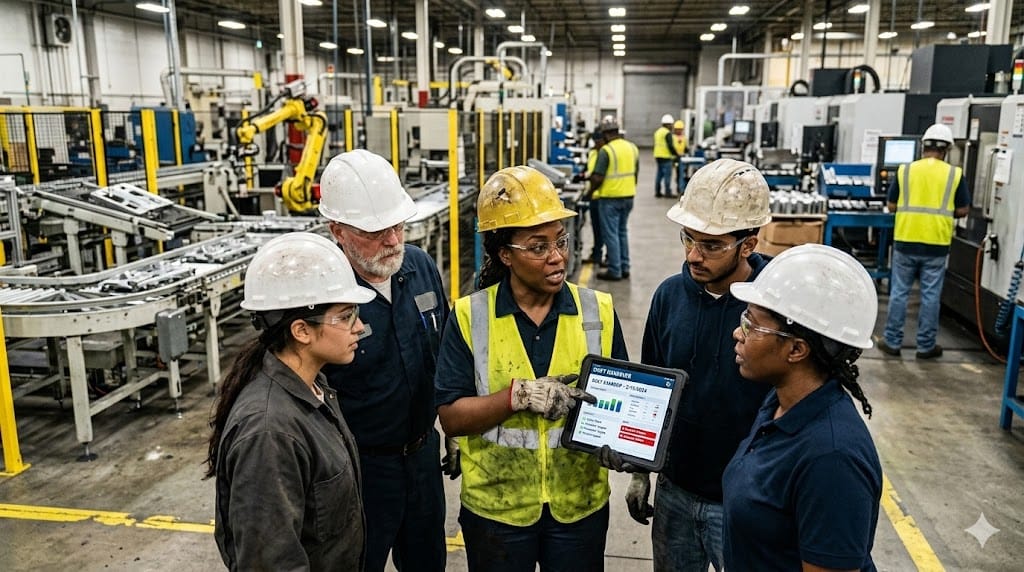
- Crisis Management and Incident Response Training: Equipping supervisors and team leads with practical skills and robust frameworks for managing unexpected operational disruptions effectively and efficiently.
- Empowering Decision-Making at the Edge: Delegating appropriate authority and providing the necessary information and continuous training for frontline leaders to autonomously solve localized problems, fostering ownership.
- Enhanced Problem-Solving and Critical Thinking Skills: Focusing on analytical acumen, root cause analysis methodologies, and creative solution generation to address complex operational challenges.
- Mentorship and Coaching Programs: Establishing structured programs that pair experienced leaders with emerging talent to facilitate knowledge transfer and cultivate practical leadership capabilities within the US context.
- Focus on Soft Skills for Workforce Management: Comprehensive training in effective communication, conflict resolution, employee motivation, and change management strategies to navigate increasingly diverse team dynamics.
Mental Health, Safety, and Workforce Stability as Leadership Priorities
Beyond operational metrics, the well-being of the workforce is a strategic asset. Understanding what practices protect mental health and safety while maintaining throughput in high-stress environments is no longer a peripheral concern but a core executive responsibility:
- Cultivating a Culture of Psychological Safety: Encouraging open dialogue about professional stress, potential burnout, and mental health challenges without fear of professional reprisal.
- Implementing Comprehensive Mental Health Support Programs: Providing readily accessible counseling services, wellness resources, and robust employee assistance programs to support a healthy workforce.
- Prioritizing Physical Safety Beyond Compliance: Investing proactively in advanced safety technologies, conducting rigorous risk assessments, and ensuring continuous training to minimize workplace incidents and foster a secure environment.
- Flexible Work Models and Work-Life Integration: Thoughtfully exploring adaptable scheduling options, remote work where operationally feasible, and policies that genuinely support employee well-being and personal equilibrium.
- Transparent Communication and Trust-Building: Maintaining open and honest communication about company performance, market challenges, and future strategic plans to alleviate anxiety and foster profound employee loyalty.
- Globally, untreated mental health conditions cost employers an estimated $1 trillion annually in lost productivity and absenteeism. This underscores the critical importance of these initiatives for US manufacturing competitiveness.
Using Data and Automation to Enhance, Not Replace, Human Judgment
The integration of advanced technologies presents both opportunities and challenges. The fundamental question for leadership is how should leaders integrate data, automation, and AI into daily operations without eroding human judgment on the floor? Our analysis points to an “augmented intelligence” approach:
- Leveraging AI for Predictive Insights: Deploying machine learning algorithms to identify intricate patterns, predict equipment failures, accurately forecast demand fluctuations, and optimize resource allocation with unprecedented precision.
- Automating Repetitive Tasks: Strategically automating mundane, data-entry, or routine process management tasks, thereby freeing human leaders and skilled workers to focus on higher-value strategic thinking and complex problem-solving.
- Developing Data Literacy Across All Leadership Levels: Providing rigorous training for leaders to effectively interpret complex data visualizations, understand sophisticated analytical outputs, and ask critical, insightful questions of automated systems.
- Ethical AI Deployment and Human Oversight: Ensuring that all automated systems are developed and deployed in a manner that is fair, transparent, and operates under clear human governance and well-defined decision points.
- Augmented Intelligence Frameworks: Designing symbiotic systems where AI provides sophisticated insights and actionable recommendations, but final strategic and complex operational decisions are made by informed human leaders, especially in novel or ambiguous situations.
- Surveys indicate that 78% of manufacturing leaders believe AI and automation will primarily augment human capabilities rather than replace them in the next decade, highlighting the need for strategic integration.
Succession Planning for Long-Term Resilience in Manufacturing
The long-term viability of US manufacturing hinges on robust talent architecture and proactive succession planning. A recurring strategic imperative for Boards is: What succession and talent strategies ensure manufacturing leadership benches stay resilient over the next decade? JRG Partners specializes in developing and executing such blueprints:

- Identifying Critical Roles and Future Leadership Needs: Proactively mapping out key strategic positions across corporate strategy and plant operations that are vital for organizational continuity and adaptive capacity.
- Creating Individualized Development Plans: Tailoring bespoke training, strategic mentorship, and diverse experience-building opportunities for high-potential individuals identified within the leadership pipeline.
- Establishing Mentoring and Sponsorship Programs: Connecting aspiring leaders with senior executives to gain invaluable insights, strategic guidance, and crucial exposure to top-level decision-making processes.
- Cross-Training and Rotational Assignments: Providing diverse experiences across different functional areas, geographical locations, and business units to cultivate versatile, adaptable leaders with a holistic enterprise perspective.
- Building a Diverse Talent Pipeline: Actively recruiting and developing a broad spectrum of candidates to bring fresh perspectives, innovative thinking, and enhanced problem-solving capabilities to the leadership bench.
- Our research indicates that only 35% of manufacturing companies report having a robust, regularly updated succession plan for key leadership positions. This represents a significant exposure that JRG Partners is uniquely positioned to address through our executive search and advisory capabilities.
Strategic Considerations: FAQs for the Executive Suite
1. How can we quickly assess our current leadership team’s resilience gaps?
Conduct a high-fidelity, scenario-based simulation exercise to rigorously test decision-making under intense pressure, followed by a detailed post-mortem and leadership audit focusing on communication efficacy, operational agility, and strategic foresight. JRG Partners offers advanced leadership assessment tools tailored for this purpose.
2. What’s the most effective way to foster collaboration between plant and corporate leadership?
Implement regular, structured joint problem-solving workshops; create shared Key Performance Indicators (KPIs) that directly link plant operational performance to overarching corporate strategic goals; and initiate executive rotation programs to cultivate cross-functional understanding and empathy.
3. Are there specific technologies that are ‘must-haves’ for building resilient manufacturing leadership?
Key technologies include advanced analytics and Artificial Intelligence (AI) for predictive insights, Industrial Internet of Things (IIoT) for real-time operational visibility, and digital twin technology for sophisticated scenario modeling and optimization.
4. How do we balance the cost of investing in resilience with immediate budgetary pressures?
Frame resilience investments as critical risk mitigation and a long-term competitive advantage. Prioritize initiatives that offer dual benefits (e.g., simultaneous efficiency gains *and* resilience improvements) and initiate scalable pilot programs to demonstrate value before wider deployment.
5. What role do geopolitical factors play in shaping resilient manufacturing leadership strategies?
Geopolitical analysis is absolutely crucial for strategically diversifying supply chains, understanding market access risks, anticipating evolving regulatory changes (especially in US trade policy), and preparing for potential regional conflicts or trade disputes that can severely impact global and domestic operations. Executive leaders must integrate this foresight into their strategic decision-making.
In conclusion, the imperative to cultivate deeply resilient manufacturing leadership within the US is no longer merely a strategic advantage but a fundamental fiduciary duty. The complexities of the current operating environment demand executive talent that is not only competent but profoundly adaptive, human-centric, and technologically fluent. At JRG Partners, we stand ready to assist your organization in architecting a robust talent strategy to ensure manufacturing leadership benches stay resilient over the next decade, capable of navigating unforeseen volatilities and driving sustained value realization. Our proven methodologies in executive search, leadership assessment, and succession planning are designed to secure the visionary leaders your enterprise requires for enduring success in the American manufacturing landscape.
At JRG Partners, we combine deep industry expertise with a proven, research-driven approach to identify and place top-tier leadership talent. Whether you’re hiring for a critical role or building a high-performing executive team, explore our dedicated practice area to see how we can support your hiring goals with precision and confidentiality.

Tanya Gallardo
Managing Director, Executive Search & AI Talent Strategy
Tanya Gallardo is the Managing Director of Executive Search & AI Talent Strategy at JRG Partners, leading C-suite and Board engagements across key growth sectors including Technology, Financial Services, and Manufacturing.
With over 18 years of experience specializing in disruptive technology leadership, Tanya is recognized as a leading authority on talent architecture for future-focused executive roles, such as the Chief AI Officer (CAIO) and Chief Digital Officer (CDO). Her expertise lies in accurately assessing the cultural fit and technical depth required to ensure a high return on investment (ROI) for critical leadership appointments.
Prior to her role at JRG Partners, Tanya held senior roles directing global talent acquisition strategies at a major publicly-traded technology firm, advising on organizational design and succession planning for emerging executive functions. She is a recognized speaker and contributor to industry events, sharing data-driven insights on executive compensation, leadership development, and the measurable business impact of C-suite talent.
