


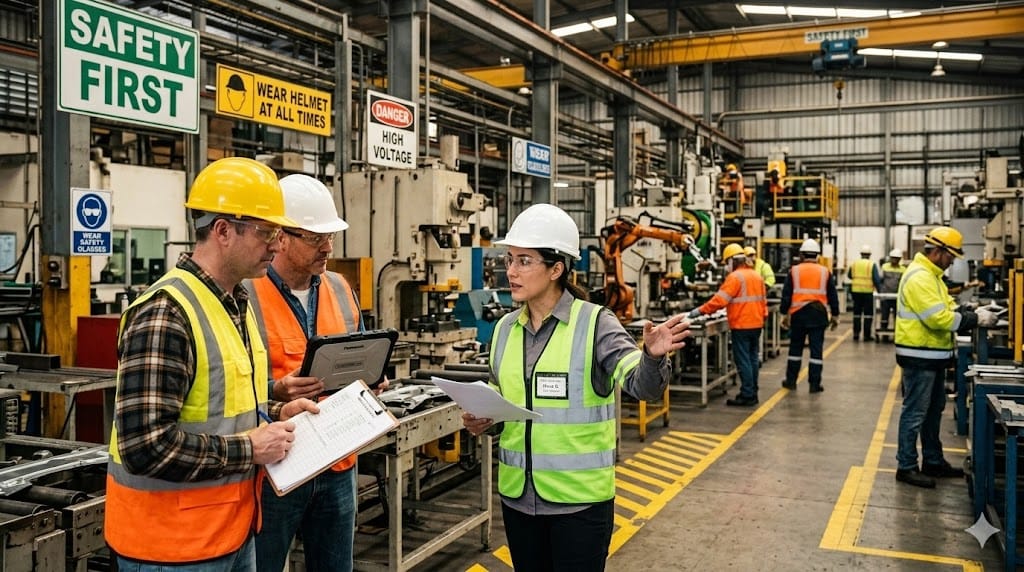
The contemporary US manufacturing landscape demands a paradigm shift in how we perceive and integrate Environmental, Health, and Safety (EHS) functions. No longer a mere cost center or a tangential compliance exercise, EHS leadership has ascended to a core strategic imperative, profoundly impacting operational efficiency, enterprise-wide risk mitigation, and invaluable brand equity.
In an increasingly complex regulatory environment, coupled with rapid technological advancements and evolving stakeholder expectations, the caliber of your EHS leadership directly correlates with your organization’s agility and sustained profitability. This confidential brief outlines a forward-thinking framework for identifying, attracting, and empowering top-tier EHS talent, focusing on what differentiates a high-performing EHS leader from a compliant EHS manager in manufacturing.
Through JRG Partners’ unparalleled executive search methodology, we consistently identify leaders who not only navigate intricate regulatory frameworks but also pioneer proactive strategies for value realization. Our insights reveal that the most impactful EHS leaders possess a unique synthesis of technical mastery, robust leadership capabilities, and astute business acumen, driving measurable success within the dynamic US industrial sector.
EHS Leadership: A Strategic Pillar for Resilient Manufacturing
The traditional perception of Environmental, Health, and Safety as an operational overhead is obsolete. Modern industrial enterprises recognize EHS as a foundational element of their strategic architecture, intrinsically linked to long-term viability and competitive advantage. Our research indicates several critical areas where elevated EHS leadership drives significant value:
- Transitioning from Cost Center to Value Creation: Strategic EHS initiatives enhance operational efficiency and productivity. By embedding safety protocols and environmental stewardship into core processes, organizations reduce waste, optimize resource utilization, and streamline workflows.
- Mitigating Enterprise Risk: Proactive risk management, led by exemplary EHS professionals, prevents costly incidents, avoids severe legal penalties, and safeguards corporate reputation. This proactive posture is a critical fiduciary duty.
- Ensuring Business Continuity: Protecting personnel, physical assets, and production schedules against unforeseen disruptions is paramount. Robust EHS frameworks are essential for maintaining uninterrupted operations in the face of various contingencies.
- Enhancing Corporate Reputation and ESG Performance: Strong environmental stewardship and safety records are increasingly vital for meeting investor expectations and stakeholder demands for superior Environmental, Social, and Governance (ESG) performance.
- Talent Attraction and Retention: A demonstrated commitment to employee well-being fosters a positive workplace culture, making the organization a preferred employer. Companies with strong safety cultures report 50% fewer incidents, underscoring EHS’s role in human capital management.
Core Competencies of High-Impact EHS Leaders
Identifying truly transformative EHS leadership requires an assessment beyond standard technical qualifications. Our experience, cultivated over decades of executive placements, shows that high-impact EHS leaders possess a distinct blend of attributes:
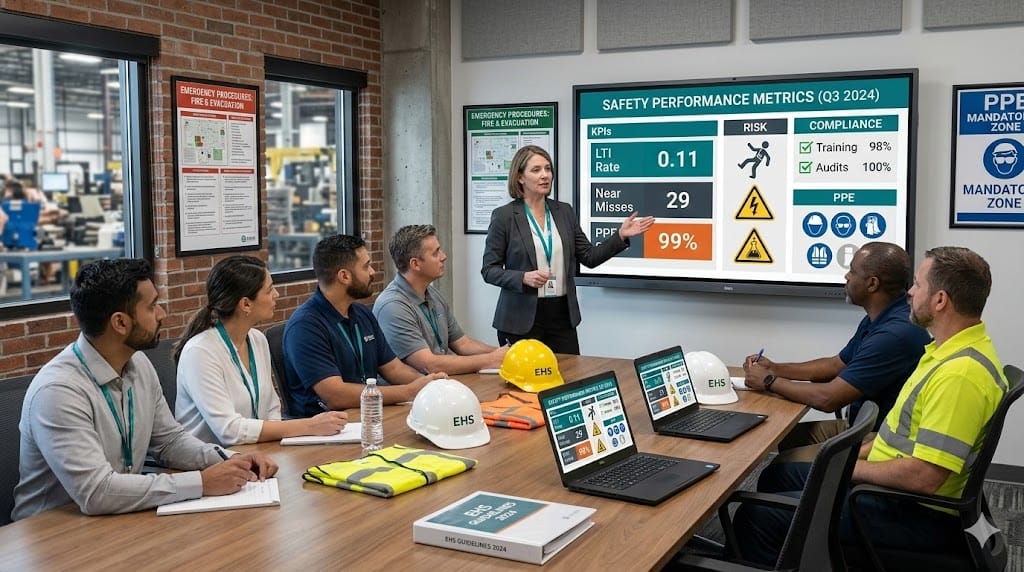
- Technical EHS Expertise: A profound understanding of advanced safety protocols, comprehensive environmental regulations, and sophisticated hazard identification methodologies is non-negotiable.
- Leadership and Influence: The capacity to inspire, motivate, and gain buy-in across all organizational strata—from the shop floor to the executive board—is paramount for cultural transformation.
- Strategic Thinking and Problem Solving: The ability to anticipate future risks, synthesize complex data, and develop proactive, data-driven solutions is a hallmark of exceptional EHS leadership.
- Communication and Collaboration: Effectively conveying intricate EHS information and fostering cross-functional teamwork are critical for integrated risk management.
- Business Acumen: Aligning EHS initiatives directly with broader manufacturing goals and financial objectives, demonstrating clear return on investment, is a strategic differentiator. This directly addresses which technical and regulatory qualifications should be non-negotiable for EHS leadership roles, emphasizing a blend of deep regulatory knowledge and strategic business integration.
Regulatory Mastery: Navigating the US Compliance Landscape
The complexity of the US regulatory landscape—spanning federal, state, and local mandates—necessitates an EHS leader with unparalleled expertise and foresight.
- OSHA Compliance and Beyond: Implementing robust safety programs, continuous training, and transparent incident reporting systems that not only meet but exceed Occupational Safety and Health Administration (OSHA) requirements.
- Environmental Protection Agency (EPA) Regulations: Expert management of air emissions, wastewater discharge, hazardous waste streams, and chemical storage protocols in accordance with EPA statutes.
- State and Local Ordinances: Navigating the intricate tapestry of specific regional environmental and safety requirements across diverse operating locations.
- Industry-Specific Standards: Adhering to sector certifications and voluntary programs such as ISO 14001 (Environmental Management), ISO 45001 (Occupational Health & Safety), and Responsible Care initiatives.
- Proactive Regulatory Scanning: A strategic EHS leader actively monitors and anticipates emerging legislation, adapting EHS strategies to ensure sustained compliance and competitive advantage. Regulatory non-compliance fines reached $14 billion annually across industries, underscoring the critical importance of this expertise.
Building a Safety-First Culture on the Shop Floor
A resilient safety culture is not merely declared; it is meticulously cultivated and consistently reinforced. The EHS leader is the chief architect of this cultural transformation. JRG Partners frequently evaluates candidates on their demonstrated ability to instill this ethos.
- Visible Leadership Commitment: Demonstrating unwavering support for EHS initiatives from the highest levels of the organization is fundamental to fostering trust and compliance.
- Employee Engagement and Empowerment: Fostering active participation through safety committees, robust suggestion programs, and accessible hazard reporting mechanisms empowers the frontline workforce. This directly addresses how can manufacturers assess a candidate’s ability to influence frontline behavior and culture? – by examining past initiatives in employee engagement and empowerment.
- Comprehensive Training and Education: Implementing continuous learning programs for all employees on evolving safety procedures, risk awareness, and emergency preparedness.
- Transparent Communication and Feedback Loops: Openly discussing incidents, near misses, and safety improvements builds a learning organization.
- Accountability and Recognition Systems: Implementing fair enforcement protocols alongside robust systems for celebrating positive safety behaviors incentivizes desired actions.
Data, Technology, and Industry 4.0 in EHS Management
The integration of advanced analytics and Industry 4.0 technologies is revolutionizing EHS management, transforming it from reactive incident response to proactive risk prediction and prevention. This transformative approach is pivotal in our assessment of future-ready EHS leaders. We specifically consider how should EHS leadership hiring criteria change in an Industry 4.0, sensor-rich manufacturing environment?
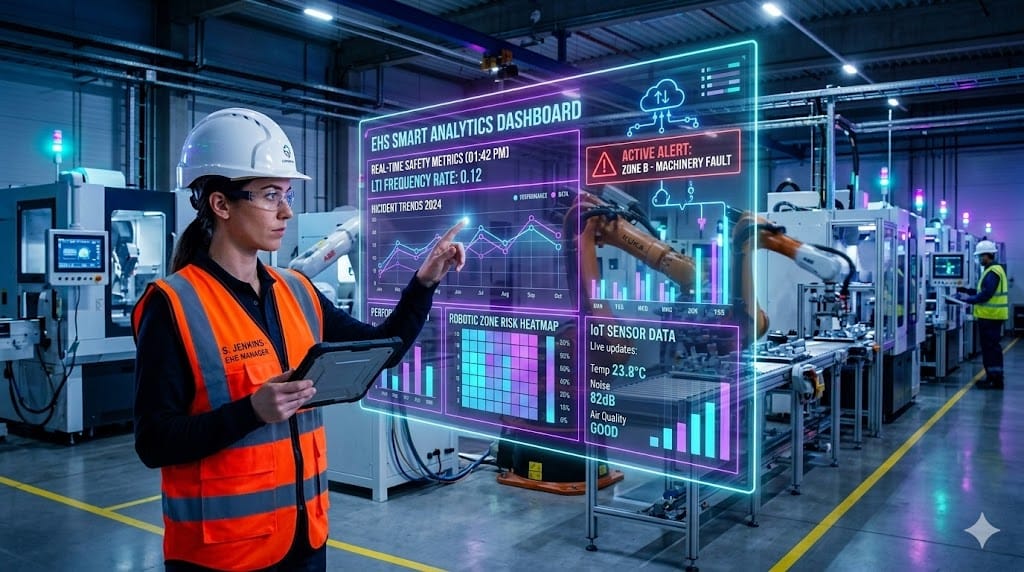
- EHS Management Information Systems (EMIS): Leveraging sophisticated software platforms for real-time incident tracking, comprehensive compliance management, and streamlined permit tracking.
- Predictive Analytics: Utilizing advanced data modeling to forecast potential hazards, identify emerging risks, and proactively implement preventive measures. Companies using predictive analytics reduced lost-time incidents by 15-20%, demonstrating its profound impact.
- IoT and Wearable Technology: Deploying real-time monitoring solutions for environmental conditions, worker health metrics, and proximity hazards, enhancing immediate safety interventions.
- Robotics and Automation: Strategically employing automation to perform hazardous tasks, thereby significantly reducing human exposure to high-risk environments.
- Digital Twins and AR/VR for Training: Creating immersive and safe training environments for complex procedures, improving comprehension and retention without physical risk.
Assessing EHS Leadership Potential During Executive Search
Our rigorous executive search process at JRG Partners is designed to unearth EHS leaders who can deliver measurable strategic impact. We place a premium on candidates who can clearly articulate how can EHS leaders effectively communicate the ROI of safety investments to executive leadership? during our assessment.
- Structured Behavioral Interviews: Our proprietary interview methodologies probe past experiences, focusing on demonstrated capabilities in driving cultural change, mitigating complex risks, and leading cross-functional teams, to reliably predict future performance in demanding EHS leadership roles. This includes questions designed to address what interview questions reliably reveal an EHS leader’s risk-mitigation and incident-prevention mindset?
- Technical and Situational Assessments: Evaluating problem-solving skills through real-world manufacturing EHS scenarios, ensuring practical aptitude and strategic foresight.
- Cultural Fit Evaluation: Assessing alignment with the company’s core values, safety philosophy, and preferred collaboration style is crucial for seamless integration and long-term success.
- Reference Checks with a Focus on Impact: Beyond verifying employment, our reference checks delve into specific achievements, leadership effectiveness, and stakeholder management skills.
- Visioning Exercise: Requiring candidates to articulate a compelling strategic vision for EHS within the company’s specific manufacturing context, showcasing their ability to think holistically and drive innovation.
Onboarding and Supporting New EHS Leaders for Early Wins
Attracting top-tier EHS talent is only the first step. Effective onboarding and sustained support are critical for a new leader to achieve early success and long-term impact. This strategic support directly addresses how can plant leadership and HR set up a new EHS leader for success in the first 6–12 months?
- Clear Expectations and Strategic Mandate: Defining immediate priorities, long-term strategic goals, and clear success metrics from the outset.
- Comprehensive Site Orientation: Thoroughly familiarizing the new leader with manufacturing processes, facility layouts, existing EHS infrastructure, and key internal and external personnel.
- Access to Resources and Authority: Ensuring adequate budget, staffing, technological tools, and the necessary decision-making power to execute strategic initiatives effectively.
- Mentorship and Networking: Connecting the new leader with internal senior leaders and external industry peers for guidance, knowledge exchange, and accelerated integration.
- Early Wins Focus: Collaboratively identifying achievable short-term projects that demonstrate immediate value, build credibility, and establish momentum.
Measuring EHS Leader Success: KPIs, Audits, and Continuous Improvement
Defining and consistently measuring the success of EHS leadership is paramount for strategic oversight and continuous improvement. It allows for a clear understanding of which KPIs best measure the impact of an EHS leader beyond lost-time incidents and recordables?
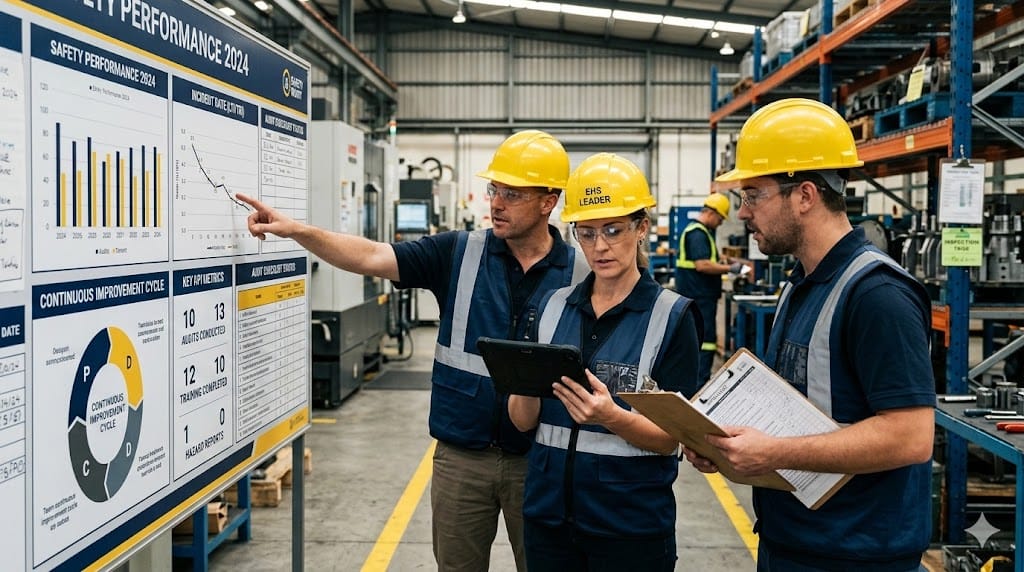
- Lagging Indicators: While traditional metrics such as Total Recordable Incident Rate (TRIR), Days Away, Restricted, or Transfer (DART) rate, Lost Time Rate (LTR), workers’ compensation costs, and regulatory fines remain important, they offer a retrospective view.
- Leading Indicators: Forward-looking metrics are crucial, including near-miss reporting frequency, safety audit scores, training completion rates, hazard identification rates, employee safety perception surveys, and proactive safety intervention counts.
- Internal and External Audits: Regularly assessing compliance, the effectiveness of management systems (e.g., ISO 45001), and identifying opportunities for strategic improvement.
- Stakeholder Feedback: Systematically gathering input from employees, union representatives, senior management, and regulatory bodies to gauge perception and effectiveness.
- Benchmarking and Best Practices: Comparing EHS performance against industry leaders and implementing continuous improvement cycles (Plan-Do-Check-Act) to drive perpetual enhancement. Our data confirms that companies with robust EHS programs consistently outperform competitors in safety metrics. This rigorous evaluation framework directly informs executive decisions regarding when is it time to upgrade or replace your current EHS leadership based on performance indicators?
The strategic imperative for exceptional EHS leadership in US manufacturing cannot be overstated. It is a critical investment in your organization’s future, safeguarding assets, people, reputation, and ultimately, shareholder value. JRG Partners stands ready to partner with your executive team in architecting a talent strategy that ensures your EHS function is not merely compliant, but a powerful engine for innovation, resilience, and sustained competitive advantage.
Critical Considerations for Executive Leadership:
- What are the most challenging aspects of integrating a new EHS leader into an established manufacturing operation, particularly concerning existing cultural dynamics?
- How can EHS leaders effectively communicate the tangible ROI of safety investments to executive leadership, translating risk mitigation into financial performance?
- What are some emerging EHS risks in the US manufacturing sector, such as climate change adaptation or advanced materials handling, that future leaders must be proactively prepared to address?
- Should EHS leadership be centrally orchestrated for consistent policy or strategically decentralized for localized agility in a multi-site US manufacturing company?
- What pivotal role does an EHS leader play in fortifying a manufacturing facility against the operational and supply chain impacts of climate change?
Looking for a specialized executive search partner?
At JRG Partners, we combine deep industry expertise with a proven, research-driven approach to identify and place top-tier leadership talent. Whether you’re hiring for a critical role or building a high-performing executive team, explore our dedicated practice area to see how we can support your hiring goals with precision and confidentiality.

Tanya Gallardo
Managing Director, Executive Search & AI Talent Strategy
Tanya Gallardo is the Managing Director of Executive Search & AI Talent Strategy at JRG Partners, leading C-suite and Board engagements across key growth sectors including Technology, Financial Services, and Manufacturing.
With over 18 years of experience specializing in disruptive technology leadership, Tanya is recognized as a leading authority on talent architecture for future-focused executive roles, such as the Chief AI Officer (CAIO) and Chief Digital Officer (CDO). Her expertise lies in accurately assessing the cultural fit and technical depth required to ensure a high return on investment (ROI) for critical leadership appointments.
Prior to her role at JRG Partners, Tanya held senior roles directing global talent acquisition strategies at a major publicly-traded technology firm, advising on organizational design and succession planning for emerging executive functions. She is a recognized speaker and contributor to industry events, sharing data-driven insights on executive compensation, leadership development, and the measurable business impact of C-suite talent.
