


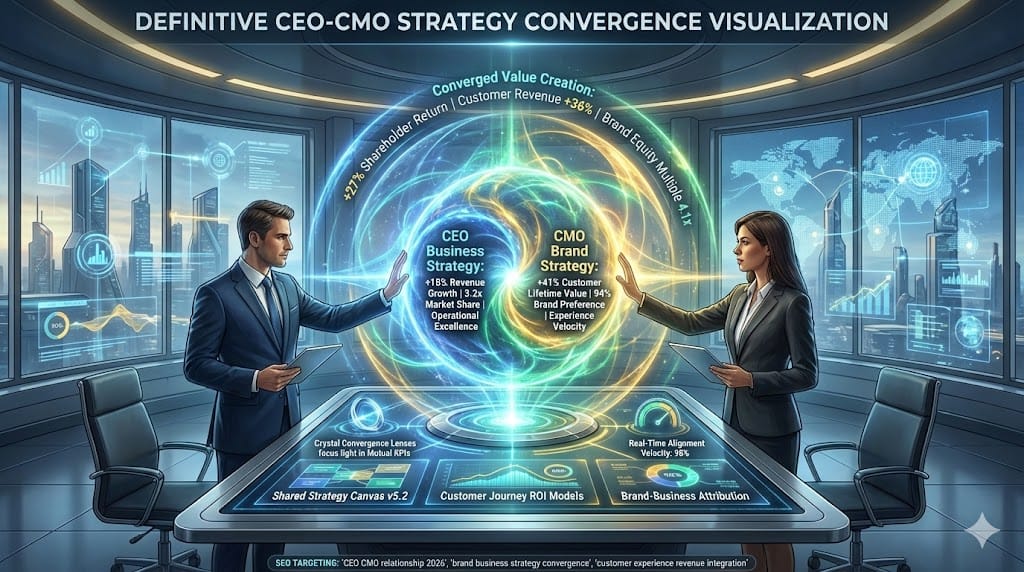
At JRG Partners, we observe a fundamental and irreversible transformation within the C-suite, particularly concerning the dynamic between the Chief Executive Officer (CEO) and the Chief Marketing Officer (CMO). This isn’t merely an evolution of functional roles; it represents a strategic imperative for unified leadership that directly impacts valuation and market longevity. The traditional chasm separating brand development from core business operations is rapidly collapsing, driven by relentless digital disruption and hyper-empowered consumers.
In this new paradigm, the very essence of market identity—the brand—has ascended from a supportive function to a primary driver of revenue and a critical strategic asset influencing the Profit & Loss (P&L) statement. This pivotal shift directly addresses the question: Why has brand strategy become CEO-level responsibility? It’s because brand now dictates market access, customer loyalty, and ultimately, shareholder return in the US competitive landscape.
Key Strategic Imperatives for US Executive Leadership
- The historical demarcation between market identity creation (CMO’s purview) and core corporate direction (CEO’s domain) is dissolving, propelled by digital transformation and heightened consumer expectations.
- Brand management is no longer a peripheral support activity but a critical engine for revenue generation and a foundational strategic asset, directly influencing financial outcomes.
- US CEOs are increasingly held accountable for the entirety of customer engagement outcomes, recognizing their direct correlation to market share growth and long-term shareholder valuation.
- Integrated planning, mutually aligned key performance indicators (KPIs), and robust cross-functional governance structures are indispensable for translating brand promises into tangible corporate success.
- Future enterprise success critically depends on executive leaders who can adeptly harness advanced data analytics and artificial intelligence to craft personalized experiences and maintain a singular, cohesive brand-business narrative, particularly during periods of market instability.
Introduction: The Strategic Imperative for Unified Leadership
Historically, marketing initiatives were often viewed as a cost center, a necessary expenditure for promotion, while core business operations were unequivocally positioned as the engine for profit generation. This outdated perspective no longer holds true in the contemporary US market. The pervasive influence of digital disruption, coupled with hyper-transparent markets and a customer base that possesses unprecedented leverage, mandates a single, cohesive corporate narrative and an integrated operational strategy.
The symbiotic relationship between the CEO and CMO has therefore become central to securing competitive advantage and ensuring long-term market sustainability. JRG Partners consistently advises Boards that ignoring this convergence is a direct threat to fiduciary duty and value realization in today’s environment.
Brand Evolution: From Support Function to Revenue Driver
The role of brand has evolved dramatically. It has transcended mere advertising and promotional activities to encompass sophisticated brand equity management and strategic asset stewardship. A robust and well-managed market identity commands pricing power, cultivates deep customer loyalty, and accelerates market share expansion. There is a palpable and direct correlation between the vitality of a brand and the overall enterprise value.
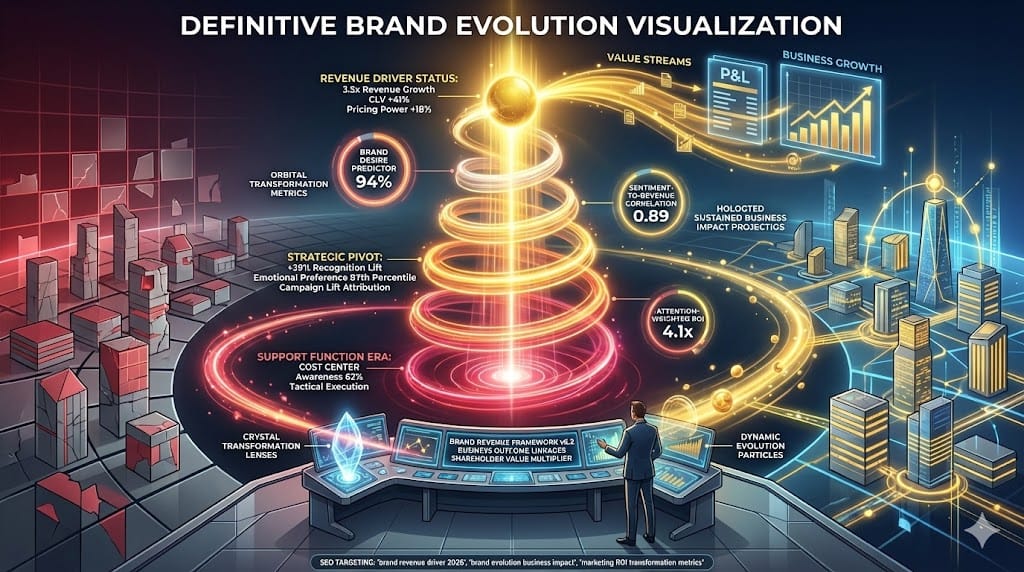
Research indicates that companies cultivating strong brands demonstrably outperform their rivals; specifically, they achieve an average of 20% in stock returns over 10 years. In the US context, leveraging brand as a key mechanism for global market penetration while simultaneously ensuring localized relevance is paramount for diversified growth. This strategic elevation of brand directly informs what P&L impact data proves marketing’s strategic elevation within leading organizations.
CEO Accountability for Customer Experience Outcomes
In today’s saturated US markets, the customer experience (CX) stands as the ultimate differentiator. CX is no longer relegated to a departmental function within marketing or customer service; it has become a board-level imperative, a core component of executive oversight. A seamless and intuitive customer journey is intrinsically linked to heightened customer lifetime value (CLV), significant churn reduction, and fervent brand advocacy. The strategic risks associated with fragmented customer interactions are substantial and can erode market trust rapidly.
Concerningly, studies reveal a significant perception gap: 80% of CEOs believe they deliver a superior customer experience, while only 8% of their customers agree. From a US and global perspective, exceptional CX is a critical determinant in market adoption and distinguishing oneself from competitors across varied geographic segments.
Joint Strategy Development: Brand Meets Business
The era of siloed strategic planning is obsolete. Forward-thinking organizations are now moving towards integrated brand-business roadmaps. Brand strategy must intrinsically inform critical business decisions such as market entry, innovative product development, and strategic Mergers & Acquisitions (M&A). Conversely, overarching business objectives must dictate brand positioning, strategic messaging, and investment priorities. The co-creation of an enterprise’s vision, mission, and strategic priorities is essential.
While this integration is critical, a recent analysis indicates that only 35% of companies report truly integrated strategic planning between marketing and the C-suite. Ensuring global brand consistency while allowing for judicious local strategic adaptations based on market specificities is a delicate but necessary balance. This necessitates considering how should CEOs restructure decision rights with CMOs to facilitate truly integrated planning.
Shared KPIs Linking Marketing to P&L Impact
The transition from “vanity metrics” (e.g., social media likes, impression counts) to quantifiable financial performance indicators is a non-negotiable step. Key metrics for this converged leadership include, but are not limited to, Return on Investment (ROI) on marketing spend, customer acquisition cost (CAC), customer lifetime value (CLV), brand equity valuation, market share growth, and pipeline generation directly attributable to brand initiatives. Implementing shared dashboards and integrated reporting structures that seamlessly unify marketing performance with financial outcomes is paramount.
Leading enterprises are 2x more likely to align marketing KPIs with overall business objectives. This strategic alignment of resource allocation, driven by data-based insights, ensures every marketing dollar contributes directly to the bottom line. This addresses precisely what shared KPIs align CMO efforts with CEO business goals for maximum strategic impact.
Cross-Functional Governance and Decision Rights
To truly embed this convergence, new operating models are indispensable. This includes the establishment of dynamic brand councils, integrated leadership teams, and cross-functional working groups. A clear delineation of decision-making authority for brand-business initiatives across all departments (e.g., product innovation, sales enablement, finance, human resources) is vital. Breaking down long-standing organizational silos is critical to fostering deep collaboration and cultivating a unified organizational culture that champions the customer-centric ethos.

The active role of executive sponsorship is invaluable in driving this cultural transformation. JRG Partners often assists Boards in designing these new governance structures, advising on which governance models create effective CEO-CMO partnerships to optimize enterprise performance and foster a culture of accountability and innovation.
Talent Requirements for Converged Leadership
The emergence of the “hybrid” leader is a defining characteristic of this new era. Modern CMOs require not only profound marketing expertise but also robust business acumen, financial literacy, and a comprehensive understanding of operational impact. Conversely, CEOs must cultivate deeper brand literacy and enhanced customer empathy. Developing these cross-functional skills within existing leadership teams and throughout the organization is a strategic imperative. Industry data suggests that 70% of companies struggle to find candidates with the blend of creative and analytical skills needed for modern marketing roles.
JRG Partners specializes in identifying and attracting this rare talent, offering strategic executive search services for future-ready executives who can bridge the gap between creative brand vision and hard business results in the demanding US market. We identify what talent profiles define converged brand-business leaders who can excel in this complex environment.
Crisis Response: Unified Brand-Business Voice
In a digital-first, hyper-connected world, the impact of crises is amplified manifold. During such turbulent times, the critical need for a singular, consistent voice that simultaneously addresses brand reputation and ensures business continuity cannot be overstated. Proactive planning is essential, involving cross-functional crisis management teams with clearly defined roles and robust communication protocols.
The objective is twofold: to protect brand trust while diligently mitigating financial and operational risks. JRG Partners emphasizes to clients the necessity of having executive teams that can seamlessly coordinate, especially when navigating diverse cultural sensitivities and complex regulatory environments during a global crisis. Understanding how do CEO-CMO teams navigate brand crises together is paramount for protecting enterprise value.
Future Convergence Accelerated by AI Personalization
Artificial Intelligence (AI) is rapidly accelerating this convergence, enabling the delivery of hyper-personalized customer experiences at unprecedented scale, thereby blurring the traditional lines between marketing and product/service delivery. Leveraging AI for advanced predictive analytics in brand strategy, precise market trend identification, and astute business forecasting is now a strategic necessity. Data has emerged as the new strategic currency, fostering a seamless feedback loop between brand perception and quantifiable business performance. Projections indicate that AI in marketing is set to grow to over $100 billion by 2030.

This rapid advancement necessitates careful consideration of ethical implications, robust data governance frameworks, and the imperative for responsible AI implementation. Strategic advantage will undeniably accrue to those organizations that harness AI-powered insights for superior market penetration andsustained customer retention. This leads us to critically examine how will AI-driven personalization reshape CEO-CMO dynamics in the coming years.
FAQs for the Board
Here, we address common inquiries regarding this critical executive transformation, offering insights informed by our extensive experience in strategic executive search across the US market.
- What is the primary benefit of a converged CEO-CMO relationship?
The paramount benefit is the cultivation of a unified, intensely customer-centric business strategy that simultaneously elevates brand equity and boosts financial performance, leading directly to sustained competitive advantage and undisputed market leadership. - How can a CEO effectively measure the impact of brand strategy on P&L?
CEOs can robustly measure impact through shared, financially-linked KPIs such as customer lifetime value (CLV), customer acquisition cost (CAC), brand equity valuation, verifiable market share growth, revenue generated per customer, and the direct ROI of integrated marketing campaigns, all meticulously tied to tangible financial outcomes. - What are the biggest challenges in achieving this convergence?
Key challenges encompass overcoming entrenched organizational silos, navigating resistance to change, establishing common performance metrics, reconciling disparate departmental priorities, and cultivating essential new skill sets among both executive leadership and broader teams. - What new skills does a modern CMO need to develop to thrive in this converged environment?
Modern CMOs must cultivate strong business acumen, acute financial literacy, advanced data analytics proficiency, a deep understanding of operational frameworks, cross-functional leadership capabilities, and a profound grasp of customer experience design, all complementing their traditional marketing expertise. JRG Partners actively recruits and advises on developing such hybrid executive leadership profiles. - How does AI specifically enhance this new CEO-CMO relationship?
AI significantly enhances this relationship by delivering data-driven insights for hyper-personalization, enabling predictive analytics for advanced strategic planning, automating seamless customer experience delivery, and providing objective measurement of both brand and business performance, thereby facilitating more informed and synergistic joint decision-making.
Conclusion: The Strategic Imperative for 21st-Century Leadership
The convergence of the CEO and CMO functions is far more than an organizational trend; it represents a fundamental recalibration of how businesses must compete and thrive in the US and global economy. A unified brand-business strategy is now the indispensable cornerstone of resilient, customer-centric organizations. JRG Partners strongly urges all executive leaders and Board members to proactively embrace this profound convergence. By doing so, they will not only secure their market position but also ensure sustainable growth and long-term shareholder value in an increasingly complex and competitive global landscape. Our role at JRG Partners is to ensure your executive search and talent architecture are precisely aligned with this future, positioning cross-functional visionaries who can bridge the gap between commercial execution and long-term corporate effectiveness.

Tanya Gallardo
Managing Director, Executive Search & AI Talent Strategy
Tanya Gallardo is the Managing Director of Executive Search & AI Talent Strategy at JRG Partners, leading C-suite and Board engagements across key growth sectors including Technology, Financial Services, and Manufacturing.
With over 18 years of experience specializing in disruptive technology leadership, Tanya is recognized as a leading authority on talent architecture for future-focused executive roles, such as the Chief AI Officer (CAIO) and Chief Digital Officer (CDO). Her expertise lies in accurately assessing the cultural fit and technical depth required to ensure a high return on investment (ROI) for critical leadership appointments.
Prior to her role at JRG Partners, Tanya held senior roles directing global talent acquisition strategies at a major publicly-traded technology firm, advising on organizational design and succession planning for emerging executive functions. She is a recognized speaker and contributor to industry events, sharing data-driven insights on executive compensation, leadership development, and the measurable business impact of C-suite talent.
