


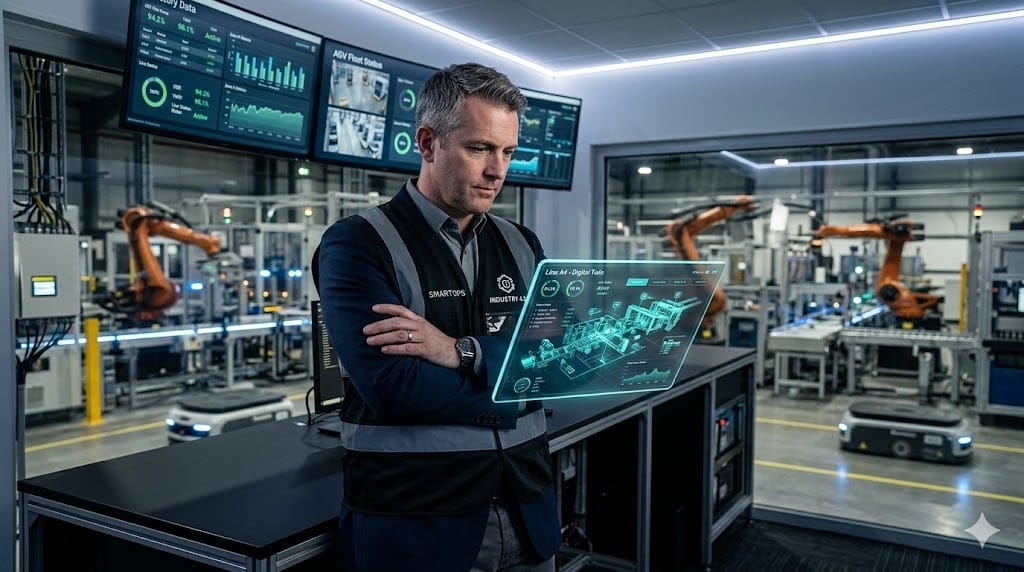
The landscape of US manufacturing is undergoing an unprecedented transformation, driven by the rapid advancements of Industry 4.0. This paradigm shift necessitates a critical re-evaluation of leadership competencies, particularly for those at the helm of production and operational excellence.
The question now for discerning boards and C-suite leaders is profound: What specific skills distinguish a smart-factory-ready manufacturing executive from a traditional operations leader? At JRG Partners, a premier US-based executive search firm, we are consistently engaged in sourcing and placing top-tier talent equipped to navigate this complexity. Our proprietary research indicates that conventional operational experience, while foundational, is no longer sufficient to unlock the full value realization potential of connected enterprises.
Key Takeaways for Future-Ready Manufacturing Leadership
- The archetypal manufacturing plant manager is rapidly evolving into a strategic “Digital Industrialist,” a role demanding a sophisticated blend of technical acumen, strategic foresight, and nuanced human-centric leadership. This pivot is critical for sustained competitive advantage within the US industrial sector.
- Next-generation manufacturing executives must exhibit profound fluency in modern digital technologies, advanced data analytics, artificial intelligence, sophisticated automation, and the Industrial Internet of Things (IIoT). These are to be leveraged as strategic differentiators, not merely as tactical operational tools.
- An integrated, end-to-end perspective on the entire supply chain and the broader manufacturing ecosystem is imperative for optimizing global and domestic operations, thereby fostering inherent resilience against market volatility.
- Effective leadership within highly automated production environments mandates a deeply human-centric approach, emphasizing strategic workforce development, comprehensive change management, and the cultivation of an agile culture of innovation and collaborative ingenuity.
- Meticulously designing contemporary job descriptions, robust performance scorecards, and proactive succession plans is paramount for attracting, cultivating, and retaining the specialized leadership talent vital for the next industrial generation. JRG Partners excels in crafting these bespoke talent architectures.
- Measuring success in an intelligent factory environment demands a refined set of Key Performance Indicators (KPIs) that transcend traditional metrics, instead concentrating on digital asset utilization, data-driven decision-making efficacy, and agile responsiveness across the value chain.
From Plant Manager to Digital Industrialist: The Evolving Manufacturing Executive Profile
The historical manufacturing operations leader traditionally focused on micro-level operational efficiency, lean methodologies, and stringent cost control. While these remain critical foundational elements, the advent of Industry 4.0 has instigated a significant transformation. This shift demands seamless integration of Information Technology (IT) with Operational Technology (OT), leveraging real-time data streams, and managing intricately interconnected systems.
The “Digital Industrialist” emerges as a strategic orchestrator who possesses an intimate understanding of both the granularities of the factory floor and the broader strategic implications inherent in digital transformation initiatives. This new breed of leader moves beyond mere production management to orchestrating comprehensive value creation across both digital and physical realms, directly impacting shareholder returns.
- Leading industry analyses affirm that 85% of manufacturing leaders believe digital transformation is accelerating, but only 15% feel their current workforce possesses all the necessary skills for a smart factory environment (World Economic Forum, 2023). This represents a significant talent gap that JRG Partners is actively addressing.
Core Competency 1: Digital and Data Fluency in Smart Factory Environments
A fundamental requirement for the modern manufacturing executive is a deep understanding of the digital thread – the integrated data flow from product design through engineering, production, and ongoing maintenance. This necessitates moving beyond basic descriptive analytics to harness predictive and prescriptive insights. Strategic deployment and astute management of cloud computing and edge intelligence solutions are critical.
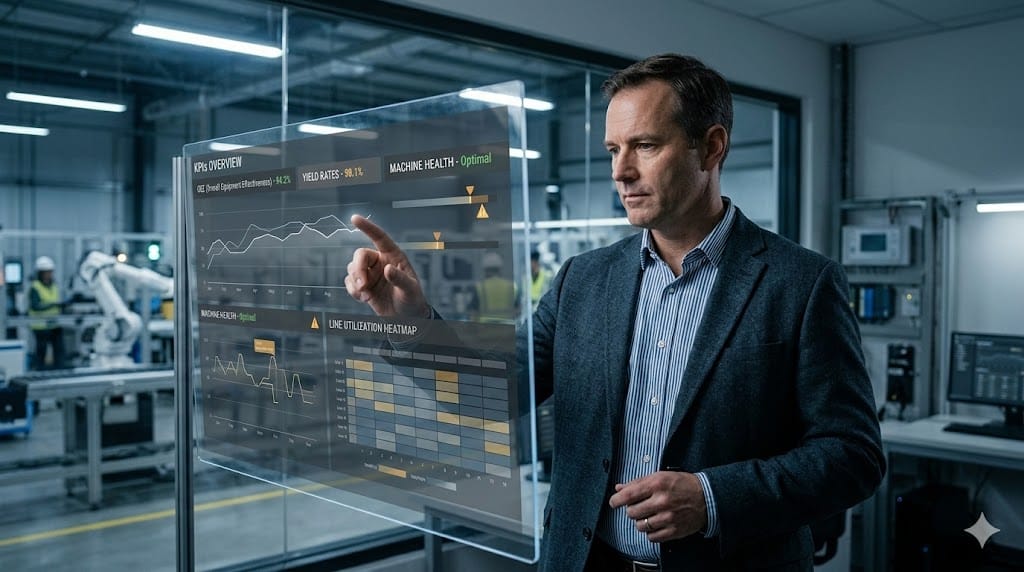
Furthermore, robust cybersecurity protocols for OT environments are non-negotiable, safeguarding critical infrastructure from increasingly sophisticated digital threats. The application of digital twin technology for simulating and optimizing complex operations in a virtual environment offers immense potential for efficiency gains and risk mitigation.
- Leading research indicates that companies leveraging advanced analytics in manufacturing report up to a 10-15% improvement in operational efficiency and a 5-8% reduction in production costs (Deloitte, 2022). This underscores the financial imperative for executive data fluency.
- How fluent in data, analytics, and IIoT must modern manufacturing executives be to make effective decisions? Our assessment is that a strategic leader must possess not just conceptual understanding but also the practical ability to interrogate data, understand algorithmic outputs, and translate complex insights into actionable business strategies.
Core Competency 2: AI, Automation, and IIoT as Strategic Levers, Not Just Tools
The manufacturing executive must view AI, automation, and IIoT not as isolated technological deployments but as integrated strategic levers for competitive advantage. This extends beyond basic automation to implementing AI for advanced predictive maintenance, enhanced quality control, and sophisticated process optimization. Strategic deployment of robotics and collaborative robots (cobots) can significantly enhance productivity and proactively address labor market challenges within the US.
Leveraging IIoT for real-time visibility connects machines, sensors, and entire systems to generate actionable intelligence. Crucially, developing robust AI ethics and governance frameworks ensures the responsible and equitable use of these advanced technologies. Identifying and pursuing new business models, such as product-as-a-service, enabled by these innovations, is a hallmark of strategic leadership.
- The global market for Artificial Intelligence in manufacturing is projected to grow from $2.2 billion in 2021 to $16.8 billion by 2029 (Fortune Business Insights, 2022), reflecting its undeniable strategic importance.
- In what ways should executives use AI and automation strategically rather than treating them as isolated tech projects? The emphasis must be on enterprise-wide integration, aligning these technologies with overarching business objectives for long-term value creation.
Core Competency 3: End-to-End Supply Chain and Ecosystem Thinking
Visibility and resilience across the entire value chain are paramount. This involves seamlessly integrating factory operations with intricate global and domestic supply chain networks. The development of digital supply chain twins offers real-time simulation and optimization capabilities for the entire value chain, enabling proactive risk management and efficiency improvements. Strategic collaboration with external partners, leveraging secure data sharing and platform ecosystems, is essential for unlocking new efficiencies.
Agility and responsiveness are critical capabilities for adapting to dynamic market changes and unforeseen disruptions with speed and precision. Integrating sustainability and circular economy principles into the core supply chain strategy is not merely a compliance issue but a strategic imperative for long-term brand equity and operational efficiency.
- McKinsey research reveals that supply chain disruptions cost companies an average of 45% of one year’s profits over a decade (McKinsey, 2022), starkly underscoring the absolute necessity for integrated, resilient supply chain strategies.
- How does end-to-end supply chain intelligence change the decisions a manufacturing leader makes day to day? It shifts focus from siloed departmental optimizations to holistic system improvements, enabling predictive interventions and strategic sourcing that benefit the entire enterprise.
Core Competency 4: Human-Centric Leadership in Highly Automated Plants
Even in increasingly automated and data-driven environments, human leadership remains not just relevant but profoundly critical. A primary responsibility of the modern manufacturing executive is workforce transformation – strategically upskilling and reskilling employees for novel roles within digital factories. Expert change management and cultural adaptation are essential for guiding teams through technological shifts and embedding new, collaborative ways of working. Fostering harmonious human-robot collaboration, designing environments where human expertise and intelligent machines work synergistically, is a key challenge.
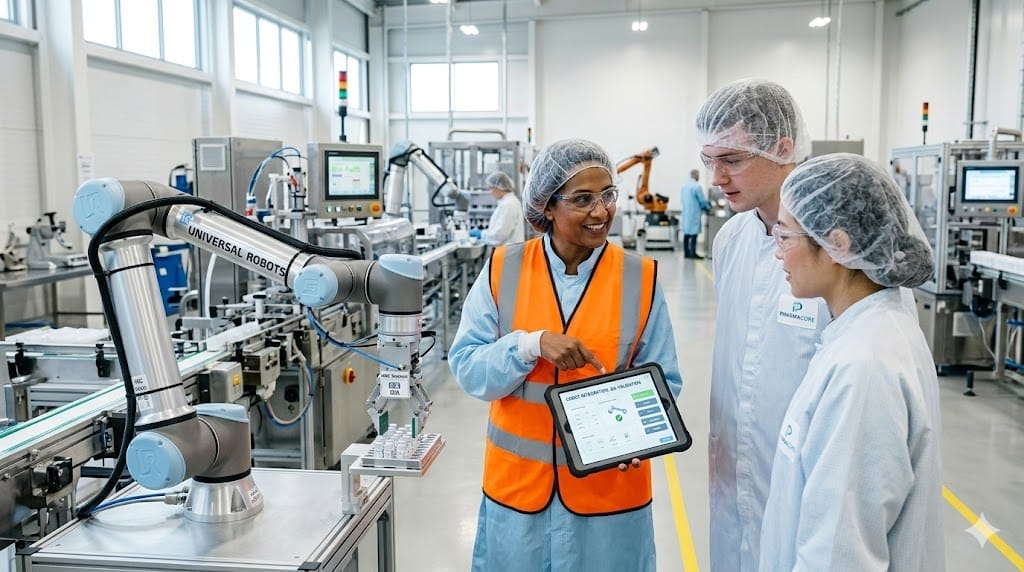
Prioritizing employee engagement and well-being, while addressing the psychological impacts of automation, demonstrates empathetic leadership. Building diverse and inclusive teams is paramount for attracting and retaining the varied skill sets necessary to navigate complex challenges and foster a truly innovative environment.
- Leading analyses indicate that only 30% of manufacturers feel highly prepared to address the skills gap driven by automation (PwC, 2023), highlighting a critical need for human-centric leadership and strategic investment in workforce development programs.
- What leadership behaviors keep people engaged and reskilled in highly automated, sensor-rich factories? Empathy, transparent communication, investment in continuous learning pathways, and fostering a culture that celebrates both human ingenuity and technological advancement are key.
Designing the New Manufacturing Executive Job Description and Scorecard
For boards and CHROs to effectively attract and evaluate talent, the traditional manufacturing executive role profile requires a fundamental rewrite. How should boards and CHROs rewrite the manufacturing executive role profile and assessment rubric for Industry 4.0 and beyond? The answer lies in incorporating new key responsibilities such as digital strategy formulation, technology roadmap execution, robust data governance, complex ecosystem integration, and proactive talent development. Required skills must now encompass sophisticated strategic thinking, deep digital literacy, adept change leadership, cross-functional collaboration capabilities, and elevated emotional intelligence.
Performance metrics must evolve beyond traditional Overall Equipment Effectiveness (OEE) to include measures like digital adoption rate, data utilization efficacy, innovation pipeline velocity, cybersecurity posture strength, and workforce digital readiness. Developing comprehensive competency frameworks that define the ideal behaviors and skills for these advanced manufacturing leaders is crucial. JRG Partners specializes in assisting organizations in crafting these compelling roles, which are designed to appeal to a new generation of leaders who seek impactful, technologically advanced challenges.
Rethinking Succession: How to Build and Buy Next-Gen Manufacturing Leaders
Proactive succession planning is a fiduciary duty for boards. What development paths, rotations, and upskilling programs best create this new kind of manufacturing executive internally? Internal development programs, specifically designed to accelerate high-potential employees through digital upskilling and bespoke leadership training, are vital. Implementing mentorship and even reverse mentorship programs, pairing experienced leaders with digitally native talent, can foster invaluable knowledge transfer.
External recruitment strategies must expand beyond traditional industrial backgrounds to target candidates with strong credentials from tech, software, and data science sectors. For critical leadership gaps, JRG Partners’ proven executive search methodology effectively identifies and recruits these highly specialized individuals. Cultivating robust partnerships with academia and industry consortia can build sustainable pipelines for future talent. Ultimately, embedding a continuous learning culture, where lifelong learning is a core organizational value, is non-negotiable for sustained competitive advantage.
- Gartner research indicates that over 70% of organizations predict a significant leadership gap in critical areas over the next five years (Gartner, 2023), emphatically emphasizing the urgency for proactive succession planning in US manufacturing.
Measuring Impact: Smart Factory KPIs for Modern Manufacturing Executives
To truly assess the effectiveness of the “Digital Industrialist,” a new suite of Key Performance Indicators (KPIs) is essential. These metrics go beyond historical operational benchmarks to gauge the strategic impact of digital transformation. Examples include:
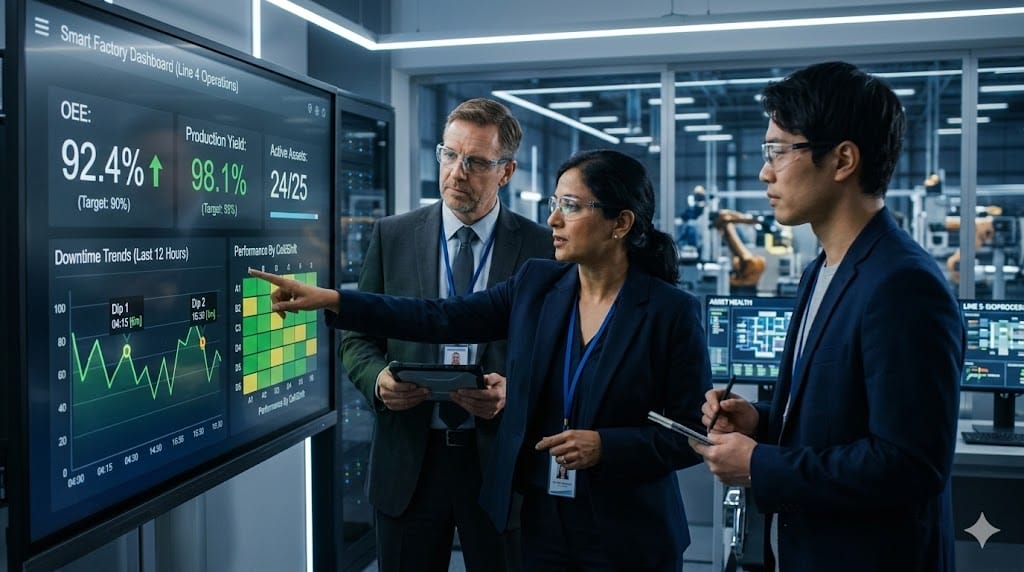
- Digital Asset Utilization Rate: Tracking the efficiency and Return on Investment (ROI) of digital investments across the factory floor.
- Data-Driven Decision Rate: Quantifying the percentage of critical decisions made based on real-time data analytics and actionable insights, moving away from intuition alone.
- Innovation Cycle Time: Measuring the velocity from idea generation to the successful implementation of new processes, products, or digital solutions.
- Cybersecurity Resilience Score: A comprehensive metric assessing the factory’s ability to withstand, detect, and rapidly recover from cyber threats and breaches.
- Workforce Digital Readiness Index: Systematically assessing employee proficiency, adaptability, and comfort with new technologies and digital tools.
- Ecosystem Integration Score: Evaluating the seamlessness and efficiency of data and process flow with external partners, suppliers, and customers.
Best-in-class smart factories achieve up to 30% higher asset utilization and 10-12% lower quality costs compared to traditional plants (Capgemini Research Institute, 2021). These gains are directly attributable to the diligent application of advanced KPIs and the strategic oversight of next-generation executive leadership. Which business and factory performance metrics most clearly reveal whether the “new model” manufacturing executive is delivering superior results? The answer lies in a balanced scorecard that integrates financial performance with digital maturity, talent readiness, and ecosystem resilience, providing a holistic view of value creation.
Frequently Asked Questions for Boards & C-Suite
- What exactly is a “Digital Industrialist” and why is this distinction important now? A Digital Industrialist is an executive who strategically integrates advanced digital technologies (AI, IIoT, automation) with core manufacturing processes to drive value, innovation, and competitive advantage, moving beyond mere operational management. This distinction is vital as it signals a shift from managing existing processes to actively shaping future capabilities and market positions.
- How can existing manufacturing executives acquire the necessary digital skills? Through targeted executive education programs, immersive digital upskilling initiatives, strategic project leadership roles in digital transformation, and mentorship from digitally native talent.
- What are the biggest challenges in transitioning to a smart factory leadership model? Overcoming cultural resistance to change, addressing significant skills gaps, ensuring robust cybersecurity, managing complex technology integration, and redefining traditional performance metrics.
- Is human leadership still relevant in increasingly automated and AI-driven manufacturing environments? Absolutely. Human leadership is more critical than ever for strategic vision, fostering innovation, managing complex human-machine collaboration, ethical AI governance, and nurturing a resilient, adaptable workforce.
- How do these new competencies impact the overall organizational structure of a manufacturing company? They often necessitate flatter, more agile structures; cross-functional digital transformation teams; increased collaboration between IT and OT; and a stronger emphasis on roles dedicated to data science, AI strategy, and cybersecurity.
The imperative to evolve manufacturing executive leadership is undeniable for US enterprises aiming to maintain global competitiveness and drive superior shareholder value. JRG Partners remains your trusted advisor in identifying, assessing, and securing the exceptional talent required to lead this critical industrial transformation. Our deep understanding of the US talent market and extensive network ensure that your leadership architecture is robust and future-proof.
Looking for a specialized executive search partner?
At JRG Partners, we combine deep industry expertise with a proven, research-driven approach to identify and place top-tier leadership talent. Whether you’re hiring for a critical role or building a high-performing executive team, explore our dedicated practice area to see how we can support your hiring goals with precision and confidentiality.

Tanya Gallardo
Managing Director, Executive Search & AI Talent Strategy
Tanya Gallardo is the Managing Director of Executive Search & AI Talent Strategy at JRG Partners, leading C-suite and Board engagements across key growth sectors including Technology, Financial Services, and Manufacturing.
With over 18 years of experience specializing in disruptive technology leadership, Tanya is recognized as a leading authority on talent architecture for future-focused executive roles, such as the Chief AI Officer (CAIO) and Chief Digital Officer (CDO). Her expertise lies in accurately assessing the cultural fit and technical depth required to ensure a high return on investment (ROI) for critical leadership appointments.
Prior to her role at JRG Partners, Tanya held senior roles directing global talent acquisition strategies at a major publicly-traded technology firm, advising on organizational design and succession planning for emerging executive functions. She is a recognized speaker and contributor to industry events, sharing data-driven insights on executive compensation, leadership development, and the measurable business impact of C-suite talent.
