


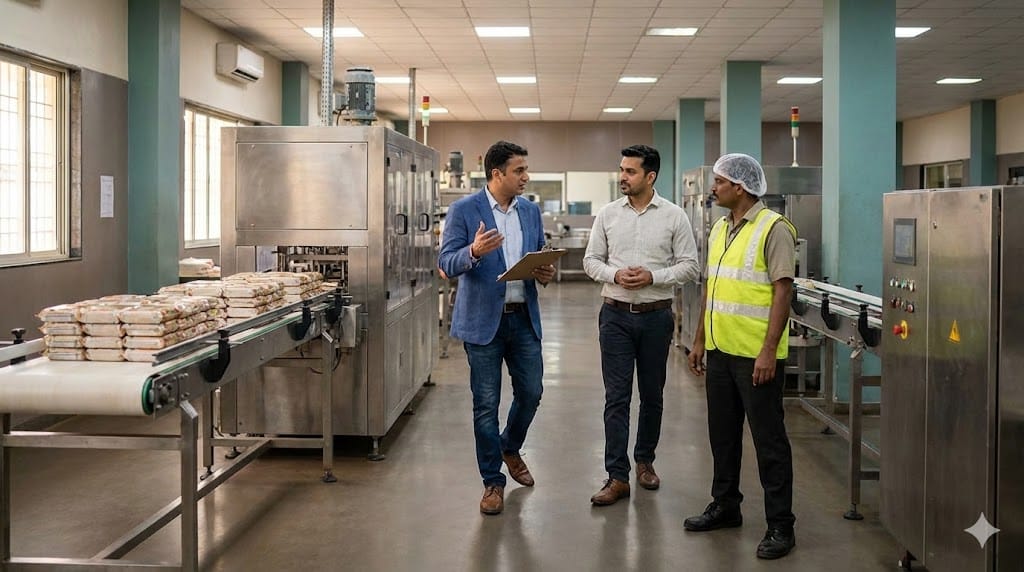
In the fiercely competitive U.S. food sector, the role of a President transcends mere operational oversight; it demands a nuanced blend of strategic foresight, operational mastery, and acute financial stewardship. For a mid-market food enterprise navigating tight margins and rapid consumer shifts, the choice of a chief executive is paramount to sustainable growth and long-term value creation.
Our comprehensive analysis delves into the core competencies that define a truly exceptional President, elucidating critical leadership attributes essential for success. Boards are increasingly scrutinizing executive candidates who can demonstrate not just leadership, but a proven track record in a highly specialized field. A key inquiry for discerning boards is: What P&L metrics define great mid-market food Presidents?
Strategic Imperatives for Presidential Leadership in Food & Beverage
A President at the helm of a U.S. mid-market food organization must possess a multi-faceted skillset, acting as both an architect of strategy and a steward of daily execution. The following key takeaways represent the bedrock of effective leadership in this dynamic environment:
- Financial Acumen in Tight Margins: A president must be a master of P&L ownership, driving profitability through meticulous cost control and strategic pricing in a highly competitive sector.
- Deep Industry & Supply Chain Mastery: Navigating the unique complexities of food production, distribution, and resilient ingredient sourcing is non-negotiable for operational stability.
- Agile Innovation & Regulatory Savvy: Success hinges on anticipating consumer trends and innovating within strict regulatory frameworks without stifling growth.
- Strategic Team & Scalability Focus: Building a high-performing team and instituting disciplined scalability discipline are crucial precursors to sustainable expansion and eventual value maximization.
P&L Ownership in Thin-Margin Reality
The imperative for robust P&L management within the food industry cannot be overstated. A President must demonstrate an unyielding commitment to optimizing every financial lever.
Mastering Cost of Goods Sold (COGS)
Effective leaders deep dive into ingredient costs, manufacturing efficiencies, and waste reduction strategies. This includes continuous process improvement and vendor negotiation for optimal raw material pricing.
Strategic Pricing & Margin Management
Implementing dynamic pricing models that balance market competitiveness with ambitious profitability targets is essential. This requires sophisticated market intelligence and a keen understanding of elasticity.
Operational Efficiency as a Profit Driver
Identifying and optimizing processes across production, logistics, and administration is crucial to reduce overhead and enhance enterprise productivity. It’s about doing more with less, without compromising quality.
Cash Flow Optimization
Proactive management of working capital, inventory levels, and accounts receivable/payable ensures liquidity and financial health. This agile approach to capital deployment is a hallmark of strong financial leadership.
Balancing Investment & Return
Making shrewd capital expenditure decisions that support growth without overleveraging is critical. Every investment must be justified by a clear return on investment (ROI) projection.

Category Expertise: Food Industry Navigation
Beyond general business acumen, a President must possess profound category expertise specific to the food sector.
Understanding Food Product Life Cycles
Recognizing the distinct stages from ideation to obsolescence for various food items informs strategic product development and market positioning.
Decoding Consumer Preferences
Deep insights into dietary shifts, health trends, convenience demands, and ethical consumption patterns are vital for market relevance. What consumer trend navigation distinguishes category leaders? It’s the ability to not just react, but proactively shape offerings around evolving tastes and values.
Navigating Retailer Dynamics
Building strong relationships with major grocery chains, specialty retailers, and foodservice distributors is paramount for market access and growth in the US retail landscape.
Competitive Landscape Analysis
Monitoring direct and indirect competitors, private label threats, and emerging market entrants provides strategic insights for differentiation and market share defense.
Ingredient Sourcing & Quality Standards
Profound knowledge of raw material markets, seasonality, and rigorous quality assurance protocols is non-negotiable for product integrity and brand reputation.
Supply Chain Resilience and Vendor Mastery
In an era of unprecedented global disruption, a President’s command over the supply chain is a strategic differentiator. The question often posed by boards is: Which supply chain capabilities separate category winners?
Diversified Sourcing Strategies
Mitigating risks from single-point failures, geopolitical events, or climate disruptions is essential for uninterrupted operations. This involves building a robust network of suppliers across geographies.
Strategic Vendor Partnerships
Cultivating long-term, collaborative relationships with key suppliers based on trust, quality, and reliability fosters a resilient and mutually beneficial ecosystem.
Logistics Optimization
Efficient inbound and outbound transportation, stringent cold chain management, and optimized warehousing solutions are critical for product freshness and cost control.
Inventory Management Excellence
Balancing just-in-time principles with strategic safety stock to prevent stockouts and minimize holding costs, especially for perishables, requires sophisticated forecasting and agile management.
Supply Chain Visibility & Technology Adoption
Leveraging data and advanced platforms to track goods, anticipate issues, and enhance responsiveness is crucial for maintaining a competitive edge in logistics.

Consumer Trends and Product Innovation
Staying ahead of consumer demands requires a culture of continuous innovation and market responsiveness.
Market Intelligence & Trend Forecasting
Employing advanced analytics and market research to identify nascent consumer desires and predict future trends is critical for maintaining relevance. This isn’t just about data; it’s about insight.
Agile Product Development
Rapid prototyping, testing, and iteration of new products or reformulations are necessary to meet evolving tastes and dietary preferences. A President must champion this iterative approach.
Brand Storytelling & Authenticity
Communicating the product’s value proposition, ethical sourcing, and mission effectively resonates deeply with a discerning audience. Authenticity builds lasting brand equity.
Packaging Innovation
Designing packaging that is sustainable, convenient, informative, and visually appealing is a subtle yet powerful marketing tool, influencing purchasing decisions and brand perception.
Digital Engagement & E-commerce Strategy
Connecting with consumers through online channels, social media, and direct-to-consumer initiatives expands reach and builds direct relationships. A President must champion a robust digital transformation strategy.
A President’s ability to navigate these dynamics while safeguarding profitability is complex. Therefore, a critical question for leadership consideration is: How should Presidents balance innovation with margin protection? It requires an intricate dance between investment in future growth and disciplined financial stewardship.
Regulatory Compliance Without Growth Stifling
The U.S. food industry operates under a stringent regulatory umbrella. A President must navigate this landscape with expertise and foresight.
Proactive Food Safety Leadership
Implementing stringent HACCP plans, GFSI standards, and robust recall readiness protocols is fundamental. Food safety is not merely compliance; it’s a foundational responsibility and a brand protector.
Labeling Accuracy & Transparency
Ensuring full compliance with FDA, USDA, and other relevant labeling requirements is essential to avoid costly penalties and maintain consumer trust.
Environmental & Sustainability Governance
Adhering to evolving regulations around waste, water usage, and carbon footprint reflects corporate responsibility and anticipates future legislative shifts. Boards often ask: What regulatory instincts prevent compliance pitfalls? The answer lies in proactive engagement and anticipating future regulatory landscapes.
Quality Assurance & Control Systems
Establishing robust systems from farm-to-fork is paramount to maintaining product integrity, consistency, and a stellar brand reputation.
Navigating International Trade Regulations
Understanding import/export laws, tariffs, and certifications for global market expansion requires specialized expertise, crucial for growth-oriented enterprises considering international reach.

Team Building in Talent-Scarce Markets
Building and retaining a high-performing team is a President’s critical mandate, especially in today’s competitive talent environment.
Strategic Recruitment & Retention
Attracting and keeping skilled professionals in manufacturing, R&D, sales, and supply chain is a continuous challenge. JRG Partners specializes in identifying and securing executive talent who thrive in these demanding roles, leveraging our extensive network to present candidates who are not just qualified, but culturally aligned and future-ready.
Cultivating a Performance-Driven Culture
Fostering accountability, innovation, and a collective commitment to quality and efficiency is key. A President must be the architect of this organizational ethos.
Leadership Development & Succession Planning
Identifying and nurturing future leaders within the organization is an investment in long-term stability and continued excellence. JRG Partners provides comprehensive leadership advisory services to support Boards in structuring robust succession planning frameworks.
Employee Engagement & Welfare
Creating an environment that values employee contributions, offers competitive benefits, and promotes well-being directly impacts productivity and retention. It’s about investing in human capital.
Leveraging Technology for Workforce Management
Implementing HRIS and communication tools enhances internal operations and fosters a connected, efficient workforce. These tools are no longer optional but essential for modern workforce management.
Given the persistent challenges in talent acquisition and retention, a critical consideration for Boards is: Which leadership styles thrive in food industry talent wars? Our research indicates a blend of transformational and servant leadership, fostering empowerment and clear vision, yields superior results.
Scalability Discipline Before Hypergrowth
For mid-market companies targeting expansion, disciplined scalability discipline is non-negotiable for sustained success.
Infrastructure Investment & Optimization
Ensuring production facilities, equipment, and IT systems can support increased demand without bottlenecks is crucial. This proactive investment prevents future growth constraints.
Process Standardization
Documenting and optimizing operational procedures ensures efficiency and consistent quality at scale. Standardization is the bedrock of repeatable success.
Financial Modeling for Growth
Developing realistic projections for capital expenditures, working capital needs, and profitability during expansion phases is vital to avoid financial strain.
Market Entry Strategy
Identifying and prioritizing new markets based on clear criteria rather than opportunistic expansion ensures strategic growth and optimal resource allocation.
Technology Integration for Efficiency
Implementing ERP systems, automation, and data analytics to manage growing complexity is essential for maintaining control and visibility across expanding operations.

Exit Preparation Through Professionalization
Even for companies not immediately seeking an exit, operating with an eye towards eventual value realization through professionalization is a mark of strong leadership. A key strategic query for Boards is: How do great Presidents prepare companies for acquisition?
Robust Financial Reporting & Auditing
Maintaining transparent, accurate, and auditable financial statements is critical to satisfy potential buyers and investors, enhancing credibility and valuation.
Strong Corporate Governance
Implementing best practices in board oversight, risk management, and ethical conduct demonstrates maturity and reduces perceived buyer risk. JRG Partners advises Boards on strengthening corporate governance frameworks to maximize enterprise appeal.
Documented Processes & Intellectual Property
Systematizing operations and formally protecting recipes, brands, and proprietary technologies solidifies competitive advantages and increases intangible asset value.
Independent Management Team
Building a leadership structure that can operate effectively without the founder or current President’s daily involvement demonstrates resilience and a transferable business model.
Articulation of Value Proposition
Clearly defining and communicating the company’s competitive advantages, market position, and growth potential enhances valuation during M&A events. This narrative must be compelling and data-backed.
A Note from JRG Partners: Our role at JRG Partners extends beyond traditional executive search. As a premier US-based executive search firm, we partner with Boards and C-suite executives to define the precise talent architecture required for sustained competitive advantage.

We leverage our deep industry insights and rigorous assessment methodologies to identify Presidents who embody these critical competencies – leaders who possess the rare combination of strategic foresight, operational excellence, and an unwavering commitment to fiduciary duty. Our unparalleled success rate in C-suite placements in the food sector underscores our commitment to talent architecture that drives value realization for our clients.
Conclusion: Forging the Future of Food Leadership
The role of a President in a mid-market U.S. food company is undeniably complex, requiring a unique fusion of financial discipline, industry expertise, innovation agility, and exceptional people leadership. Success hinges on a leader’s ability to not only navigate current challenges but also anticipate future paradigms. The ability to expertly integrate these diverse demands, from optimizing cost of goods sold to pioneering new digital channels, defines the executive who will lead their organization to enduring prosperity and market dominance.
As we look towards the horizon, a provocative question arises for every forward-thinking Board: Will AI transform food Presidents’ operational roles by 2030? JRG Partners is actively researching this paradigm shift, ensuring our talent strategies remain future-proofed for the digital age.
Frequently Asked Questions
What is the most critical trait for a mid-market food company president facing economic uncertainty?
In periods of economic uncertainty, the most critical trait for a President is exceptional financial acumen coupled with agile decision-making. This means a relentless focus on cash flow optimization, stringent cost control, and dynamic pricing strategies, balanced with the courage to make decisive, data-driven choices under pressure.
How can a president effectively balance short-term profitability with long-term strategic investments in the food sector?
Achieving this balance requires clear strategic planning and robust financial modeling. A President must delineate which investments (e.g., R&D, sustainable sourcing, automation) are non-negotiable for future growth, ring-fencing capital for them while aggressively optimizing operational efficiencies and cost structures to safeguard immediate margins. Transparent communication with the Board regarding these trade-offs is paramount.
What role does digital transformation play in achieving both operational efficiency and market relevance?
Digital transformation is no longer optional. It’s crucial for both. On the operational front, ERP systems, automation, and data analytics drive efficiency across the supply chain, production, and administration. For market relevance, digital engagement via e-commerce, social media, and personalized marketing enhances consumer connection, trend insights, and direct-to-consumer opportunities.
Should a president prioritize sales growth or margin protection in a highly competitive food environment?
In a highly competitive, thin-margin sector, margin protection must be a constant priority. While strategic sales growth is essential, it should never come at the expense of profitability. A great President understands that unprofitable growth is unsustainable. Focus should be on profitable growth, achieved through strong branding, premiumization, and efficient market penetration, not just volume at any cost.
How can a president best foster a culture of innovation while maintaining stringent food safety and quality standards?
Fostering innovation alongside strict safety and quality standards requires integrated leadership. The President must instill a culture where innovation is viewed as problem-solving within regulatory boundaries. This involves dedicated R&D teams working closely with QA/QC, employing agile development cycles that incorporate safety checkpoints, and celebrating innovation that also upholds uncompromising quality and compliance.
Looking for a specialized executive search partner?
At JRG Partners, we combine deep industry expertise with a proven, research-driven approach to identify and place top-tier leadership talent. Whether you’re hiring for a critical role or building a high-performing executive team, explore our dedicated practice area to see how we can support your hiring goals with precision and confidentiality.

Tanya Gallardo
Managing Director, Executive Search & AI Talent Strategy
Tanya Gallardo is the Managing Director of Executive Search & AI Talent Strategy at JRG Partners, leading C-suite and Board engagements across key growth sectors including Technology, Financial Services, and Manufacturing.
With over 18 years of experience specializing in disruptive technology leadership, Tanya is recognized as a leading authority on talent architecture for future-focused executive roles, such as the Chief AI Officer (CAIO) and Chief Digital Officer (CDO). Her expertise lies in accurately assessing the cultural fit and technical depth required to ensure a high return on investment (ROI) for critical leadership appointments.
Prior to her role at JRG Partners, Tanya held senior roles directing global talent acquisition strategies at a major publicly-traded technology firm, advising on organizational design and succession planning for emerging executive functions. She is a recognized speaker and contributor to industry events, sharing data-driven insights on executive compensation, leadership development, and the measurable business impact of C-suite talent.
