


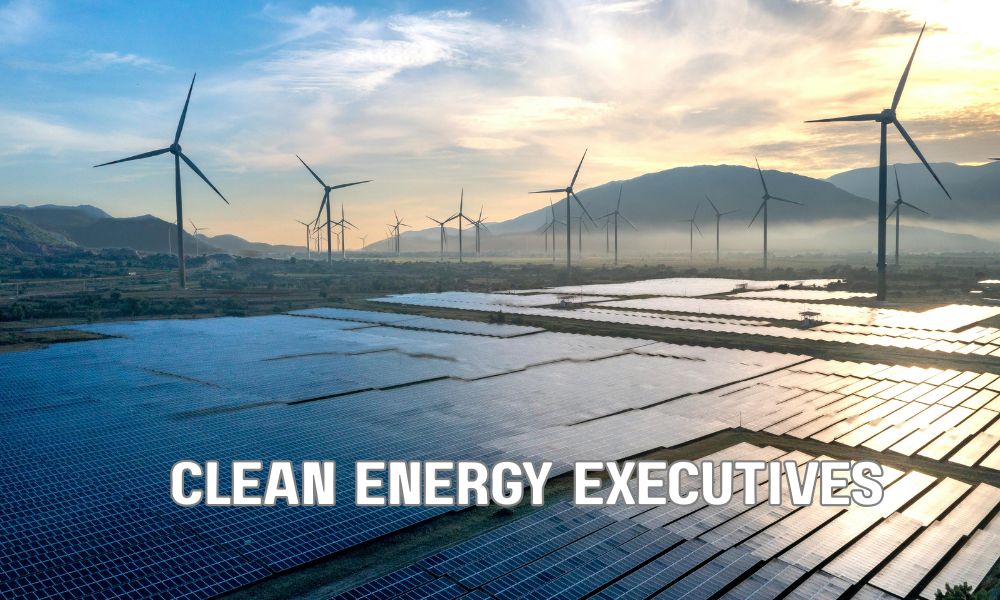
As Global Head of Research & Leadership Advisory at JRG Partners, I have ranked the top 10 most in-demand executive roles in Renewable Energy & Solar for 2026 based on our search activity and the sector’s structural shifts. This is one of the fastest-growing sectors in the economy, where developers, manufacturers, and independent power producers compete fiercely for leaders who can originate, finance, build, and operate at a pace legacy energy never demanded, and the roles below are where employer demand most exceeds available supply.
Key Takeaways: The Most Contested Renewable Energy & Solar Leadership Roles
- Chief Development Officer and Chief Financial Officer top the demand list, reflecting explosive project pipeline growth strains the supply of leaders who can take ass.
- Technology and transition-specific roles now compete directly with traditional operational seats for board attention.
- Most of these roles require candidates who are currently employed and must be recruited through direct, retained approach.
- Compensation for the scarcest roles is being pulled upward as employers bid against adjacent sectors.
- Succession gaps in several of these seats are a growing board-level risk.
Why These Roles, and Why Now
Three forces concentrate demand on the seats below. Explosive project pipeline growth strains the supply of leaders who can take assets from origination through construction to operation. Policy-driven economics, tax credits, incentives, and their monetization, make finance and policy leadership decisive. Interconnection, storage integration, and grid-services complexity demand technical-commercial hybrids in short supply. The result is a leadership market where these ten roles command disproportionate board attention and search investment.
The Top 10 In-Demand Executive Roles in Renewable Energy & Solar
1. Chief Development Officer
Demand for the Chief Development Officer is driven by project origination through commercial operation date. Employers competing for this profile should expect a thin market of currently-employed candidates and price the role against the sector’s most aggressive payers rather than internal history.
2. Chief Financial Officer
Demand for the Chief Financial Officer is driven by tax equity, project finance, and capital-markets access. Employers competing for this profile should expect a thin market of currently-employed candidates and price the role against the sector’s most aggressive payers rather than internal history.
3. VP of Project Finance
Demand for the VP of Project Finance is driven by monetizing incentives and structuring capital. Employers competing for this profile should expect a thin market of currently-employed candidates and price the role against the sector’s most aggressive payers rather than internal history.
4. Chief Operating Officer
Demand for the Chief Operating Officer is driven by construction and asset operations at portfolio scale. Employers competing for this profile should expect a thin market of currently-employed candidates and price the role against the sector’s most aggressive payers rather than internal history.
5. VP of Origination
Demand for the VP of Origination is driven by PPA and offtake commercial leadership. Employers competing for this profile should expect a thin market of currently-employed candidates and price the role against the sector’s most aggressive payers rather than internal history.
6. VP of Interconnection
Demand for the VP of Interconnection is driven by grid-connection strategy and execution. Employers competing for this profile should expect a thin market of currently-employed candidates and price the role against the sector’s most aggressive payers rather than internal history.
7. Chief Technology Officer
Demand for the Chief Technology Officer is driven by storage integration and performance optimization. Employers competing for this profile should expect a thin market of currently-employed candidates and price the role against the sector’s most aggressive payers rather than internal history.
8. VP of EPC / Construction
Demand for the VP of EPC / Construction is driven by building projects on schedule and budget. Employers competing for this profile should expect a thin market of currently-employed candidates and price the role against the sector’s most aggressive payers rather than internal history.
9. VP of Asset Management
Demand for the VP of Asset Management is driven by operating-portfolio performance and returns. Employers competing for this profile should expect a thin market of currently-employed candidates and price the role against the sector’s most aggressive payers rather than internal history.
10. General Counsel
Demand for the General Counsel is driven by project contracts, permitting, and incentives. Employers competing for this profile should expect a thin market of currently-employed candidates and price the role against the sector’s most aggressive payers rather than internal history.
What This Demand Picture Means for Employers
The concentration of demand on these ten seats has three implications: searches for them take longer and cost more, cross-sector sourcing is often unavoidable, and succession planning for these roles is now a strategic priority rather than an HR afterthought. Our guide to executive search in Renewable Energy & Solar covers the sourcing and process discipline these roles require, and our Renewable Energy & Solar compensation report benchmarks what they command.
Frequently Asked Questions
- Q: What is the most in-demand executive role in Renewable Energy & Solar for 2026?
- A: The Chief Development Officer leads sector demand, driven by project origination through commercial operation date.
- Q: Which Renewable Energy & Solar roles are hardest to recruit?
- A: The technology and transition-specific seats, Chief Operating Officer and VP of Origination among them, because the required capabilities often sit outside the sector’s traditional bench.
- Q: Are these roles filled internally or externally?
- A: Increasingly externally for the transition-era seats, since the capabilities are new to the sector; traditional operational roles retain deeper internal benches.
- Q: How should employers compete for these roles?
- A: With mandate clarity, competitive and market-benchmarked packages, and a decisive process, since the strongest candidates field multiple approaches continuously.
Related Renewable Energy & Solar Resources
See also Renewable Energy & Solar executive search guide, Renewable Energy & Solar executive compensation report, Renewable Energy & Solar CEO hiring guide.

Tanya Gallardo
Managing Director, Executive Search & AI Talent Strategy
Tanya Gallardo is the Managing Director of Executive Search & AI Talent Strategy at JRG Partners, leading C-suite and Board engagements across key growth sectors including Technology, Financial Services, and Manufacturing.
With over 18 years of experience specializing in disruptive technology leadership, Tanya is recognized as a leading authority on talent architecture for future-focused executive roles, such as the Chief AI Officer (CAIO) and Chief Digital Officer (CDO). Her expertise lies in accurately assessing the cultural fit and technical depth required to ensure a high return on investment (ROI) for critical leadership appointments.
Prior to her role at JRG Partners, Tanya held senior roles directing global talent acquisition strategies at a major publicly-traded technology firm, advising on organizational design and succession planning for emerging executive functions. She is a recognized speaker and contributor to industry events, sharing data-driven insights on executive compensation, leadership development, and the measurable business impact of C-suite talent.
