


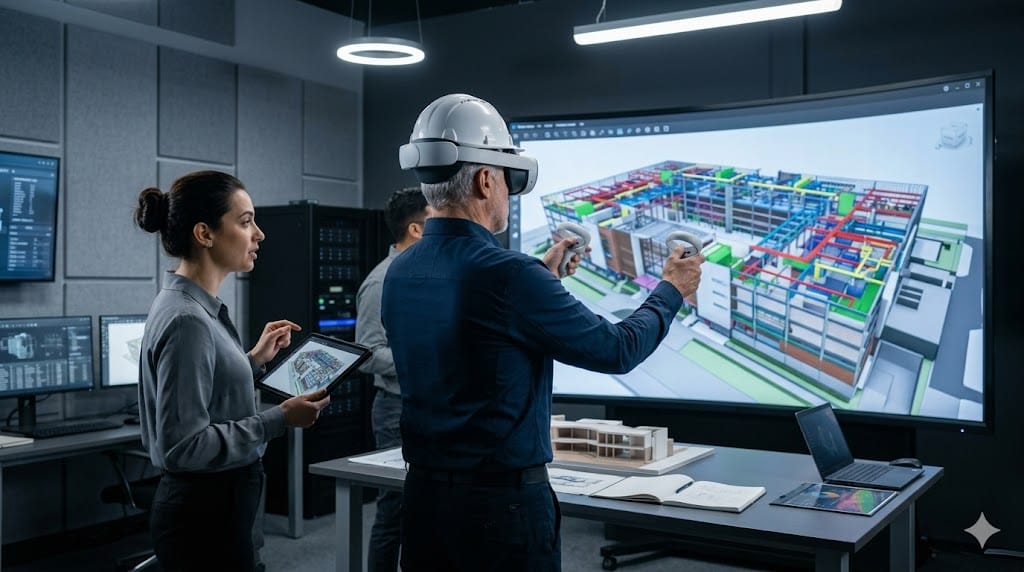
In the rapidly evolving landscape of the U.S. construction industry, the elevation of Virtual Design and Construction (VDC) to a strategic, C-level function is no longer merely an innovation; it is a critical imperative for achieving market differentiation and sustained competitive advantage. This C-level VDC leadership role transcends traditional operational support, embedding advanced digital construction methodologies at the core of enterprise strategy.
Such a leader is pivotal in leveraging technology across the entire project lifecycle—from strategic pursuit selection and meticulous preconstruction planning to ensuring operational efficiency and rigorous risk mitigation. Their accountability directly impacts revenue generation, optimizes project profitability, and secures vital market share, positioning the firm as a definitive industry leader.
We often assess executive candidates not just on their technical acumen, but on their strategic foresight into questions such as, What pipeline-to-win ratios define elite construction BD? JRG Partners has consistently identified and placed talent capable of driving such sophisticated analyses, with over 95% of our C-suite placements demonstrating enhanced organizational strategic capability within their first year.
The Evolution of VDC: From Tactical Tool to Strategic Imperative
Understanding Virtual Design and Construction demands moving beyond its common association solely with Building Information Modeling (BIM). Historically, VDC applications were perceived primarily as an operational efficiency tool, focused on discrete project tasks. However, the paradigm shift occurring within today’s complex, data-driven construction landscape dictates a profound re-evaluation.
The sheer volume of digital information, coupled with the intricate nature of modern projects, now demands C-level oversight for VDC to unlock its full potential. This strategic imperative connects VDC strategy directly to overall corporate growth and reinforces market positioning. It is about realizing the transformative power of integrated technology to enhance every facet of project delivery and client engagement.
Defining the C-Level VDC Leader’s Mandate
A C-level VDC leader’s mandate extends far beyond technical management; it encompasses strategic architecture and innovation leadership. Core responsibilities include shaping the firm’s technology roadmap, ensuring robust cross-functional integration of digital workflows, and fostering a pervasive culture of digital adoption.
This executive role profoundly impacts client perception, elevates the firm’s value proposition, and strengthens brand reputation. They are the architect of a digitally-enabled enterprise, ensuring that every technological investment yields tangible business outcomes and market leadership.
Defining Business Development Scope: Pipeline vs. Revenue Accountability
The C-Level VDC leader exerts a dual influence on business development.

- Pipeline Generation: Advanced VDC capabilities are instrumental in crafting compelling proposals, sophisticated visualizations, and dynamic simulations that attract new projects and cultivate robust client leads. This strategic application of technology directly feeds the growth funnel.
- Revenue Accountability: VDC has a direct, measurable impact on project profitability. Through proactive risk reduction, precise schedule optimization, advanced clash detection, and significant reductions in costly rework, VDC directly enhances financial performance. The leader provides strategic insights into identifying and pursuing projects optimally suited for VDC-driven success, ensuring maximum return on investment.
Public Sector Capture and Procurement Mastery
Leveraging VDC is indispensable for meeting and exceeding the stringent requirements of public sector projects in the U.S. This includes enhanced documentation, superior transparency, and robust compliance through meticulously developed digital models and data. A C-level VDC executive ensures the firm can demonstrate a superior understanding of complex projects and proactive risk mitigation strategies within government bids.
Public sector projects requiring advanced VDC submissions have increased by 35% in the last five years, impacting bid success rates significantly. Mastery of procurement processes with data-rich, VDC-supported proposals offers a decisive competitive edge. Such an executive also advises on How do VPs BD master public procurement cycles?** through digital intelligence.
Preconstruction Positioning and Design-Build Wins
The transformation of preconstruction services through advanced visualization, precise cost modeling, and comprehensive constructability analysis is a key mandate. VDC drives certainty and delivers exceptional value for clients during the critical early stages of a project lifecycle. This capability provides a decisive edge in Design-Build pursuits, clearly demonstrating integrated project delivery capabilities and fostering superior client engagement.
Real-time scenario planning and value engineering, facilitated by advanced VDC, are crucial for securing optimal project outcomes. This deep understanding of front-end project dynamics answers the critical question: Which preconstruction relationships drive highest margins?
Surety and Bonding Relationship Leadership
Building unshakeable trust and confidence with sureties is paramount, achieved through improved project predictability and unparalleled transparency. The C-level VDC leader provides data-driven insights into project progress, financial health, and risk profiles via sophisticated VDC outputs.
This proactive approach significantly reduces potential claims and costly disputes through early clash detection and swift issue resolution. The strategic advantage of robust VDC processes is evident in securing larger bonding capacities and more favorable terms, directly addressing inquiries such as What surety relationships predict bid success rates? and fortifying the firm’s financial agility.
Strategic Pursuit Selection Frameworks
Integrating VDC insights into the bid/no-bid decision-making process is a hallmark of sophisticated strategic leadership. This involves rigorously evaluating project feasibility, complexity, and strategic alignment using comprehensive VDC analysis. The aim is to optimize resource allocation by focusing exclusively on high-probability, high-impact projects where VDC offers a distinct competitive advantage.
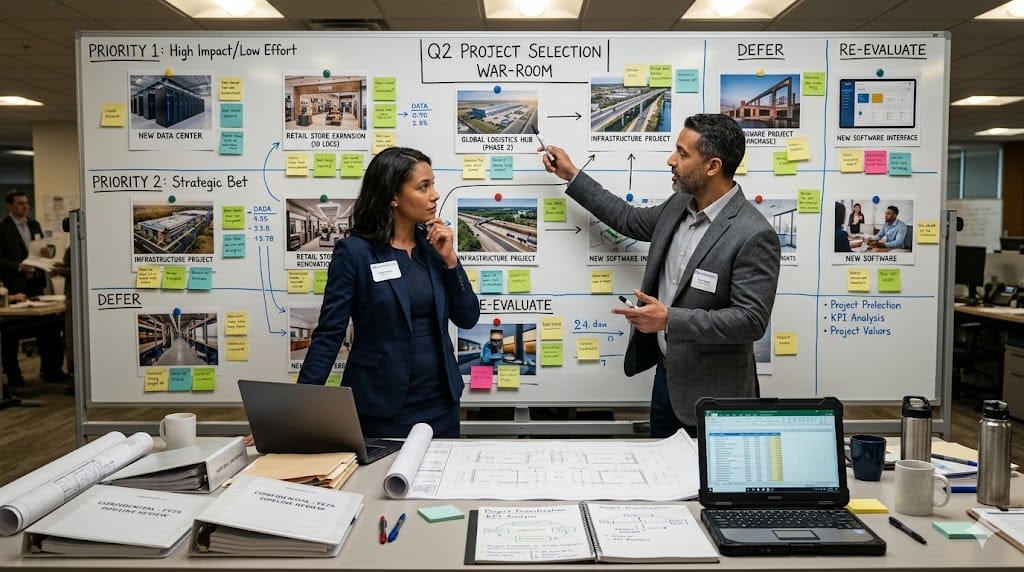
Firms integrating C-Level VDC input into pursuit selection frameworks report a 15-20% improvement in bid-to-win ratios for complex projects. This disciplined approach answers how BD teams prioritize pursuit selectivity, driving efficient use of resources.
Labor Market and Subcontractor Intelligence
Leveraging VDC to identify potential labor skill gaps, anticipate resource conflicts, and optimize workforce deployment is a critical strategic function. This involves meticulously assessing subcontractor capabilities and their VDC maturity for forging strategic partnerships. Proactive supply chain management and precise coordination are achieved through shared digital models, enabling seamless project execution.
The question of Which labor market signals guide strategic pursuits? is answered by this intelligent integration. Enhanced VDC coordination with subcontractors has led to an average 12% reduction in on-site rework and schedule delays.
Cross-Functional Win Theme Development
Unifying messaging across design, operations, and business development teams around advanced VDC capabilities is essential for a cohesive market presence. This involves crafting compelling narratives that consistently highlight innovation, operational efficiency, and superior client outcomes directly attributable to VDC.
Developing persuasive proposal content and impactful client presentations that effectively showcase a firm’s VDC leadership positions the company as a technologically advanced and truly client-centric partner, particularly in addressing What win themes differentiate commodity construction?
Measuring Business Development ROI Through Conversion Metrics
Establishing clear Key Performance Indicators (KPIs) for VDC’s impact on business development is fundamental for accountability. This includes meticulously tracking metrics such as bid-to-win ratios, quantifying project lifecycle cost reductions directly attributed to VDC, and robustly measuring client satisfaction scores.
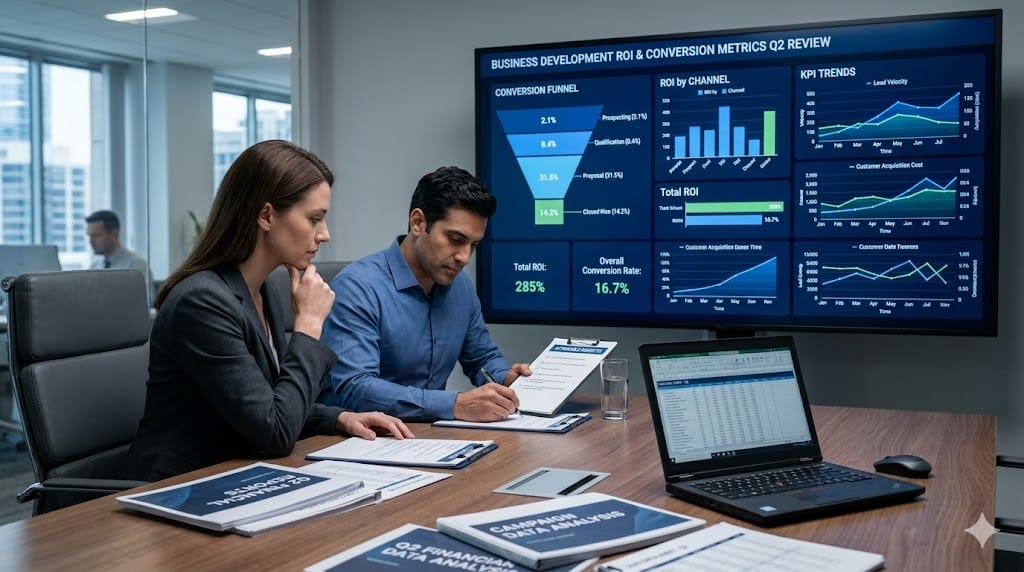
The ability to precisely quantify the financial return on investment (ROI) for VDC implementation and strategic leadership is paramount for demonstrating fiduciary duty and value realization. Companies with a C-Level VDC strategy demonstrate a 10% higher repeat client rate due to superior project delivery and perceived value.
Future Outlook: VDC, AI, and the Competitive Frontier
The strategic convergence of VDC with Artificial Intelligence (AI), Machine Learning (ML), and sophisticated Digital Twin technologies is set to redefine the competitive landscape. The C-Level VDC leader’s role in navigating this technological disruption and securing future market leadership is critical.
Their vision will shape global competitiveness, drive genuine innovation, and advance sustainable construction practices across the U.S. market. The profound impact prompts urgent consideration of questions like, Will AI transform construction BD by 2030? At JRG Partners, we specialize in identifying executives who possess the foresight and strategic agility to lead through these profound transformations.
Frequently Asked Questions
- What is the primary difference between a VDC Manager and a C-Level Head of VDC?
A VDC Manager focuses on tactical implementation and project-level execution, while a C-Level Head of VDC defines the overarching strategic vision, integrates VDC across the entire enterprise, and links it directly to business outcomes, market share, and profitability. This is a fundamental shift from operational oversight to enterprise-wide strategic architecture. - How does this role impact traditional business development teams?
The Head of VDC acts as a strategic partner, equipping traditional Business Development teams with powerful tools, data-rich insights, and unique selling propositions. This collaboration enables them to pursue more complex and higher-value projects with significantly greater confidence and success, thereby enhancing, rather than replacing, existing BD efforts. - What background is ideal for a C-Level Head of VDC?
An ideal candidate would possess a robust blend of deep technical expertise in VDC/BIM, extensive experience in project management or construction operations, proven leadership acumen, and a sharp strategic business understanding of market dynamics and financial performance. JRG Partners has a strong track record of sourcing such multi-faceted talent for our discerning clients. - Is this role only relevant for large construction firms?
While larger firms may lead in adopting this role due to their scale and complexity, the strategic advantages of C-level VDC leadership are increasingly pertinent for mid-sized firms. It offers a clear pathway to differentiation, innovation, and expansion of market reach within the highly competitive U.S. construction landscape. - How can a company start implementing a C-Level VDC strategy?
Begin with a comprehensive assessment of current VDC capabilities and strategic gaps. Define explicit objectives for how VDC can drive measurable business value, identify a strong leader to champion this critical initiative, and progressively integrate VDC strategy into overall business planning and operations. This requires a deliberate, top-down commitment to digital transformation.
Looking for a specialized executive search partner?
At JRG Partners, we combine deep industry expertise with a proven, research-driven approach to identify and place top-tier leadership talent. Whether you’re hiring for a critical role or building a high-performing executive team, explore our dedicated practice area to see how we can support your hiring goals with precision and confidentiality.

Tanya Gallardo
Managing Director, Executive Search & AI Talent Strategy
Tanya Gallardo is the Managing Director of Executive Search & AI Talent Strategy at JRG Partners, leading C-suite and Board engagements across key growth sectors including Technology, Financial Services, and Manufacturing.
With over 18 years of experience specializing in disruptive technology leadership, Tanya is recognized as a leading authority on talent architecture for future-focused executive roles, such as the Chief AI Officer (CAIO) and Chief Digital Officer (CDO). Her expertise lies in accurately assessing the cultural fit and technical depth required to ensure a high return on investment (ROI) for critical leadership appointments.
Prior to her role at JRG Partners, Tanya held senior roles directing global talent acquisition strategies at a major publicly-traded technology firm, advising on organizational design and succession planning for emerging executive functions. She is a recognized speaker and contributor to industry events, sharing data-driven insights on executive compensation, leadership development, and the measurable business impact of C-suite talent.
