



The Strategic Imperative: Elevating Developer Experience to a Board-Level Mandate In an increasingly digitized economy, where software defines competitive advantage and talent scarcity persists across the United States, the role of a dedicated Developer Experience (DX) leader has transcended mere operational optimization to become a critical component of enterprise strategy.
Category Archives: For Employers
executive recruiting, Executive Search Challenges, For Employers
How to Structure Compensation for High-Demand Tech Leaders

12
Feb
Feb
As the Global Head of Research & Leadership Advisory for , I present this strategic brief outlining the critical imperatives for executive compensation structures within the US tech sector. Navigating the fierce competition for premier talent requires a proactive, data-informed approach to reward strategy. Specifically, understanding what base salary ranges compete for CTO/CIO roles in 2026?

12
Feb
Feb
In an increasingly dynamic US corporate landscape, the strategic imperative of executive recruitment transcends mere skill matching. Our latest analysis reveals a critical differentiator in leadership success: the intrinsic mindset – specifically, the ‘Builder’ versus ‘Scaler’ orientation. Understanding this distinction is paramount for sustainable value realization.
executive recruiting, Executive Search Challenges, For Employers
From Legacy to Cloud-Native: Finding Transformation-Oriented CIOs

12
Feb
Feb
The strategic imperative for digital transformation, particularly the comprehensive shift towards cloud-native architectures, is irrevocably reshaping the competitive landscape for leading US enterprises. This monumental undertaking necessitates a Chief Information Officer (CIO) whose mandate transcends traditional technology stewardship to encompass strategic architect of profound business agility and innovation.
executive recruiting, Executive Search Challenges, For Employers
The Challenge of Retaining Top Tech Executives in a Hot Market
12
Feb
Feb
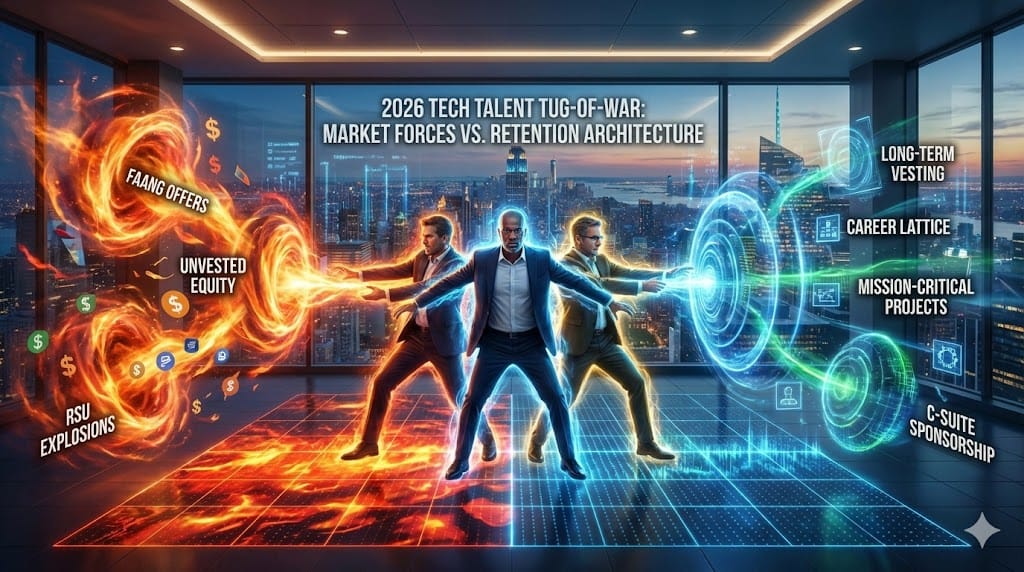
In today’s highly dynamic and competitive US technology landscape, the imperative of retaining visionary leadership talent has escalated from a mere human resources concern to a critical strategic determinant of long-term enterprise value. Boards must therefore critically evaluate how should boards structure executive retention audits?
executive recruiting, Executive Search Challenges, For Employers
Recruiting Executive Talent with Expertise in AI/ML Platforms and MLOps

12
Feb
Feb
Dear Board Members and C-Suite, it is with utmost urgency and strategic foresight that we present this analysis on the critical challenges and unparalleled opportunities in securing transformative AI/ML leadership. The accelerating pace of technological evolution dictates that enterprises must prioritize the recruitment of exceptional executive talent capable of steering complex AI/ML initiatives from concept to widespread operational impact.
executive recruiting, Executive Search Challenges, For Employers
Assessing Leadership in Agile and DevOps Transformations

12
Feb
Feb
In the rapidly evolving US corporate landscape, the distinction between successful and stalled digital initiatives often hinges on a singular, critical factor: leadership. Our proprietary research at consistently demonstrates that the caliber of executive talent steering Agile and DevOps transformations directly dictates their strategic value realization.
executive recruiting, Executive Search Challenges, For Employers
The Future of the Product/Engineering Partnership at the C-Level

12
Feb
Feb
In the relentlessly competitive US corporate landscape, the traditional C-level dichotomy between Product and Engineering functions represents an increasingly antiquated impediment to achieving true strategic agility and market leadership . This imperative extends beyond mere collaboration; it demands a deep, symbiotic integration to secure a durable competitive edge.
executive recruiting, Executive Search Challenges, For Employers, PE Recruitment Challenges
Scaling Leadership: Hiring Tech Executives for Hyper-Growth Companies

12
Feb
Feb
The contemporary US tech landscape is defined by an unparalleled velocity of change, demanding a paradigm shift in executive talent strategy, particularly for organizations navigating hyper-growth trajectories. Securing leaders who can not only manage but actively architect rapid, sustainable expansion is a fiduciary imperative for value realization.
COO Executive Recruiting, executive recruiting, Executive Search Challenges, For Employers
The Rise of the Chief Automation Officer (CAO) in Manufacturing and Logistics

11
Feb
Feb
Charting the Path to Autonomous Operations In an era defined by unprecedented technological acceleration and global competitive pressures, the strategic imperative for robust automation leadership has never been more pronounced within US enterprises. ’ ongoing market intelligence and executive search mandates reveal a critical new C-suite role rapidly taking shape: the Chief Automation Officer (CAO).