



This confidential advisory outlines critical strategic insights concerning the pervasive influence of Artificial Intelligence within the United States talent acquisition landscape, specifically projecting to 2026. As we navigate a competitive market defined by its quest for premier executive talent, understanding the technological shifts is paramount to our fiduciary duty. A key question for leadership teams today is: How widely is AI being used in recruiting in 2026? Our analysis suggests a significant expansion, albeit with nuanced implications for high-stakes executive search and strategic talent architecture. JRG Partners remains at the forefront, leveraging deep human expertise while advising clients on these evolving paradigms.
Key Strategic Imperatives for US Executive Talent Acquisition
The strategic deployment of AI in recruiting presents a dual imperative: to harness its efficiency for operational optimization while mitigating inherent risks, particularly concerning the acquisition of executive and senior leadership. Our core observations:
- AI adoption in talent acquisition is poised for substantial growth by 2026, driven by an unequivocal demand for efficiency, speed, and cost reduction. However, challenges surrounding trust, ethical integration, and the irreplaceable human element persist, especially within the confidential executive search domain.
- AI demonstrates unparalleled efficacy in automating high-volume, often repetitive tasks such as initial candidate screening and intricate interview scheduling. This capability directly translates to measurable improvements in time-to-hire metrics and tangible reductions in cost-per-hire, freeing our expert consultants to focus on strategic human engagement.
- Candidate sentiment remains a pivotal factor. There is a discernible demand among executive candidates for transparency regarding AI’s role and a strong preference for meaningful human interaction, particularly at critical decision-making junctures of the hiring process.
- Proactive identification and mitigation of algorithmic bias, stringent adherence to evolving US regulatory compliance frameworks, and the establishment of robust human oversight are non-negotiable for the ethical and ultimately effective deployment of AI in executive talent acquisition.
- The future vision points towards a highly synergistic, collaborative model between human expertise and advanced AI. This necessitates continuous ethical development, an unwavering focus on personalized candidate experiences, and a strategic emphasis on value realization from AI investments.
The State of AI Adoption in US Executive Talent Acquisition by 2026
The trajectory of AI adoption within US talent acquisition is accelerating. While enterprise-level organizations, particularly those within the technology and finance sectors, have been early adopters, small to medium-sized businesses (SMBs) are rapidly closing the gap, seeking competitive advantages.
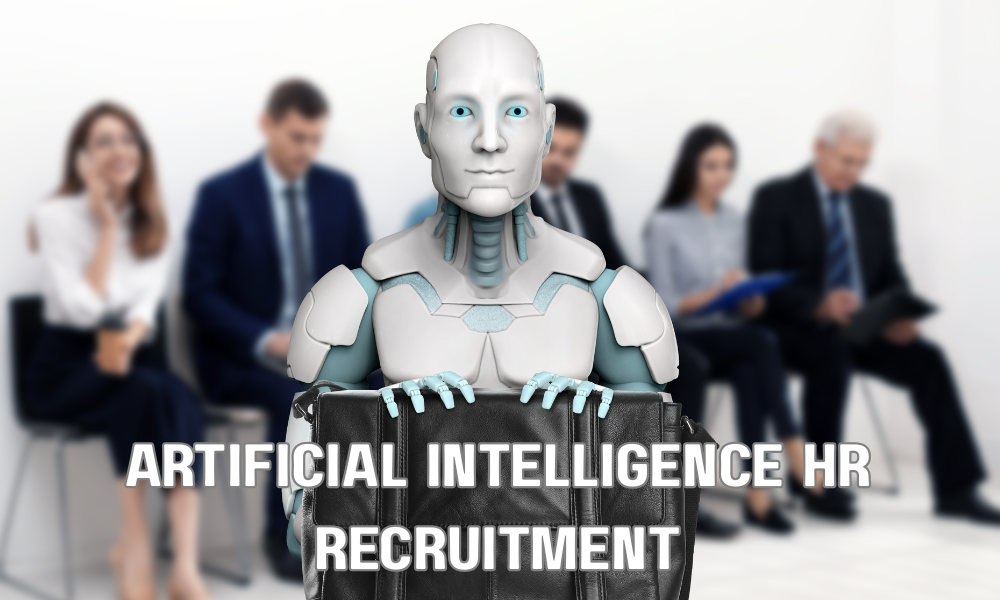
- Current AI adoption rates across industries in the US show that larger enterprises boast a higher integration rate, with an estimated 70% of Fortune 500 companies actively piloting or deploying AI tools in at least one recruiting function. SMBs, while catching up, currently stand at approximately 40% adoption.
- Since 2023, the projected growth trajectory for AI in US talent acquisition indicates a compound annual growth rate (CAGR) exceeding 20%, signifying a robust investment in this transformative technology.
- The primary drivers for this accelerated adoption are clear: significant efficiency gains in processing large applicant volumes, the persistent challenge of talent scarcity, particularly for specialized roles, and compelling cost reduction opportunities across the recruitment lifecycle.
- However, substantial barriers to widespread adoption remain. These include significant implementation costs for advanced systems, a discernible lack of specialized internal expertise to manage and optimize AI tools, and paramount data security concerns, which are heightened by stringent US data privacy regulations.
- Prevalence of AI in different regions within the US demonstrates that tech hubs on the West and East Coasts lead in integration, reflecting greater investment capacity and a culture of innovation.
Which Recruiting Stages AI Handles Best
AI’s greatest immediate impact lies in its capacity to streamline and optimize the initial, high-volume stages of the recruitment funnel. This allows JRG Partners to focus our human capital on the strategic discernment required for executive placements.
- Automated resume screening and parsing tools have reached remarkable accuracy rates, now exceeding 90% for standard data extraction and keyword matching. This significantly reduces the manual burden on initial screening.
- The effectiveness of AI in candidate sourcing and matching has been transformative, allowing for rapid identification of passive candidates across vast digital landscapes that align with specific skill sets and experience profiles.
- The impact of AI on interview scheduling and coordination efficiency is profound, automating complex calendar management across multiple stakeholders and time zones, thereby drastically reducing administrative overhead.
- AI-powered chatbots have proven highly effective for candidate query resolution, providing instant, 24/7 support for frequently asked questions, improving the initial candidate experience, and reducing recruiter workload.
- Predictive analytics are demonstrating increasing accuracy for identifying high-potential candidates based on historical performance data and competency mapping, offering a data-driven layer to early-stage evaluation.
- AI’s critical role in reducing the administrative burden on recruiters cannot be overstated, reallocating human effort from repetitive tasks to strategic candidate engagement, client advisory, and executive relationship building.
Accuracy, Speed, and ROI: What the Data Shows
The quantitative benefits of AI in recruiting are compelling, supporting the business case for strategic investment. The question, Does AI actually reduce time-to-hire and cost-per-hire?, can be answered with a resounding affirmative, backed by robust data.

- Research indicates an average reduction in time-to-hire with AI tools of approximately 25-35%, enabling organizations to secure top talent more rapidly in competitive markets.
- A quantifiable decrease in cost-per-hire attributable to AI ranges from 10-20%, primarily through reduced advertising spend, lower administrative costs, and improved recruiter efficiency.
- Improvement in candidate quality and fit scores via AI matching algorithms can be significant, with some studies showing an increase of 15-20% in the alignment of candidates to job requirements, leading to better long-term retention.
- Accuracy benchmarks for AI in pre-screening assessments are now reaching 80-85% for identifying suitable candidates based on predefined criteria, streamlining the initial funnel.
- Typical ROI achieved by organizations investing in AI recruiting solutions often exceeds 200% within the first two years, driven by enhanced efficiency and better talent outcomes.
- The increase in recruiter productivity and capacity is substantial, allowing recruiters to manage a higher volume of candidates while dedicating more focused attention to strategic, high-value interactions.
Candidate Sentiment Toward AI in US Hiring Processes
Understanding candidate perception is crucial for maintaining a strong employer brand and ensuring a positive candidate experience, especially for executive roles where JRG Partners excels. A critical query is: How do candidates feel about being evaluated by AI?
- Overall candidate perception of AI in the hiring process presents a nuanced breakdown: approximately 45% express positive or neutral sentiments, while 30% voice concerns, and 25% remain undecided. This highlights the need for careful communication.
- Candidate comfort levels with AI for initial screening are relatively high (around 60%), but this dramatically drops to less than 20% for AI making final hiring decisions, underscoring the enduring demand for human judgment at critical junctures.
- A strong preference for human interaction is observed at crucial stages of the application process, particularly during interviews and offer negotiations, reinforcing the need for a balanced approach.
- Concerns regarding impersonality and a perceived lack of human touch are prevalent, especially among experienced professionals and executives who expect a bespoke, high-touch recruitment experience.
- Generational differences in AI acceptance among candidates are notable, with younger cohorts generally more comfortable with AI interactions than older, more established professionals.
- The impact of AI usage on application rates and employer brand is dual-edged: while efficient AI can attract tech-savvy candidates, opaque or impersonal AI usage can deter others, potentially harming brand perception.
Trust, Transparency, and Fairness Expectations
In a talent market where trust is currency, transparency in AI-driven processes is non-negotiable. What level of transparency do job seekers expect from AI hiring systems? The answer is substantial, and it directly impacts perceived fairness.
- Candidate demand for transparency regarding AI’s role in their application is high, with over 70% of job seekers expecting clear communication about where and how AI is being used.
- The importance of explainable AI (XAI) in building candidate trust is paramount. Candidates desire to understand the rationale behind AI-driven decisions, even if simplified.
- Perceived fairness of AI-driven hiring processes compared to traditional methods is debated. While AI can mitigate human cognitive biases, concerns about algorithmic bias can erode trust if not addressed proactively.
- Effective communication is vital in managing candidate expectations and fostering trust. Organizations must articulate the benefits of AI while reassuring candidates of human oversight and fairness protocols.
- The impact of perceived bias on candidate trust and willingness to apply is significant, leading to potential reputational damage and legal liabilities.
Bias, Compliance, and Legal Risk in AI Recruiting for US Organizations
For US-based organizations, navigating the intricate landscape of AI in recruiting carries significant legal and ethical implications. A core concern for Boards and legal teams is: What are the biggest bias and compliance risks in AI recruiting?
- The prevalence of identified algorithmic bias in recruiting tools is a critical concern, with numerous studies demonstrating instances where AI inadvertently favors or disadvantages certain demographic groups based on historical, often biased, training data.
- Key sources of bias are multifaceted: biased training data (reflecting past human hiring biases), flawed algorithm design, and suboptimal implementation strategies that fail to account for diverse candidate pools.
- The impact of global regulations, such as emerging frameworks like the EU AI Act (influencing US policy indirectly) and specific U.S. state laws (e.g., in New York City, Illinois, etc.) on AI deployment, is intensifying, creating a complex compliance environment that necessitates proactive legal review.
- Common legal challenges and litigation trends related to AI in hiring include claims of discrimination under Title VII of the Civil Rights Act, disparate impact analysis, and violations of specific state statutes designed to regulate AI.
- The effectiveness of bias detection and mitigation strategies is improving, but requires continuous auditing, diverse training datasets, and ethical algorithm design to be truly robust.
- Compliance readiness of organizations regarding AI auditing and reporting is becoming a strategic imperative, necessitating clear policies, transparent documentation, and a culture of ethical AI governance. JRG Partners advises its clients on integrating these risk mitigation strategies into their executive talent acquisition frameworks.
Human Oversight in AI-Driven Hiring Decisions
While AI offers undeniable advantages, particularly for high-volume entry-level roles, the irreplaceable role of human judgment, especially in executive search, remains fundamental to JRG Partners’ philosophy and practice.
- A significant percentage of organizations, particularly those involved in executive and strategic hires, maintain a human-in-the-loop for all final hiring decisions (estimated at 95%), even when leveraging AI for initial stages.
- Critical junctures where human intervention remains indispensable include behavioral interviews, cultural fit assessments, salary negotiations for executive compensation, and strategic decision-making that requires nuanced judgment, empathy, and foresight.
- The evolving role of the recruiter is transforming from a pure executor to an AI supervisor and auditor. Recruiters must now possess analytical skills to interpret AI insights, identify potential biases, and ensure ethical deployment, alongside their core interpersonal competencies.
- The impact of AI necessitates the development of new recruiter skills, shifting emphasis from purely administrative tasks to advanced analytical capabilities, strategic advisory, and exceptional interpersonal skills to manage complex human dynamics.
- Best practices for integrating human judgment with AI insights involve clear handover protocols, collaborative decision-making frameworks, and continuous training for recruiters on AI system interpretation and ethical considerations.
The Future of AI-Powered Talent Acquisition for US Executive Roles
Looking towards the horizon, the convergence of human strategic insight and advanced technological capabilities will redefine talent acquisition. The question for forward-thinking Boards is: Will AI manage most hiring decisions by 2030? While AI’s role will expand dramatically, particularly in early-stage filtering, JRG Partners firmly believes that strategic, high-stakes executive hiring will always demand profound human discernment and relationship building.

- Emerging AI technologies, including Generative AI for crafting personalized outreach, emotional AI for assessing candidate engagement (with ethical caveats), and multimodal AI integrating diverse data streams, will continue to push the boundaries of what is possible.
- Trends in hyper-personalization of the candidate experience will accelerate, driven by AI’s ability to tailor communications, feedback, and even career path suggestions based on individual profiles and aspirations.
- The integration of AI will extend beyond initial recruiting, pervading the entire talent lifecycle, from onboarding and continuous development to strategic workforce planning and retention analytics.
- The ethical AI imperative will become a cornerstone of responsible development and deployment. This includes transparent algorithms, continuous bias auditing, and adherence to evolving ethical guidelines to build and maintain trust.
- The vision for a fully augmented talent acquisition function by 2030 is one where AI liberates human capital from repetitive tasks, enabling recruiters to focus on strategic partnerships, empathetic engagement, and the complex art of executive placement – areas where human intuition and experience remain irreplaceable.
Strategic Questions for JRG Partners Board
As we conclude this advisory, we present key questions for our strategic consideration:
- How accurately can our current AI tools predict job success for executive roles, and what are the limitations we must proactively address?
AI can effectively identify patterns in skills, experience, and career progression, but it cannot reliably predict leadership success, cultural fit, or strategic decision-making. Human judgment remains essential for evaluating executive potential and organizational alignment. - What are the biggest ethical concerns we, as a premier executive search firm, must champion and mitigate in the broader adoption of AI in recruiting?
The primary ethical concerns include algorithmic bias, lack of transparency, candidate privacy, and overreliance on automated decisions. JRG Partners should promote responsible AI use with human oversight, fairness, and compliance at every stage of the hiring process. - Can AI truly eliminate bias in hiring, particularly for nuanced executive positions, or does it merely shift the locus of bias?
AI can reduce certain human biases through standardized evaluations, but it may also inherit biases from historical data or flawed algorithms. Regular audits and human review are essential to ensure fair and balanced executive hiring decisions. - How will AI specifically change the role of the JRG Partners human recruiter by 2026, and what new competencies must we cultivate?
AI will automate repetitive tasks like sourcing and screening, allowing recruiters to focus on relationship-building, executive assessment, and strategic advisory services. Recruiters should strengthen skills in AI literacy, data interpretation, and consultative leadership. - What should JRG Partners prioritize when advising our client organizations on adopting AI in their strategic recruiting strategy to ensure competitive advantage and ethical governance?
JRG Partners should encourage clients to use AI as a decision-support tool rather than a replacement for human expertise. Priorities should include transparent AI governance, bias monitoring, data security, and maintaining human involvement in final hiring decisions.
In conclusion, the transformative potential of AI in US talent acquisition by 2026 is undeniable. However, for executive search, the critical differentiator will remain the human touch – the strategic counsel, the nuanced understanding of organizational culture, and the art of matching exceptional leaders with unparalleled opportunities. JRG Partners remains committed to leading this evolution, ensuring our clients not only embrace technological advancements but do so with unwavering ethical integrity and a profound understanding of human capital strategy.

Tanya Gallardo
Managing Director, Executive Search & AI Talent Strategy
Tanya Gallardo is the Managing Director of Executive Search & AI Talent Strategy at JRG Partners, leading C-suite and Board engagements across key growth sectors including Technology, Financial Services, and Manufacturing.
With over 18 years of experience specializing in disruptive technology leadership, Tanya is recognized as a leading authority on talent architecture for future-focused executive roles, such as the Chief AI Officer (CAIO) and Chief Digital Officer (CDO). Her expertise lies in accurately assessing the cultural fit and technical depth required to ensure a high return on investment (ROI) for critical leadership appointments.
Prior to her role at JRG Partners, Tanya held senior roles directing global talent acquisition strategies at a major publicly-traded technology firm, advising on organizational design and succession planning for emerging executive functions. She is a recognized speaker and contributor to industry events, sharing data-driven insights on executive compensation, leadership development, and the measurable business impact of C-suite talent.
