


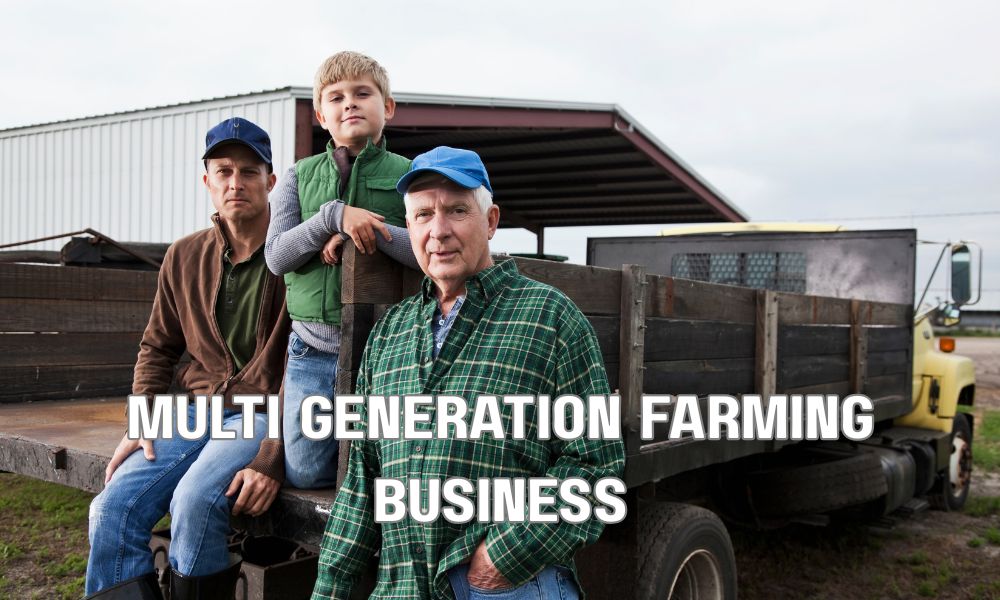
As Global Head of Research & Leadership Advisory at JRG Partners, I wrote this guide on succession planning in Agriculture & Agribusiness because the sector’s leadership transition is colliding with a demographic and capability one. The industry’s operational and commercial leadership is experienced while agtech, data, and sustainability capabilities are newer, and family-ownership transitions across the sector compound the succession challenge. Building the pipeline before you need it is no longer optional.
Key Takeaways: Agriculture & Agribusiness Succession Planning in 2026
- The industry’s operational and commercial leadership is experienced while agtech, data, and sustainability capabilities are newer, and family-ownership transitions across the sector compound the succession challenge.
- Succession is a multi-year discipline, not an emergency response to a departure.
- The capabilities the sector now needs may not exist in the traditional internal bench.
- Boards should map critical-seat succession coverage annually and honestly.
- External benchmarking of internal candidates prevents the complacency that sinks internal successions.
Why Agriculture & Agribusiness Faces a Succession Challenge
The industry’s operational and commercial leadership is experienced while agtech, data, and sustainability capabilities are newer, and family-ownership transitions across the sector compound the succession challenge. This is compounded by the sector’s transformation: Agtech and precision agriculture are forcing technology and data capabilities into traditionally operational leadership. Sustainability and regenerative-agriculture demands from food companies and regulators are reshaping strategy. The leaders retiring were built for a different industry than the one their successors will run.
Mapping Critical-Seat Exposure
Begin with a candid coverage map: every critical role scored as ready-now, ready-soon, or exposed. Agriculture & Agribusiness boards most often find Chief Operating Officer and VP of Agtech / Digital, plus the sector’s newer technology and transition seats, sitting in the exposed column. The value of the map is exactly the discomfort it creates.
Building the Pipeline
Pipeline building has three moving parts: developing high-potentials against tomorrow’s required capabilities rather than yesterday’s, benchmarking those internal candidates honestly against the external market so readiness is calibrated rather than assumed, and cultivating external relationships for the seats the internal bench cannot realistically fill.
Emergency Succession: The Plan You Hope Not to Use
Emergency succession is the plan you hope never to execute: a named interim for each critical seat, with defined authority and duration, ready if a departure comes without warning. Boards without one pay for the omission at the worst possible moment, and an interim designation never substitutes for the permanent pipeline.
Connecting Succession to Search
Succession planning and external search are two halves of one leadership strategy. The seats where internal succession is unrealistic become tomorrow’s external searches, and starting those relationships early, before the vacancy, is what separates prepared boards from scrambling ones. Our guide to executive search in Agriculture & Agribusiness covers the external side, and our Agriculture & Agribusiness talent trends analysis tracks the demographic and capability shifts driving the challenge.
Frequently Asked Questions
- Q: Why is succession planning urgent in Agriculture & Agribusiness?
- A: The industry’s operational and commercial leadership is experienced while agtech, data, and sustainability capabilities are newer, and family-ownership transitions across the sector compound the succession challenge.
- Q: How far ahead should Agriculture & Agribusiness succession planning start?
- A: For C-suite seats, nine to twelve months minimum before a planned transition, and continuously for the development pipeline; emergency interim plans should always be current.
- Q: Should Agriculture & Agribusiness successors come from inside or outside?
- A: Both: develop internal candidates against future-facing capabilities while benchmarking honestly against the external market, since the sector’s new demands may exceed the internal bench.
- Q: What is the biggest succession mistake in Agriculture & Agribusiness?
- A: Treating succession as an emergency response rather than a multi-year discipline, and failing to benchmark internal candidates against the external market.
Related Agriculture & Agribusiness Resources
See also Agriculture & Agribusiness executive search guide, Agriculture & Agribusiness top 10 in-demand roles, Agriculture & Agribusiness executive compensation report.

Tanya Gallardo
Managing Director, Executive Search & AI Talent Strategy
Tanya Gallardo is the Managing Director of Executive Search & AI Talent Strategy at JRG Partners, leading C-suite and Board engagements across key growth sectors including Technology, Financial Services, and Manufacturing.
With over 18 years of experience specializing in disruptive technology leadership, Tanya is recognized as a leading authority on talent architecture for future-focused executive roles, such as the Chief AI Officer (CAIO) and Chief Digital Officer (CDO). Her expertise lies in accurately assessing the cultural fit and technical depth required to ensure a high return on investment (ROI) for critical leadership appointments.
Prior to her role at JRG Partners, Tanya held senior roles directing global talent acquisition strategies at a major publicly-traded technology firm, advising on organizational design and succession planning for emerging executive functions. She is a recognized speaker and contributor to industry events, sharing data-driven insights on executive compensation, leadership development, and the measurable business impact of C-suite talent.
