


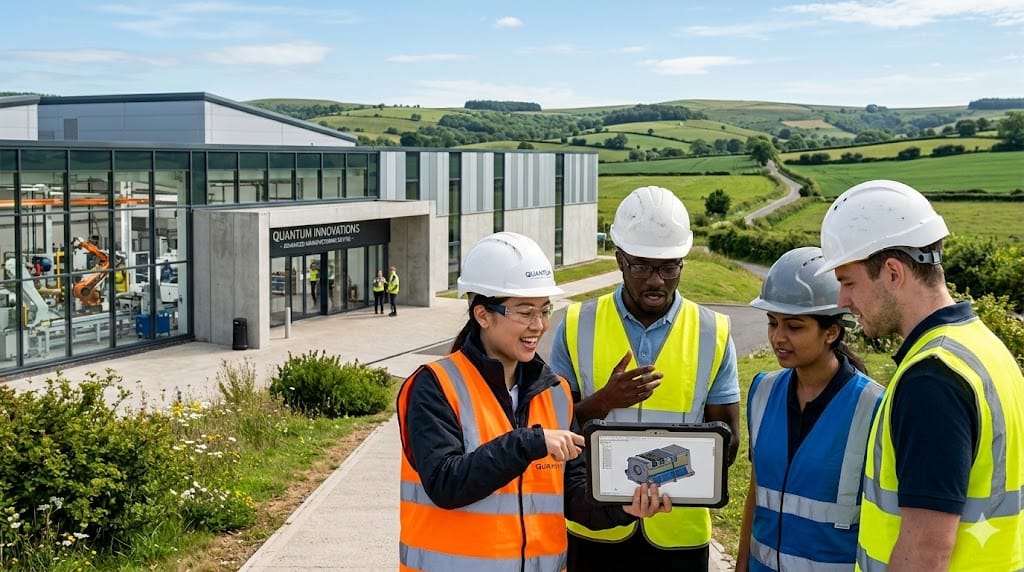
The strategic imperative to bolster domestic manufacturing capabilities in the United States requires a critical re-evaluation of how talent is sourced and retained, particularly in non-urban industrial centers. Our analysis, informed by extensive market intelligence and JRG Partners’ rigorous executive search methodologies, reveals a pervasive challenge: Why do skilled manufacturing workers hesitate to relocate to non-urban plants? This question underpins a broader strategic imperative for corporations and regional economic development bodies to collaboratively address the systemic factors hindering talent migration to vital production hubs.
Ignoring this paradigm shift in workforce dynamics threatens not only the operational stability of key industries but also national economic security and global competitiveness.
Key Strategic Imperatives
- Strategic Rebranding: Non-urban industrial centers must proactively redefine their attractiveness, emphasizing lifestyle advantages and significant cost efficiencies over congested metropolitan areas. This is not merely marketing; it is a fundamental shift in perception management.
- Proactive Talent Cultivation: Deep investment in localized education partnerships and robust internal apprenticeship frameworks is essential for fostering sustainable talent pipelines.
- Modernization as a Core Tenet: Showcasing advanced production environments, prioritizing technology integration, worker safety, and explicit career progression paths, is crucial for engaging modern professionals.
- Holistic Compensation Structures: Compensation must extend beyond base remuneration to include comprehensive packages covering relocation support, housing assistance, and operational flexibility to mitigate transition friction.
- Community Integration: The comprehensive value proposition of the entire community—quality of life, social amenities, and support infrastructure—must be articulated to secure enduring commitment from professionals and their families.
- Data-Driven Approach: Continuous quantitative and qualitative measurement of attraction and retention initiatives is non-negotiable for refining strategies and maximizing human capital ROI.
The Manufacturing Talent Crunch Outside Major US Cities
The foundational manufacturing sectors in numerous US regional economies face an intensifying talent crisis. This critical shortfall is driven by an aging demographic within the industrial workforce, a growing skills gap, and aggressive competition from urban centers for skilled labor.
The prevailing perception of manufacturing careers as antiquated or less desirable further exacerbates recruitment challenges, directly threatening the operational viability and expansion potential of these vital US industries. JRG Partners frequently navigates these complexities, identifying executive leadership capable of addressing these workforce development hurdles.
- Challenges: An aging incumbent workforce, inherent difficulties in attracting emerging talent, fierce competition for skilled personnel from urban hubs, and outmoded perceptions of industrial work environments.
- Economic Impact: Stifled economic growth, diminished global competitiveness, and the potential for critical plant closures, undermining the US industrial base.
- Over 2.1 million manufacturing jobs are projected to go unfilled by 2030, with a significant portion concentrated in rural and exurban areas, costing the U.S. economy an estimated $1 trillion.
Reframing Non-Urban Locations as Lifestyle and Cost Advantages
To effectively counteract negative stereotypes, non-urban locales must be strategically rebranded and aggressively marketed as highly desirable places for both living and professional development. Emphasis should be placed on the unique quality-of-life benefits that are often scarce in dense urban environments: significantly shorter commute times, a lower overall cost of living, privileged access to natural landscapes and outdoor recreation, and a robust sense of community.

This fundamental reframing positions opportunities in non-urban manufacturing not as a compromise, but as a deliberate and strategic lifestyle enhancement. This directly addresses the critical question: Which lifestyle and cost-of-living benefits most effectively attract talent to rural manufacturing hubs? Our research indicates a strong preference for these tangible advantages among prospective candidates.
- Quality of Life: Reduced commuting stress, alleviation of traffic congestion, abundant access to recreational activities, and strong local community networks.
- Cost Efficiency: Substantially lower housing expenditures, reduced general living expenses, and consequently, greater discretionary income.
- Marketing Strategy: Emphasize superior work-life balance, robust community engagement opportunities, and family-centric environments.
- The cost of living in non-urban areas can be 15-30% lower than in major metropolitan centers, significantly increasing the purchasing power of a competitive salary.
Building Local Talent Pipelines with Schools and Colleges
Securing long-term talent attraction mandates fundamental investment in local educational ecosystems. Manufacturing enterprises should forge robust, symbiotic partnerships with regional high schools, vocational training institutions, and community colleges. The objective is to co-develop specialized curricula, offer accredited certifications, and provide immersive, hands-on experiential learning opportunities.
This strategy cultivates a direct, localized pipeline of proficient individuals who are not only skilled in industry-specific disciplines but are also intrinsically invested in their local communities. This proactive engagement directly answers: How can manufacturers use high schools and community colleges to build a reliable local talent pipeline? JRG Partners has observed that executive leadership adept at fostering these educational alliances consistently secures a long-term competitive advantage.
- Strategic Partnerships: Collaborative ventures extending from K-12 education through vocational centers and community colleges.
- Curriculum Development: Jointly designing programs that directly align with contemporary industrial needs, encompassing areas such as mechatronics and advanced manufacturing technologies.
- Early Exposure: Facilitating factory tours, career exploration events, and robust mentorship programs for students to demystify manufacturing careers.
- Companies with strong university and community college partnerships report a 25% higher rate of successful talent acquisition for specialized roles.
Modernizing Plants: Technology, Safety, and Career Progression
The prevailing image of manufacturing necessitates a profound update. Organizations must showcase modern production facilities that rigorously integrate cutting-edge technologies, including automation, artificial intelligence, robotics, and advanced analytics. Paramount importance must be placed on demonstrating robust safety protocols, ergonomic design principles, and meticulously clean working environments.
Critically, companies must articulate clear pathways for skill development, upward professional mobility, and leadership accession within the organization, unequivocally demonstrating that these are high-tech, high-skill, and progressive career trajectories. This directly addresses: What role do modern equipment, automation, and safety play in changing candidate perception of rural plants? JRG Partners identifies executive talent capable of championing such comprehensive digital transformation initiatives.
- Technological Advancement: Invest in and prominently feature smart factories, Industry 4.0 technologies, and sophisticated digital tools.
- Workplace Environment: Unwavering prioritization of safety, hygiene, and ergonomic design to foster well-being.
- Career Growth: Implement transparent training frameworks, continuous upskilling initiatives, and clearly defined promotion avenues.
- 78% of skilled manufacturing workers prioritize access to advanced technology and professional development opportunities when evaluating job offers.
Incentives that Matter: Pay, Relocation, Housing, and Flexibility
Beyond a highly competitive base compensation structure, a comprehensive suite of incentives is absolutely critical for attracting premier talent from diverse geographic origins. This must encompass generous relocation assistance, substantive housing support (e.g., down payment aid, rental subsidies, strategic partnerships with local developers), and flexible work arrangements where operationally feasible (e.g., compressed workweeks, hybrid models for non-production functions).

The overarching objective is to systematically diminish the financial and logistical impediments associated with professional migration. This is precisely where the question arises: Which incentive combinations (wages, sign-on bonuses, relocation, housing, four-day weeks) move the needle most in non-urban markets? Our human capital research at JRG Partners consistently points to the efficacy of these integrated approaches.
- Competitive Compensation: Benchmarking remuneration against national, rather than exclusively local, industry averages.
- Relocation Support: Robust packages that cover moving expenses, temporary accommodation, and comprehensive family transition services.
- Housing Solutions: Strategic collaborations with local housing authorities, developers, or direct financial assistance programs.
- Work-Life Balance: Offering flexible scheduling options, generous paid time off (PTO), and comprehensive health and wellness benefits.
- 65% of potential manufacturing employees cite comprehensive relocation packages and housing support as highly influential factors in their decision to move for a job.
Community Integration: Selling the Town, Not Just the Job
Attracting and, more importantly, retaining talent—especially those with families—necessitates a holistic strategy that “sells” the entire community ecosystem. Provision of resources and support for spouses and dependents is paramount, including spousal job search assistance, detailed information on local educational institutions, healthcare facilities, and local amenities. Proactive corporate involvement in local events and civic activities is critical.
Cultivating a genuinely welcoming environment and vividly showcasing the vibrancy of the town itself instills a sense of belonging, which is directly correlated with enhanced long-term commitment. This addresses the pivotal query: How can employers partner with local government and community groups to make the town itself a talent magnet? Our executive placements frequently seek organizations demonstrating such civic leadership.
- Family Support: Aid with spousal employment, comprehensive school information, and crucial childcare resources.
- Local Amenities: Highlight diverse recreational pursuits, cultural events, dining options, and access to quality healthcare services.
- Employer as Community Steward: Active and visible participation in local governance, philanthropic endeavors, and public events.
- The overall quality of a community and support for family members are decisive factors in 80% of relocation decisions for skilled workers.
Growing Your Own: Apprenticeships and Internal Advancement Paths
While external recruitment remains a vital component of talent acquisition, a truly sustainable human capital strategy necessitates robust internal development mechanisms. Establishing formal apprenticeship programs that seamlessly integrate on-the-job practical training with structured classroom instruction offers clear pathways from entry-level to highly specialized technical and managerial roles.
Implementing continuous upskilling and reskilling initiatives for the existing workforce ensures adaptability to nascent technologies and evolving job functions, thereby fostering deep employee loyalty and mitigating costly turnover. This directly informs: What apprenticeship and internal training models work best for growing advanced manufacturing skills locally? JRG Partners works with clients to build talent architecture that integrates such proactive development.
- Apprenticeship Programs: Structured, nationally recognized training combining practical industrial experience with theoretical knowledge.
- Upskilling & Reskilling: Continual learning opportunities enabling current personnel to master new technologies and processes.
- Leadership Development: Formalized programs designed to identify, mentor, and cultivate future organizational leaders from within the existing ranks.
- Companies with formal apprenticeship programs experience an average employee retention rate of 90% after completion, significantly higher than the industry average.
Measuring What Works: Talent Attraction and Retention Metrics
A rigorous, data-driven approach is absolutely essential for objectively assessing the efficacy of all talent attraction and retention strategies. Key performance indicators (KPIs) for this domain include, but are not limited to, time-to-hire, cost-per-hire, comprehensive turnover rates (both overall and departmental), employee satisfaction indices, and the success rates of specific initiatives (e.g., apprenticeship program completion, ROI of relocation packages).

Regular and forensic analysis of these metrics is paramount for informing continuous improvement cycles and ensuring that human capital resources are allocated with maximum strategic impact and fiduciary duty. This provides the definitive answer to: Which KPIs should leaders track to know if their non-urban talent strategy is actually working? JRG Partners advises its executive search clients on establishing robust governance around these critical metrics for sustained value realization.
- Key Performance Indicators (KPIs): Time-to-fill, cost-per-hire, offer acceptance rate, overall turnover rate, and employee engagement scores.
- Feedback Mechanisms: Structured exit interviews, proactive stay interviews, and regular, anonymous employee sentiment surveys.
- ROI Analysis: Quantifying the return on investment for all training interventions, relocation incentives, and targeted marketing expenditures.
- The average manufacturing turnover rate is around 20%, highlighting the critical need for robust retention strategies and continuous monitoring.
Concluding Recommendations
Addressing the manufacturing talent crunch in non-urban US locations requires a multifaceted, integrated, and sustained strategic commitment from executive leadership. It is not merely a human resources challenge but a geostrategic imperative that directly impacts national economic resilience.
Companies that proactively invest in redefining their value proposition, cultivating local expertise, modernizing their operations, offering compelling holistic incentives, and deeply integrating with their communities will be best positioned for enduring success. At JRG Partners, we specialize in identifying the visionary leaders capable of executing these complex talent strategies, ensuring that organizations can secure the critical human capital necessary to thrive in evolving markets.
FAQs for Board Discussion
Q: Is it genuinely feasible to attract premier talent to smaller communities with ostensibly limited amenities?
A: Absolutely. Success hinges on strategically articulating the unique lifestyle advantages, the inherent lower cost of living, strong community fabric, and the advanced, modern nature of plant facilities. This must be coupled with highly competitive compensation and a comprehensive support ecosystem. The objective is to fundamentally alter the narrative and provide genuinely holistic incentives.
Q: Which types of incentives prove most impactful for drawing manufacturing personnel to non-urban sectors?
A: While a competitive remuneration package is foundational, the most impactful approach involves a judicious combination of robust relocation assistance, substantial housing support, and flexible work arrangements. These elements directly mitigate the most common financial and logistical barriers that potential employees face when considering a move.
Q: How can manufacturers operating older facilities effectively compete with newer, high-tech plants located in urban areas?
A: The strategy involves hyper-focusing on modernizing key operational areas, conspicuously highlighting investments in automation, digital tools, and safety protocols. Crucially, emphasize the extensive career growth opportunities available within the organization, demonstrating clear pathways for employees to evolve alongside advancing technology, irrespective of the physical age of the facility.
Q: What is the significance of community engagement in retaining talent post-relocation?
A: Its role is profoundly significant. Actively assisting new hires and their families in seamlessly integrating into the community—through spousal job search support, comprehensive local resource information, and company-sponsored civic involvement—cultivates a strong sense of belonging. This dramatically enhances long-term retention by transforming the new town into a cherished home, reinforcing the strategic investment in human capital.
Looking for a specialized executive search partner?
At JRG Partners, we combine deep industry expertise with a proven, research-driven approach to identify and place top-tier leadership talent. Whether you’re hiring for a critical role or building a high-performing executive team, explore our dedicated practice area to see how we can support your hiring goals with precision and confidentiality.

Tanya Gallardo
Managing Director, Executive Search & AI Talent Strategy
Tanya Gallardo is the Managing Director of Executive Search & AI Talent Strategy at JRG Partners, leading C-suite and Board engagements across key growth sectors including Technology, Financial Services, and Manufacturing.
With over 18 years of experience specializing in disruptive technology leadership, Tanya is recognized as a leading authority on talent architecture for future-focused executive roles, such as the Chief AI Officer (CAIO) and Chief Digital Officer (CDO). Her expertise lies in accurately assessing the cultural fit and technical depth required to ensure a high return on investment (ROI) for critical leadership appointments.
Prior to her role at JRG Partners, Tanya held senior roles directing global talent acquisition strategies at a major publicly-traded technology firm, advising on organizational design and succession planning for emerging executive functions. She is a recognized speaker and contributor to industry events, sharing data-driven insights on executive compensation, leadership development, and the measurable business impact of C-suite talent.
