


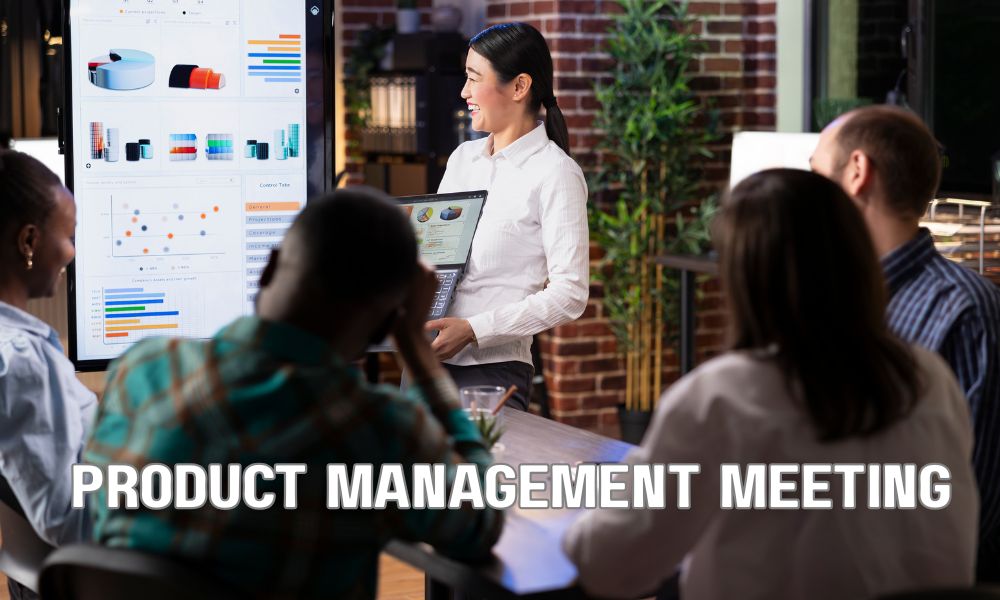
As Global Head of Research & Leadership Advisory at JRG Partners, I have compiled these interview questions to ask when hiring a VP of Product Management from the patterns across hundreds of executive assessments. The VP of Product Management interview fails predictably: fluent candidates narrate polished careers while the questions that separate operators from narrators go unasked. This guide gives you 25 questions organized by competency, with guidance on what strong answers sound like and which responses should concern you.
Key Takeaways: Interviewing VP of Product Management Candidates Effectively
- Use a consistent scorecard across candidates and interviewers, and verify the story afterward through structured referencing.
- The strongest single signal in executive interviews is comfort with specifics: real figures, real failures, real names of people developed.
- Follow-up questions do the real work; the scripted question opens the door, and ‘what was your personal role?’ walks through it.
- Match question emphasis to your mandate: the VP of Product Management you need for the next three years determines which competencies below deserve double weight.
- Always verify through structured referencing afterward, interviews generate claims; references test them.
Before You Interview: Define the Mandate
Interviews test candidates; mandates test companies. Write down what the role must deliver in three years, growth, build-out, transformation, or repair, and let that document decide which question groups below get the most time. Price the role against the same mandate using our VP of Product Management salary guide, so the offer conversation never waits on a committee cycle.
Product Outcomes, Prioritization, and Discovery (Questions 1-7)
1. Walk me through the product outcome you are proudest of, in metrics. Adoption, retention, or revenue with baselines, features shipped are inputs, not answers.
2. Tell me about the feature or product you killed. Kill discipline: the sunk-cost fight and the resources redeployed.
3. Describe your prioritization framework surviving contact with a powerful stakeholder. The framework held or bent with reasons, and the aftermath either way.
4. What did your team’s discovery work change last quarter? Cadence with consequence: recent validated learning that moved the roadmap.
5. Walk me through a launch that missed. What did the post-mortem install? Failure honesty with a systemic fix.
6. Tell me about a pricing or packaging change you drove. The underused lever: the analysis, the risk, the revenue result.
7. How do you work with engineering when estimates and ambition collide? Partnership mechanics: scoping negotiated with respect and the roadmap protected.
Craft, Collaboration, and the PM Organization (Questions 8-13)
8. Describe an AI capability you shipped and its usage reality. 2026 separator: production usage and retention, not demos.
9. Tell me about developing a PM who became a leader. Talent receipts: the signal spotted, the growth built, the trajectory.
10. How do you handle sales commitments product can’t honor? The classic collision: customer honesty, sales repair, process change.
11. Which product metric did you retire as flattering? Measurement integrity under pressure.
12. Walk me through your roadmap communication rhythm to executives. Stakeholder craft: expectations managed, trade-offs visible, surprises rare.
13. What would your first discovery sprint on our product investigate? Preparation test: user, funnel, or retention hypotheses from what is visible.
Strategic Partnership Across the Executive Table (Questions 14-17)
14. How do you make your function’s work legible and useful to peers who don’t share your expertise? Translation craft with a witness: an operating peer who would vouch for it by name.
15. What should your function’s board reporting contain, and what does everyone get wrong? A point of view earned through practice: brevity, trend over snapshot, and problems raised before they are asked about.
16. Which executive-team dynamic have you most improved, and how? Team-of-leaders citizenship: the dysfunction named carefully and the contribution verifiable.
17. How do you earn credibility with a skeptical CEO or board in the first ninety days? A deliberate entry strategy: early listening, a fast meaningful win, and honesty about what they don’t yet know.
Leadership and Team Building (Questions 18-21)
18. What will your current team say is hardest about working for you? Specific self-awareness without rehearsed humility, and knowledge that referencing will verify it.
19. How do you decide what to delegate versus own personally? Reveals whether the leader scales with you or becomes the bottleneck at your next stage.
20. Describe developing a successor for your own role. The strongest leadership tell: security, investment, and a named person whose career proves it.
21. How have you built accountability without fear? Culture mechanics: standards enforced, psychological safety preserved, with an example proving both at once.
Judgment, Integrity, and Pressure (Questions 22-25)
22. Tell me about a time you were pressured to present information more favorably than you believed was right. Non-negotiable. Strong answers show a clear line held, gracefully but firmly. Treat any equivocation as disqualifying.
23. Describe the hardest decision you have executed that affected people’s livelihoods. Rigor and humanity together: analytical discipline about the decision, dignity in its execution.
24. Tell me about a time doing the right thing cost you something. Values under load, with a price actually paid.
25. Why this company, and why now? The closer. Great candidates connect their specific experience to your specific mandate; a beautiful generic answer is a candidate interviewing everywhere.
Scoring, Structure, and What Comes After the Interview
Discipline converts interviews into data: identical core questions per finalist, defined rating scales per competency, independent scoring before any group discussion, and referencing that tests the interview’s specific claims, with at least one back-channel reference the candidate did not supply. The table below maps question groups to the mandates they matter most for.
| Competency Area | Questions | Weight Heavily When Your Mandate Is |
|---|---|---|
| Product Outcomes, Prioritization, and Discovery | 1-7 | Core functional delivery, first professional VP of Product Management, post-turbulence repair |
| Craft, Collaboration, and the PM Organization | 8-13 | Transformation, scaling, or building the capability from partial foundations |
| Strategic partnership | 14-17 | Executive-team upgrade, CEO thought-partner gap, cross-functional repair |
| Leadership and team | 18-21 | Organization build-out, inherited-team situations, rapid growth |
| Judgment and integrity | 22-25 | Always; never traded off against any other competency |
The Bottom Line for Hiring Committees
The quality of your VP of Product Management hire is set by the quality of your process: a defined mandate, structured questions asked consistently, probing follow-ups on personal role, independent scoring, and referencing that verifies the story. Companies that run that process land operators; companies that run conversational interviews land the best storyteller in the field, and discover the difference two quarters later. If the specification itself still needs work, our VP of Product Management job description template is built to precede this guide.
Frequently Asked Questions
- Q: What is the single most important question to ask a VP of Product Management candidate?
- A: The integrity question: describe a time you were pressured to present information more favorably than you believed was right. Willingness to hold that line under pressure is the one competency you cannot compensate for elsewhere.
- Q: How many interviews should a VP of Product Management hiring process include?
- A: Three to four, ending in a working session, reviewing your actual numbers, plans, or product, because an hour of real work reveals more than three more hours of conversation.
- Q: Should VP of Product Management candidates complete a case study or working exercise?
- A: Yes, for most mandates: reviewing your real (lightly sanitized) material or presenting a 90-day plan reveals more than any additional conversational hour. Keep preparation respectful, two to four hours.
- Q: How do we assess a first-time VP of Product Management versus a proven one?
- A: Use the same questions but weight trajectory over polish: look for candidates who owned the role’s work under a previous title-holder, probe personal role even harder, and reference with the executive they worked for.
- Q: What are the biggest red flags in VP of Product Management interviews?
- A: Fluent answers without numbers, achievements described entirely in ‘we’ with no personal role, no admissible failures, disparagement of previous employers, and any hedging on the integrity question. Each predicts problems that surface after hiring.
- Q: Who should lead the VP of Product Management interview process?
- A: The hiring executive should own the process and the decision, with structured participation from peers and, for officer roles, the board. Alignment on the mandate before finalists arrive matters more than who chairs which round.

Tanya Gallardo
Managing Director, Executive Search & AI Talent Strategy
Tanya Gallardo is the Managing Director of Executive Search & AI Talent Strategy at JRG Partners, leading C-suite and Board engagements across key growth sectors including Technology, Financial Services, and Manufacturing.
With over 18 years of experience specializing in disruptive technology leadership, Tanya is recognized as a leading authority on talent architecture for future-focused executive roles, such as the Chief AI Officer (CAIO) and Chief Digital Officer (CDO). Her expertise lies in accurately assessing the cultural fit and technical depth required to ensure a high return on investment (ROI) for critical leadership appointments.
Prior to her role at JRG Partners, Tanya held senior roles directing global talent acquisition strategies at a major publicly-traded technology firm, advising on organizational design and succession planning for emerging executive functions. She is a recognized speaker and contributor to industry events, sharing data-driven insights on executive compensation, leadership development, and the measurable business impact of C-suite talent.
