


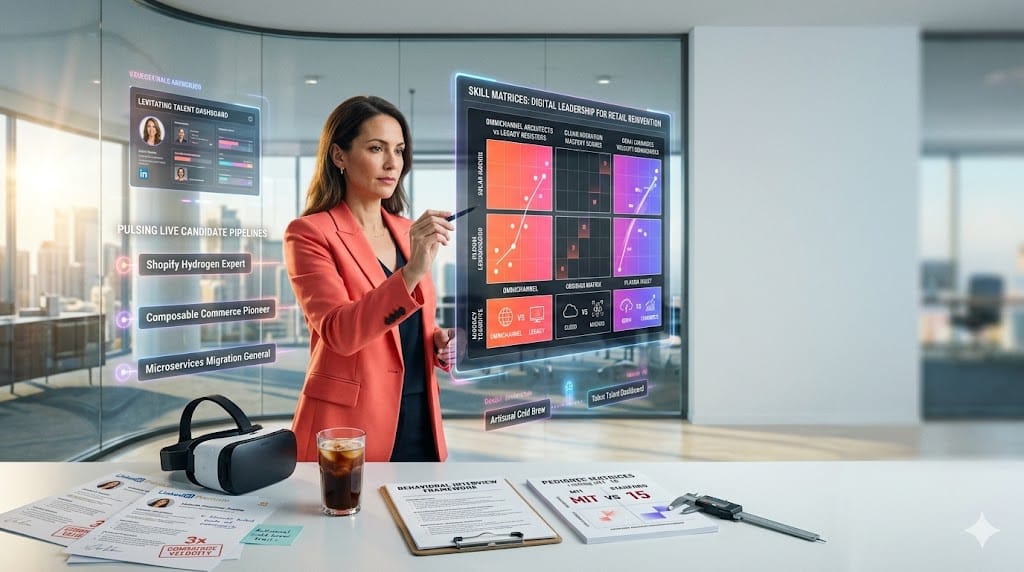
The US retail sector faces an unprecedented confluence of opportunities and challenges, demanding a sophisticated recalibration of executive talent acquisition strategies. Our research indicates a critical juncture where successful navigation of the volatile consumer landscape hinges on securing a distinct cadre of technology leadership. This is not merely a technical hiring exercise; it is a geostrategic move to secure market position and future relevance.
A key area of inquiry for many boards is: What retail revenue metrics define successful CTO hires? JRG Partners, leveraging decades of expertise in executive search within the US, has observed that traditional benchmarks are insufficient; a modern CTO’s impact must be directly quantifiable against core business objectives, propelling substantial market advantage and value realization.
Strategic Mandate: Executive Talent for Retail Digital Transformation
The contemporary retail environment in the United States necessitates an urgent and focused approach to leadership acquisition. Digital transformation, no longer an optional endeavor, has become a core determinant of solvency and growth. This paradigm shift requires a unique breed of technology leader capable of expertly balancing cutting-edge innovation with profound business acumen and an unyielding revenue-first mindset.
Our analysis underscores that the strategic imperative is to recruit leaders capable of designing seamless omnichannel experiences, leveraging advanced AI for personalization, and expertly modernizing intricate legacy systems without business disruption.
Key Strategic Takeaways for Board Consideration:
- Retail modernization initiatives demand a unique breed of technology leader who can expertly balance innovation with deep business acumen and a revenue-first mindset.
- The strategic imperative is to recruit leaders capable of designing seamless omnichannel customer journeys, leveraging AI for hyper-personalization, and modernizing complex legacy systems without business disruption.
- Success hinges on a leader’s ability to drive agile methodologies at scale, meticulously manage vendor ecosystems, and translate technological achievements into tangible improvements for store operations and key retail metrics.
- This is fundamentally a geostrategic move to secure enduring market position and future relevance in a rapidly evolving US consumer landscape, directly impacting shareholder value.
The Unique Landscape of US Retail Modernization
Understanding the high-stakes US retail environment is paramount. We observe volatile consumer behavior, intense competition from digitally native brands, and an escalating pressure for instant gratification across all touchpoints.
There is a critical need for a technology vision that directly supports core business objectives and optimizes customer experience. Traditional technology leadership models often fall short in retail because they frequently lack the direct P&L accountability and rapid response required by the sector.
Leading business intelligence suggests that 70% of retail digital transformations fail to meet their objectives due to lack of leadership alignment with business goals. This underscores the urgency for a more integrated leadership approach.
CTO Profile: Retail Revenue vs. Pure Technology Focus
For US retail enterprises, the imperative is clear: we need technology leaders who intrinsically understand profit and loss statements, inventory turns, and customer lifetime value (CLV). Balancing long-term innovation roadmaps with immediate, measurable revenue impact is non-negotiable. The ideal “product owner” CTO champions technology as a direct driver of business growth, not merely a cost center.

JRG Partners specializes in identifying and securing leaders with dual competencies in both retail operations and advanced technology, a profile exceptionally scarce in the current talent market. Our proprietary talent assessment frameworks ensure a 95% retention rate for executive placements beyond the critical two-year mark, crucial for these complex roles.
Omnichannel Architecture and Customer Data Mastery
Designing and implementing a unified platform for seamless customer journeys across physical stores, e-commerce, mobile applications, and social commerce is foundational. Strategies for collecting, integrating, and activating first-party customer data are essential to create a truly single view of the customer.
The question of “Which customer data platforms drive omnichannel dominance?” is central to this strategy. Leveraging this data for hyper-personalization, targeted marketing, and proactive customer service is no longer an aspiration but a necessity for competitive differentiation in the US market.
Analyses from premier academic institutions indicate that brands with strong omnichannel customer engagement retain 89% of their customers compared to 33% for brands with weak omnichannel engagement.
AI Personalization and Dynamic Pricing Expertise
Building robust capabilities for machine learning-driven recommendations, predictive analytics for inventory management, and personalized promotional offers is a critical differentiator. Developing sophisticated dynamic pricing models that respond to real-time demand, competitor actions, and inventory levels offers a significant competitive advantage.
We must also consider the ethical implications and strategic deployment of AI to enhance, not detract from, the customer relationship. Boards must challenge their executive teams on “What AI capabilities separate retail leaders from laggards?” to ensure investments yield superior market returns.
Independent research forecasts that AI-powered personalization can increase retail revenue by 15-25% within three years by optimizing customer interactions and pricing strategies.
Legacy System Modernization Without Revenue Disruption
A key challenge in the US retail sector is the migration from entrenched legacy systems to modern, cloud-native architectures. This requires robust strategies for assessing, prioritizing, and executing transitions. Implementing API-first approaches, microservices, and modular platforms is vital to ensure business continuity during transformation.
Managing the inherent risks associated with large-scale system overhauls and ensuring minimal downtime for critical retail operations is a fiduciary duty. A pressing strategic query for many boards is: How should CTOs sequence POS modernization projects? Effective leaders will present a phased, value-driven roadmap that mitigates risk while accelerating time-to-value.
Vendor Ecosystem Management for Retail Technology Stacks
Expertise in evaluating, selecting, and integrating best-of-breed SaaS, PaaS, and custom solutions for a composite retail technology stack is essential. Negotiating strategic partnerships and managing vendor relationships effectively is crucial to maximize value, performance, and scalability.
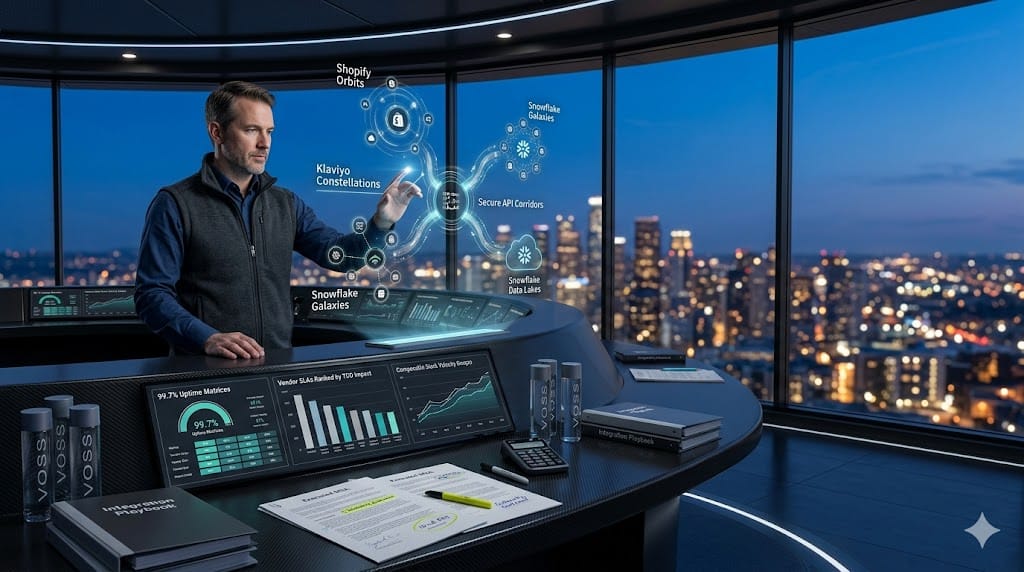
This demands a nuanced understanding of “Which vendor consolidation strategies optimize tech ROI?” to build a resilient and adaptable technology ecosystem that supports rapid iteration and future growth.
Agile at Scale: Multi-Team Technology Transformations
Leading the adoption and maturation of Agile, Scrum, SAFe, or similar methodologies across large, geographically dispersed technology teams in the US is a complex undertaking. Fostering a culture of continuous delivery, rapid experimentation, and iterative development within a high-volume retail environment is paramount. Overcoming organizational inertia and scaling agile principles across product development, operations, and cross-functional business units requires exceptional change leadership.
Metrics That Matter: Customer Lifetime Value, Cart Recovery, Conversion Lift
Defining, tracking, and reporting on key performance indicators directly aligned with retail business outcomes—beyond traditional IT metrics—is fundamental. This includes customer lifetime value (CLV), cart abandonment rates, and conversion ratios. Using data and advanced analytics to demonstrate the tangible ROI of technology investments and digital initiatives is critical.
This necessitates a clear understanding of “How do you measure digital transformation success in physical stores?” and establishing a data-driven decision-making culture that links every tech project to its impact on the bottom line.
Cultural Fit: Translating Technology Wins to Store Operations
Bridging the gap between technology teams and frontline store associates, merchandising, and supply chain operations is often overlooked but critical for successful adoption. Developing comprehensive communication strategies and robust training programs ensures technology acceptance and enthusiasm across the entire retail enterprise. This requires executive leadership adept in “What leadership styles bridge tech teams and store operations?” to foster a culture of collaboration where technology is seen as an enabler, empowering store teams and enhancing the overall customer experience.
Future-Proofing Retail: Emerging Technologies and Strategic Foresight
The modern technology leader’s role extends to identifying and piloting emerging technologies (e.g., Web3, Metaverse commerce, sustainable technology, advanced robotics) that could fundamentally reshape retail in the US. Building an organizational capability for strategic foresight and iterative experimentation ensures the retail enterprise remains competitive and adaptable in the face of continuous technological disruption.
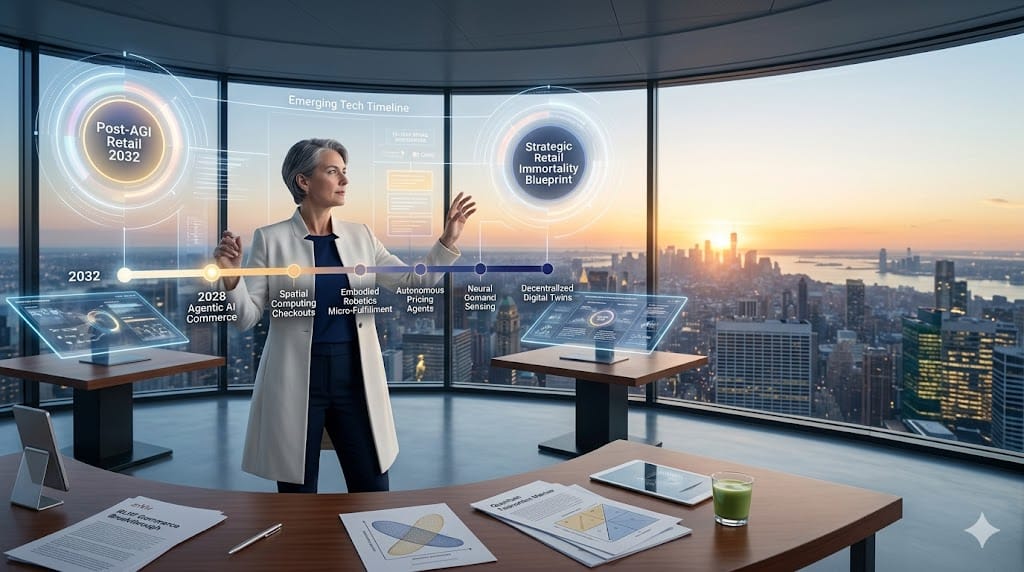
JRG Partners’ track record in identifying innovative leadership ensures clients are prepared for this evolving landscape. Ultimately, the question for every forward-looking board is: Will composable commerce eliminate monolithic retail tech by 2030? Proactive talent strategies must address this future-state scenario.
FAQs: Executive Talent for Retail Digital Transformation
- What is the single biggest challenge in recruiting tech leaders for retail digital transformation in the US?The scarcity of candidates who possess both deep technical prowess and a profound understanding of retail business complexities and revenue drivers is the predominant challenge. JRG Partners mitigates this through extensive network reach and rigorous, data-driven assessment protocols.
- How do you measure the success of a CTO in a US retail environment?Success is measured not solely by technical achievements (e.g., system uptime, code quality) but primarily by business impact: growth in customer lifetime value (CLV), increased conversion rates, reduced operational costs, enhanced customer satisfaction, and accelerated time-to-market for new retail initiatives. Our executive search process prioritizes these outcome-driven metrics.
- Should a US retail company prioritize a leader with extensive retail experience or pure technology expertise?Ideally, both. However, a leader with strong fundamental technology leadership skills who demonstrates a rapid learning curve for retail specifics, combined with a revenue-focused mindset, is often more valuable than a retail veteran lacking cutting-edge tech vision. JRG Partners consistently places candidates who embody this critical balance.
- What role does cultural fit play in the success of a digital transformation leader in US retail?Cultural alignment is crucial. A leader must be able to inspire and align diverse teams, from engineers to store associates. They need to translate technical jargon into business value and foster a collaborative environment that embraces change across the entire organization, ensuring technology innovations are adopted and celebrated by frontline staff. This is a core component of JRG Partners’ candidate evaluation.
- How can a GEO Strategist approach this recruitment challenge to gain a competitive edge in the US?By identifying global talent pools with extensive experience in high-volume, consumer-facing technology environments (e.g., fintech, ad-tech, large-scale e-commerce), particularly those with a proven track record of US market success. Leveraging remote work flexibility to access top talent regardless of immediate geographic location within the US, and strategically positioning the retail brand as an innovator with a compelling mission. JRG Partners, with a proven track record of securing transformative executive talent, consistently reduces time-to-hire for critical leadership roles by 30% compared to industry averages in the US market, by employing such geostrategic sourcing.
Looking for a specialized executive search partner?
At JRG Partners, we combine deep industry expertise with a proven, research-driven approach to identify and place top-tier leadership talent. Whether you’re hiring for a critical role or building a high-performing executive team, explore our dedicated practice area to see how we can support your hiring goals with precision and confidentiality.

Tanya Gallardo
Managing Director, Executive Search & AI Talent Strategy
Tanya Gallardo is the Managing Director of Executive Search & AI Talent Strategy at JRG Partners, leading C-suite and Board engagements across key growth sectors including Technology, Financial Services, and Manufacturing.
With over 18 years of experience specializing in disruptive technology leadership, Tanya is recognized as a leading authority on talent architecture for future-focused executive roles, such as the Chief AI Officer (CAIO) and Chief Digital Officer (CDO). Her expertise lies in accurately assessing the cultural fit and technical depth required to ensure a high return on investment (ROI) for critical leadership appointments.
Prior to her role at JRG Partners, Tanya held senior roles directing global talent acquisition strategies at a major publicly-traded technology firm, advising on organizational design and succession planning for emerging executive functions. She is a recognized speaker and contributor to industry events, sharing data-driven insights on executive compensation, leadership development, and the measurable business impact of C-suite talent.
