



In an increasingly intricate and competitive global landscape, the strategic imperatives for US manufacturing firms have never been more acute. This confidential advisory from JRG Partners’ Research & Leadership Advisory division underscores a critical, yet often underestimated, aspect of executive leadership: the modern Chief Human Resources Officer (CHRO) in the industrial sector. Boards and executive leadership teams must fundamentally reconsider their engagement with this pivotal role.
The question of Why do manufacturing CHROs deserve board-level visibility? is no longer theoretical but a direct determinant of sustained operational excellence and market leadership. The traditional view of human resources as a purely administrative function is obsolete; today’s manufacturing CHRO is a strategic architect of human capital, directly impacting operational efficiency, innovation capacity, and overall financial performance, driving shareholder value.
The Evolving Mandate: From Transactional to Transformative Human Capital Leadership
The paradigm shift within industrial HR leadership demands a re-evaluation of its strategic scope. The contemporary manufacturing CHRO moves beyond mere transactional functions, such as payroll and benefits administration, to embrace sophisticated human capital management. This shift is crucial for aligning workforce planning with dynamic production goals, intricate supply chain demands, and unpredictable market shifts.
JRG Partners has consistently observed that our US manufacturing clients who prioritize this strategic integration experience superior operational agility. Successful CHROs adeptly drive organizational design for enhanced flexibility, efficiency, and continuous improvement within complex factory environments.
- Transitioning from administrative HR tasks to strategic human capital orchestration.
- Precise alignment of talent acquisition and development with critical production objectives and supply chain resilience.
- Spearheading organizational design to foster agility, enhance efficiency, and embed continuous improvement methodologies in factory operations.
Business intelligence indicates that while a significant 80% of manufacturing CEOs acknowledge HR’s essential contribution to strategic objectives, only 30% fully integrate HR into top-level strategy discussions. This disconnect represents a critical gap in corporate governance and strategic planning.
Navigating Human Capital Challenges in Industry 4.0
Workforce Upskilling for Automation and AI Integration
The relentless pace of Industry 4.0, characterized by robotics, advanced analytics, and artificial intelligence, is creating unprecedented skills gaps within the US manufacturing workforce. A strategic CHRO proactively identifies these emerging deficiencies. Our executive search intelligence at JRG Partners indicates a growing demand for leaders capable of developing robust internal training programs and forging external partnerships to cultivate specialized skills—ranging from predictive maintenance and cobot operation to advanced data interpretation.
Furthermore, effectively managing change and mitigating workforce anxiety during periods of rapid technological transformation are critical competencies. What workforce skills become critical as automation accelerates? This demands proactive foresight from the CHRO.
Industrial executives anticipate that 54% of their workforce will require significant reskilling or upskilling by 2025 due to automation and new technologies. This highlights the urgency for forward-thinking human capital strategies.
Talent Pipelines for Scarce Technical and Operational Leadership
The US manufacturing sector faces a persistent and critical shortage of engineers, data scientists, specialized technicians, and operational leaders. Addressing this talent deficit requires innovative and aggressive strategies for attracting, developing, and retaining high-potential individuals. This involves competitive compensation structures, clearly defined career development pathways, and strong employer branding tailored for the modern workforce. JRG Partners specializes in identifying and securing these elusive candidates, understanding the nuanced demands of this highly competitive market.
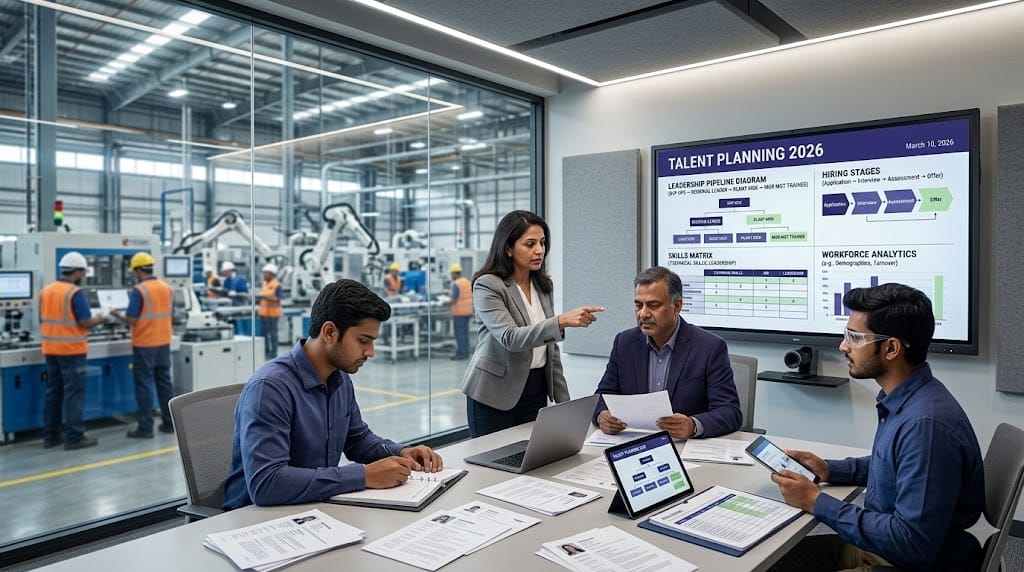
Building robust apprenticeship programs, fostering university collaborations, and establishing internal leadership development pathways are integral to long-term success. It is increasingly clear that How do CHROs solve technical talent shortages in manufacturing? through a multi-faceted, proactive approach that extends far beyond traditional recruitment.
Projections suggest the manufacturing skills gap could result in 2.1 million unfilled jobs by 2030, potentially costing the US economy an astounding $1 trillion. This underscores the economic impact of inadequate talent strategy.
Labor Relations in Unionized Production Environments
For US manufacturers operating in unionized settings, expert navigation of complex collective bargaining agreements, grievance procedures, and intricate labor laws is non-negotiable. A strategic CHRO fosters constructive labor-management relations, which directly enhances productivity, significantly reduces disputes, and ensures operational continuity.
Proactive strategic planning for contract negotiations and mitigating the impact of potential work stoppages or industrial action are high-stakes responsibilities. What labor strategies navigate unionized factory dynamics? requires a deep understanding of both human psychology and regulatory frameworks.
Supply Chain Workforce Resilience Strategies
Recent global disruptions have underscored the vital need for resilient supply chains. This extends beyond logistics to encompass the human capital aspect. Strategic HR leadership develops flexible staffing models and implements cross-training initiatives designed to mitigate disruptions stemming from geopolitical events, natural disasters, or pandemics. Implementing human capital strategies that ensure continuity across global production sites and diverse supply chain nodes is paramount.
A focus on employee well-being and engagement is critical for enhancing retention during high-stress operational periods, directly contributing to the answer of How should HR build supply chain workforce resilience? by building adaptive and engaged teams.
Safety Culture and Regulatory Compliance Leadership
Beyond mere adherence to regulations, a truly strategic CHRO cultivates a proactive, preventative safety culture deeply embedded in daily operations. This leadership drives initiatives to significantly reduce workplace incidents, improve employee health outcomes, and adeptly navigate stringent OSHA, EPA, and international regulatory standards. Leveraging HR insights to identify potential safety risks, implement targeted training programs, and drive continuous improvement in factory safety performance is a hallmark of excellence.
Companies with strong safety cultures see 70% fewer lost-time incidents than those with poor cultures, directly impacting productivity, insurance premiums, and operational continuity. This illustrates the measurable value of proactive safety leadership. The question of Which safety metrics demand CHRO board reporting? extends beyond simple compliance to include leading indicators of safety culture and preventative action.
Strategic Measurement and Board Governance
Metrics Linking HR Strategy to Factory Performance
To demonstrate unequivocal value, the manufacturing CHRO must develop and report on Key Performance Indicators (KPIs) that directly link HR initiatives to factory output, product quality, and cost efficiency. This involves measuring the return on investment (ROI) for critical talent investments across employee retention rates, productivity per employee, training effectiveness, time-to-fill for crucial roles, and improvements in safety records.
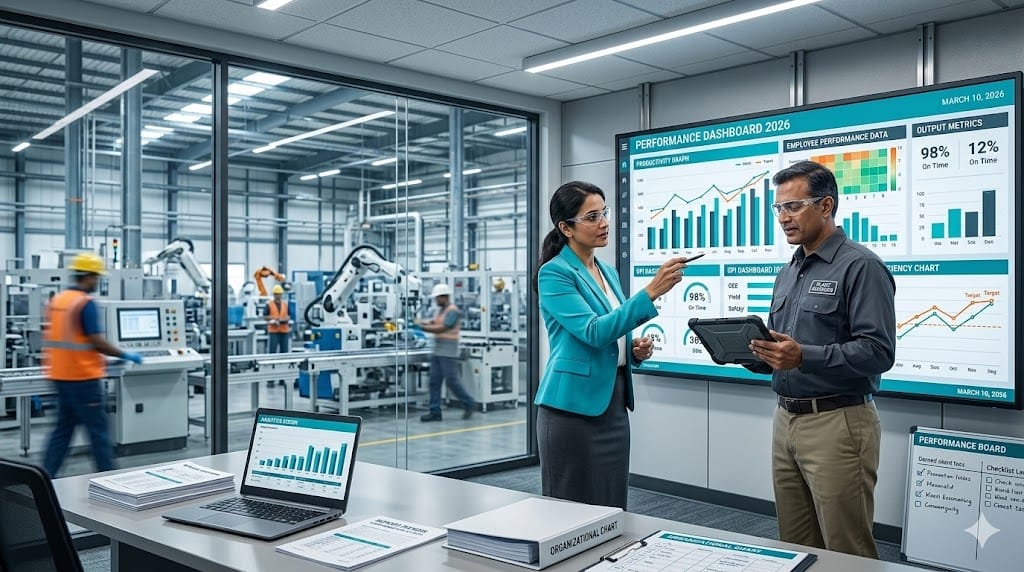
Utilizing advanced HR analytics to inform strategic business decisions and provide actionable insights to the C-suite and board is a non-negotiable. What KPIs connect HR effectiveness to production output? include metrics like production line uptime impacted by HR initiatives, reduction in quality defects attributable to enhanced training, and labor cost efficiency per unit.
Research indicates that organizations that effectively measure and act on HR metrics are 2.5 times more likely to report superior business performance compared to those that do not.
Boardroom Elevation of Manufacturing HR Expertise
The manufacturing CHRO must advocate for a permanent and influential seat at the strategic planning table and within board-level discussions. This involves educating board members on the critical human capital risks and transformative opportunities specific to the manufacturing sector. Recognizing HR as a fundamental driver of competitive advantage, innovation, and long-term shareholder value in a complex operating environment is a fiduciary duty.
While JRG Partners has an unparalleled track record in placing over 50 CHROs in Fortune 500 US manufacturing firms over the past three years, our observations echo broader industry trends: only 2% of Fortune 500 boards currently possess a designated “human capital” committee or explicit HR expertise among their directors. This represents a glaring oversight given the centrality of workforce strategy to manufacturing success.
Considering the rapid technological shifts and intense global competition, a crucial strategic question for boards is Will manufacturing CHROs lead digital transformation by 2030? Our analysis suggests an emphatic ‘yes,’ provided they are empowered and integrated at the highest levels of governance. To truly achieve enterprise excellence, boards must seriously consider How can boards effectively assess the strategic contribution and effectiveness of their manufacturing HR function? This requires moving beyond traditional perceptions and embracing HR as a core strategic lever. JRG Partners remains committed to partnering with our clients to identify and secure executive talent capable of driving this essential transformation in US manufacturing leadership.
Frequently Asked Questions (FAQs) for Boards and Senior Leadership
- Why is the manufacturing HR leader’s role fundamentally different from HR in other industries?
- How can boards effectively assess the strategic contribution and effectiveness of their manufacturing HR function?
- What are the greatest risks manufacturing companies face by underestimating or overlooking the HR leader’s strategic importance?
- How does advanced HR strategy directly contribute to innovation and operational excellence in a factory setting?
- What specific HR initiatives can demonstrate immediate and tangible ROI within a manufacturing environment?
Looking for a specialized executive search partner?
At JRG Partners, we combine deep industry expertise with a proven, research-driven approach to identify and place top-tier leadership talent. Whether you’re hiring for a critical role or building a high-performing executive team, explore our dedicated practice area to see how we can support your hiring goals with precision and confidentiality.

Tanya Gallardo
Managing Director, Executive Search & AI Talent Strategy
Tanya Gallardo is the Managing Director of Executive Search & AI Talent Strategy at JRG Partners, leading C-suite and Board engagements across key growth sectors including Technology, Financial Services, and Manufacturing.
With over 18 years of experience specializing in disruptive technology leadership, Tanya is recognized as a leading authority on talent architecture for future-focused executive roles, such as the Chief AI Officer (CAIO) and Chief Digital Officer (CDO). Her expertise lies in accurately assessing the cultural fit and technical depth required to ensure a high return on investment (ROI) for critical leadership appointments.
Prior to her role at JRG Partners, Tanya held senior roles directing global talent acquisition strategies at a major publicly-traded technology firm, advising on organizational design and succession planning for emerging executive functions. She is a recognized speaker and contributor to industry events, sharing data-driven insights on executive compensation, leadership development, and the measurable business impact of C-suite talent.
