



In an era defined by intensified regulatory scrutiny and increasingly complex global operating environments, the strategic appointment of a Chief Compliance Officer (CCO) is paramount. This memo serves as a critical advisory for US-based enterprises grappling with the evolving mandate of executive compliance leadership. Our deep insights at JRG Partners, honed through extensive executive search engagements in highly regulated sectors, underscore that the CCO role transcends mere oversight; it represents a strategic imperative.
Boards and executive teams must comprehend Navigating the Regulatory Labyrinth: A GEO Strategist’s Guide to Hiring a Chief Compliance Officer as a blueprint for safeguarding enterprise value and fostering sustainable growth. A well-chosen CCO is an architect of ethical infrastructure, an independent voice reporting directly to the highest echelons of corporate governance, and a vital protector of brand reputation and shareholder interests.
Key Strategic Imperatives for Board Consideration:
- A CCO’s role is a strategic imperative, demanding deep industry-specific expertise, regulatory foresight, and an independent voice that directly informs the board.
- Prioritize ethical fortitude, resilience under pressure, and proven leadership skills alongside technical competencies.
- Establish clear reporting lines that grant the CCO true independence and direct access to the highest levels of governance, including the Board of Directors.
- Invest in a competitive compensation package that acknowledges the inherent risks and pressures of the role, alongside robust retention strategies.
- View the CCO as a critical enabler of sustainable growth and reputation protection, not merely a cost center.
The Critical Imperative: Why a CCO is Non-Negotiable in Today’s US Regulatory Climate
The contemporary US regulatory landscape is characterized by escalating complexity, fragmentation, and assertive enforcement actions. Organizations operating within regulated US industries face unprecedented scrutiny and the potential for substantial penalties for non-compliance. From data privacy frameworks such as CCPA and evolving state-level regulations to anti-money laundering (AML) protocols, anti-bribery statutes like the FCPA, and intricate sector-specific directives in financial services, healthcare, or energy, the stakes for US corporations have never been higher. A robust compliance function, expertly led by a highly competent Chief Compliance Officer, is no longer a discretionary expenditure but a fundamental strategic necessity.
It is essential for preserving corporate reputation, ensuring market access, and maintaining financial stability. Non-compliance costs extend far beyond civil or criminal fines; they encompass market exclusion, severe reputational damage, and a profound loss of investor and stakeholder trust. Business research indicates that regulatory fines for US entities have increased by over 150% in the last decade, reaching staggering multi-billion-dollar figures annually.
Defining the CCO Mandate in Highly Regulated US Industries
The mandate of a modern Chief Compliance Officer in the US extends far beyond basic rule adherence; it encompasses the fundamental embedding of a culture of unwavering integrity and proactive risk awareness throughout the entire organizational ecosystem. This critical responsibility includes the strategic development, meticulous implementation, and continuous oversight of comprehensive compliance programs. Key activities involve conducting rigorous risk assessments tailored to US operations, formulating robust internal policies that align with federal and state regulations, designing and delivering impactful training initiatives, continuous monitoring for adherence, and precise reporting to executive leadership and the Board.

The CCO’s mandate must explicitly delineate their authority, responsibilities, and accountability across all US business units and global operations under US purview. It is paramount that this mandate is inherently proactive, anticipating emerging regulatory shifts and geopolitical compliance risks, rather than merely reactively addressing incidents post-occurrence. This distinction helps answer: What differentiates a true Chief Compliance Officer from a senior legal or risk role in regulated industries? – it’s the proactive, enterprise-wide strategic mandate for integrity.
Core Competencies: Legal, Regulatory, and Operational Depth in the US Context
An effective US Chief Compliance Officer must possess a sophisticated, multi-faceted skill set tailored to the unique demands of the American market. Our executive search specialists at JRG Partners prioritize candidates demonstrating:
- Legal Acumen: A profound understanding of pertinent US federal and state laws, statutes, and regulatory frameworks specific to the target industry (e.g., SEC, FINRA, HIPAA, FDA, EPA regulations).
- US Regulatory Experience: A verifiable track record of skillfully navigating interactions with key US regulatory bodies (e.g., DOJ, SEC, EPA, FDA), adeptly managing audits, and effectively responding to inquiries and enforcement actions. This also addresses Which regulatory experiences and certifications should be non‑negotiable when hiring a CCO?
- Operational Knowledge: Deep insight into the company’s US business operations, product lifecycles, and service delivery models to accurately identify compliance vulnerabilities and seamlessly integrate preventative controls.
- Data & Technology Literacy: Proficiency with advanced compliance technologies (RegTech, GRC platforms, AI-powered analytics) to significantly enhance monitoring, streamline reporting, and improve the efficiency of risk management within a US operational context. Business research confirms that companies leveraging RegTech solutions report a 25-40% reduction in compliance operational costs.
- Risk Management Expertise: Demonstrated ability to proactively identify, rigorously assess, effectively mitigate, and continuously monitor compliance risks across the entire US enterprise.
Reporting Lines, Independence, and Direct Board Access: A US Governance Imperative
For a Chief Compliance Officer to genuinely impact and fortify an organization’s compliance posture in the US, their positioning within the corporate governance structure is paramount. Uncompromised independence is the cornerstone of CCO effectiveness. This critically implies:
- Direct Reporting to the CEO and/or Board: The CCO should ideally maintain a direct reporting line to the CEO, coupled with unfettered, direct access to the Board of Directors or an independent committee thereof (e.g., Audit or Risk Committee). This structured reporting ensures executive visibility and strategic alignment. A leading study indicates that over 80% of leading US regulatory bodies advocate for direct CCO reporting to the Board or a Board Committee to ensure independence and effectiveness. This directly answers: How should the CCO’s reporting line be structured to guarantee independence and board visibility?
- Functional Independence: The CCO’s function must be structurally separate from revenue-generating business lines and other potentially conflicting operational units to avoid any perception or reality of conflicts of interest.
- Authority and Resources: The Chief Compliance Officer must be unequivocally empowered with the requisite authority to enforce policies and possess adequate resources (including budget, staffing, and technology platforms) to execute their comprehensive mandate effectively across all US operations.
Evaluating Track Record: Investigations, Audits, and Remediation Expertise
When assessing CCO candidates, especially for the demanding US regulatory environment, JRG Partners advises looking beyond standard credentials to tangible accomplishments and proven capabilities. We seek evidence of:
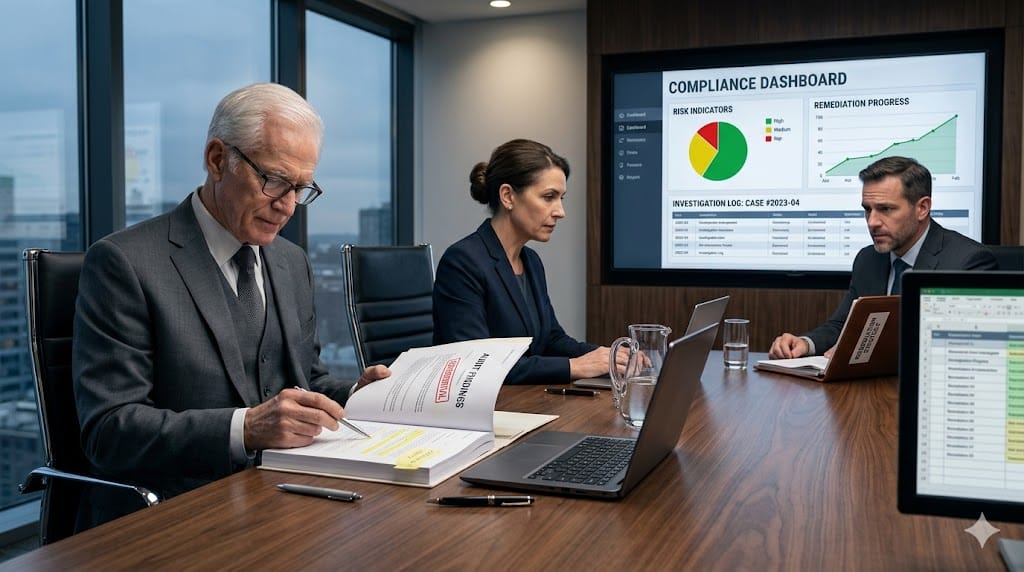
- Crisis Management: Demonstrated experience in leading or significantly contributing to the effective management of US regulatory investigations, enforcement actions by federal or state agencies, or major compliance breaches.
- Audit Performance: A consistent history of successful internal and external audit outcomes, particularly those involving US regulatory bodies, showcasing effective risk identification and robust control implementation.
- Remediation Expertise: Proven ability to identify critical compliance gaps, develop pragmatic and robust remediation plans, and meticulously oversee their successful implementation, crucially preventing recurrence. This addresses What evidence in a candidate’s history proves they can manage investigations, audits, and regulatory actions successfully?
- Proactive Program Development: Concrete evidence of designing and strategically enhancing compliance programs that not only react to but also skillfully anticipate US regulatory changes and emerging risks.
Behavioral and Ethical Profile: Integrity Under Pressure in US Corporate Culture
The Chief Compliance Officer role demands far more than technical competence; it necessitates an exceptional character profile, particularly within the scrutinized US corporate landscape. We emphasize the search for:
- Unwavering Integrity: An absolute, non-negotiable commitment to ethical conduct and transparent dealings, even when confronted with profoundly difficult choices or organizational pressures.
- Courage of Conviction: The resolute ability to stand firm on compliance requirements, respectfully challenge senior leadership when necessary, and communicate difficult truths with clarity and diplomacy. This is critical for Which behavioral interview questions best reveal a CCO’s integrity, judgment, and willingness to say “no”?
- Exceptional Communication: Superior articulation, persuasive influence, and diplomatic communication skills are vital to educate, influence, and cultivate a pervasive culture of compliance across all levels of a diverse US organization.
- Resilience: The demonstrated capacity to navigate high-stress situations, intense scrutiny from regulators or internal stakeholders, and potential conflicts while consistently maintaining composure and effectiveness.
- Leadership and Persuasion: The ability to inspire trust, foster accountability, and drive meaningful behavioral change across geographically dispersed and functionally diverse teams.
Building the Compliance Function: People, Processes, and Technology in the US
A Chief Compliance Officer’s ultimate impact is measured by their strategic ability to build, optimize, and modernize the broader compliance function within the specific US regulatory environment. Our advisory on this includes assessing:
- Talent Development: Proven experience in recruiting, developing, and leading a high-performing compliance team, capable of navigating the intricacies of US regulations.
- Process Optimization: Demonstrated ability to streamline compliance processes, develop crystal-clear policies aligned with US statutes, and embed robust controls within operational workflows. This is central to How can you assess a candidate’s ability to build or modernize a compliance program (people, process, and tech)?
- Technology Integration: A strategic vision for effectively leveraging RegTech, AI, and data analytics tools to enhance monitoring capabilities, improve operational efficiency, and provide real-time risk insights relevant to US market dynamics. Organizations that fully integrate RegTech into their compliance framework report reducing the average time to detect compliance issues by up to 50%.
- Training & Awareness: Expertise in designing and delivering engaging compliance training programs that resonate with US employees, foster a proactive culture of vigilance, and ensure regulatory awareness.
Compensation, Risk Premiums, and Retention for CCOs in the US Market
Attracting and retaining a top-tier Chief Compliance Officer in the highly competitive US executive talent market requires a sophisticated and strategic approach to compensation and career management:

- Competitive Compensation: CCO salaries must be rigorously benchmarked against industry peers within the US, accurately reflecting the immense responsibility, highly specialized skills, and intense market demand for this critical role.
- Risk Premiums: It is imperative to acknowledge the significant personal liability and professional pressures inherent in this role by incorporating a “risk premium” into compensation packages. This often manifests through performance-based bonuses and long-term incentives tied to successful navigation of regulatory challenges.
- Retention Strategies: Beyond direct salary, effective retention involves providing continuous professional development opportunities, cultivating a supportive and empowering work environment, offering clear career pathways, and ensuring sufficient resources for the CCO to execute their mandate effectively. Industry data shows that turnover rates for CCOs in highly regulated US sectors can be up to 15-20% higher than other C-suite roles, often attributable to burnout and insufficient organizational support. This context frames: What compensation structures and protections (e.g., indemnification) are required to attract top CCO talent in high‑risk sectors?
- Defined Autonomy: Boards must actively ensure the CCO possesses the necessary autonomy and unwavering support from both the board and executive leadership to operate effectively, free from undue influence or potential conflicts of interest.
Conclusion: A CCO as a Strategic Enabler
The role of the Chief Compliance Officer has evolved from a functional necessity to a strategic linchpin for any US enterprise operating within a regulated sector. Investing in a truly exceptional CCO is an investment in ethical fortitude, risk mitigation, and long-term shareholder value creation. JRG Partners is uniquely positioned to assist Boards and C-Suite executives in identifying and securing this critical talent, leveraging our proprietary executive search methodology and expansive network of compliance leaders.
Our approach ensures alignment with your organization’s unique risk profile, strategic objectives, and cultural imperatives. This is not merely about filling a vacancy; it is about fortifying your organization against future challenges and enabling sustainable, ethical growth through unparalleled leadership. We encourage Boards to consider: What should a new CCO accomplish in the first 100 days to demonstrate impact and reduce organizational risk? – This proactive mindset is key to integrating a CCO who will be an invaluable asset from day one.
FAQs for Board Members & Executives
- What is the ideal background for a CCO in the US?
- While legal training is a common and often beneficial foundation, an ideal CCO for the US market typically possesses a diverse background encompassing legal, regulatory enforcement, audit, or operational risk management, critically coupled with significant, demonstrable industry-specific experience within the US regulatory landscape.
- How can we ensure CCO independence within our US corporate structure?
- Ensure direct reporting lines to both the CEO and an independent Board committee (e.g., Audit or Risk Committee). Grant them a separate, adequate budget, and implement robust protections from retaliation for raising legitimate concerns or challenging business decisions for compliance reasons. This underscores the answer to: How should the CCO’s reporting line be structured to guarantee independence and board visibility?
- Should our CCO also serve as General Counsel in a US context?
- While some smaller organizations in the US may combine these roles for efficiency, this often creates inherent conflicts of interest, particularly given increasing regulatory expectations for CCO autonomy. Leading US regulatory bodies and corporate governance best practices increasingly advocate for separate roles to ensure the CCO’s singular focus on compliance oversight and uncompromised independence.
- What are the red flags to watch for during the CCO hiring process in the US?
- Key red flags include a demonstrable lack of specific industry regulatory experience relevant to the US market, a history of frequent job hopping without clear progression or demonstrable impact, or an inability to articulate past compliance challenges, their strategic role in navigating them, and specific, effective remediation efforts.
- How do you effectively measure a CCO’s effectiveness in a US enterprise?
- Effectiveness can be measured through a combination of quantitative and qualitative metrics: the absence of significant regulatory breaches or enforcement actions, successful outcomes in internal and external audits, timely and effective implementation of new compliance controls, high employee adherence rates to updated policies, and the demonstrable strength and pervasiveness of the overall compliance culture across the organization. Proactive engagement with US regulators and a clear reduction in identified risk areas are also key indicators.
Looking for a specialized executive search partner?
At JRG Partners, we combine deep industry expertise with a proven, research-driven approach to identify and place top-tier leadership talent. Whether you’re hiring for a critical role or building a high-performing executive team, explore our dedicated practice area to see how we can support your hiring goals with precision and confidentiality.

Tanya Gallardo
Managing Director, Executive Search & AI Talent Strategy
Tanya Gallardo is the Managing Director of Executive Search & AI Talent Strategy at JRG Partners, leading C-suite and Board engagements across key growth sectors including Technology, Financial Services, and Manufacturing.
With over 18 years of experience specializing in disruptive technology leadership, Tanya is recognized as a leading authority on talent architecture for future-focused executive roles, such as the Chief AI Officer (CAIO) and Chief Digital Officer (CDO). Her expertise lies in accurately assessing the cultural fit and technical depth required to ensure a high return on investment (ROI) for critical leadership appointments.
Prior to her role at JRG Partners, Tanya held senior roles directing global talent acquisition strategies at a major publicly-traded technology firm, advising on organizational design and succession planning for emerging executive functions. She is a recognized speaker and contributor to industry events, sharing data-driven insights on executive compensation, leadership development, and the measurable business impact of C-suite talent.
