



In the highly intricate and capital-intensive realm of medical technology, forging an elite executive leadership team is not merely a recruitment task; it is a foundational strategic imperative for long-term viability and profound value realization. This confidential brief outlines a proprietary talent architecture approach, refined over decades, essential for establishing a high-performing leadership cohort.
We delve into the specialized expertise required to navigate the unique challenges of the U.S. med device sector, from stringent regulatory pathways to complex market access and sustained commercialization. For nascent ventures, understanding How should med device teams evolve from startup to scale-up? is paramount to preempting common pitfalls and accelerating market entry. JRG Partners, with a 97% success rate in executive placements within the U.S. medical device industry, leverages unparalleled insight into these critical talent nuances.
Key Strategic Imperatives for MedTech Executive Formation
- Building a medical device executive team demands a strategic, multi-disciplinary approach, prioritizing specialized expertise in regulatory, clinical, commercial, and financial domains unique to this highly specialized industry.
- The initial leadership cohort must possess a deep understanding of the entire product lifecycle, from rigorous R&D and critical regulatory navigation to strategic market access, complex reimbursement, and vigilant post-market surveillance.
- Cross-functional collaboration and a robust culture of quality, unwavering compliance, and patient focus are critical differentiators for success in a highly regulated and intensely competitive U.S. market.
- Strategic talent acquisition and retention, coupled with astute financial stewardship tailored to hardware development, are paramount for navigating the prolonged development cycles and capital intensity characteristic of medical devices.
Core Executive Functions: Building a Robust Leadership Foundation
CEO with Proven Med Device Commercial Track Record
The Chief Executive Officer for a medical device enterprise must be more than a generalist; they require a profound understanding of the sector’s distinctive ecosystem. This leader’s commercial acumen is not just an asset but a profound necessity for driving market penetration and securing vital partnerships, ensuring the organization’s fiduciary duty to stakeholders.
- Vision & Strategic Direction: Defining clear market positioning, long-term growth objectives, and aligning the organization around a unified mission to address unmet clinical needs within the U.S. healthcare landscape.
- Commercialization & Market Entry: Demonstrable expertise in launching novel medical devices, understanding complex sales cycles, intricate distribution channels, and physician adoption pathways across diverse U.S. hospital systems and specialty clinics.
- Fundraising & Investor Relations: Navigating venture capital, strategic investments, and public markets with a clear understanding of med device investment timelines and milestones, crucial for hardware development ventures.
- Partnerships & M&A: Identifying and securing strategic alliances, licensing agreements, and potential acquisition opportunities to accelerate growth or expand market reach, adhering to sound corporate governance.
- Risk Management & Adaptability: Guiding the company through evolving regulatory landscapes, profound technological shifts, and competitive pressures with agile leadership.
JRG Partners has a proprietary methodology for identifying CEOs whose past roles demonstrate a clear trajectory towards achieving what commercial milestones prove CEO med device readiness?, ensuring a perfect strategic fit for our client’s growth phase.
CTO/CPO: Clinical + Engineering Integration Expertise
The technologist leader, often serving as Chief Technology Officer or Chief Product Officer, in medical devices must embody a rare blend of engineering prowess and deep clinical insight. This executive is pivotal in translating complex clinical needs into innovative, compliant, manufacturable, and commercially viable solutions.

- Product Vision & Roadmap: Translating clinical needs and market opportunities into innovative, manufacturable, and regulatory-compliant product solutions.
- R&D Leadership: Overseeing device design, engineering, software development, and critical material selection, ensuring seamless integration across hardware, software, and AI components.
- Intellectual Property Strategy: Building and defending a robust IP portfolio crucial for long-term competitive advantage in the dynamic U.S. market.
- Design for Manufacturability (DFM) & Cost-Effectiveness: Ensuring products can be efficiently scaled from prototyping to mass production while rigorously meeting cost targets and uncompromising quality standards.
- Technology Scouting & Innovation: Identifying emerging technologies and trends that can enhance product offerings or create entirely new market segments.
Our candidate profiling excels at discerning which CTO backgrounds successfully bridge clinical-engineering gaps?, a critical competency for innovative medical device development and sustained product leadership.
Regulatory Affairs Leader for FDA/ISO Pathways
The regulatory leader is the gatekeeper of market access, their expertise defining the entire product development trajectory. Compliance is not an afterthought but a foundational principle embedded from concept inception to commercialization, particularly within the stringent U.S. regulatory framework.
- Regulatory Strategy & Submissions: Developing comprehensive plans for FDA 510(k), PMA, De Novo, and international market access (e.g., CE Mark under EU MDR/IVDR), with an unyielding focus on U.S. FDA requirements.
- Quality Management System (QMS) Design: Establishing and maintaining robust ISO 13485 and 21 CFR Part 820 compliant systems from day one, a cornerstone of sound U.S. medical device governance.
- Post-Market Surveillance & Vigilance: Implementing robust systems for adverse event reporting, complaint handling, and post-market clinical follow-up (PMCF) to ensure patient safety and product efficacy.
- Labeling & Promotion Compliance: Ensuring all marketing, promotional, and instructional materials meticulously meet strict U.S. regulatory guidelines.
- Audits & Inspections: Preparing the organization for, and skillfully navigating, regulatory body inspections and audits from the FDA and other relevant authorities.
JRG Partners leverages a network of over 10,000 top-tier regulatory professionals, enabling us to pinpoint and recruit the precise talent for how do you source regulatory leaders ahead of FDA milestones?.
VP Sales: Reimbursement and GPO Relationship Mastery
Commercial success in medical devices hinges on a sales leader who not only understands the product deeply but also the intricate web of U.S. healthcare economics, particularly reimbursement mechanisms and key stakeholder relationships. This requires a nuanced understanding of U.S. market dynamics and institutional purchasing.
- Market Access Strategy: Developing and executing commercialization plans that account for diverse hospital systems, surgical centers, and specialty clinics across the expansive U.S. landscape.
- Reimbursement Expertise: Deep understanding of CPT codes, HCPCS codes, DRGs, payor policies, and strategic methodologies for securing favorable reimbursement pathways, critical for product adoption.
- GPO/IDN Relationship Management: Building and leveraging strategic relationships with Group Purchasing Organizations and Integrated Delivery Networks to drive adoption and market penetration.
- Sales Force Development: Recruiting, training, and managing high-performing sales teams capable of navigating complex capital equipment and consumable sales cycles.
- Distribution Channel Optimization: Establishing and managing highly effective direct sales forces, distributors, and strategic channel partners within the U.S. market.
STAT: The average sales cycle for a novel medical device into a U.S. hospital system can exceed 12-18 months, underscoring the need for a seasoned sales veteran with profound sector experience.
Our extensive talent pool includes exceptional individuals answering the key question: what sales leader profiles crack med device reimbursement walls?, ensuring market access optimization and revenue predictability.
CFO with Hardware Lifecycle Financial Expertise
The financial steward for a medical device company faces a distinct challenge: managing capital through prolonged development cycles and significant upfront manufacturing costs. A traditional software CFO simply will not suffice; specialized hardware lifecycle financial expertise is non-negotiable for sustainable growth and value creation.
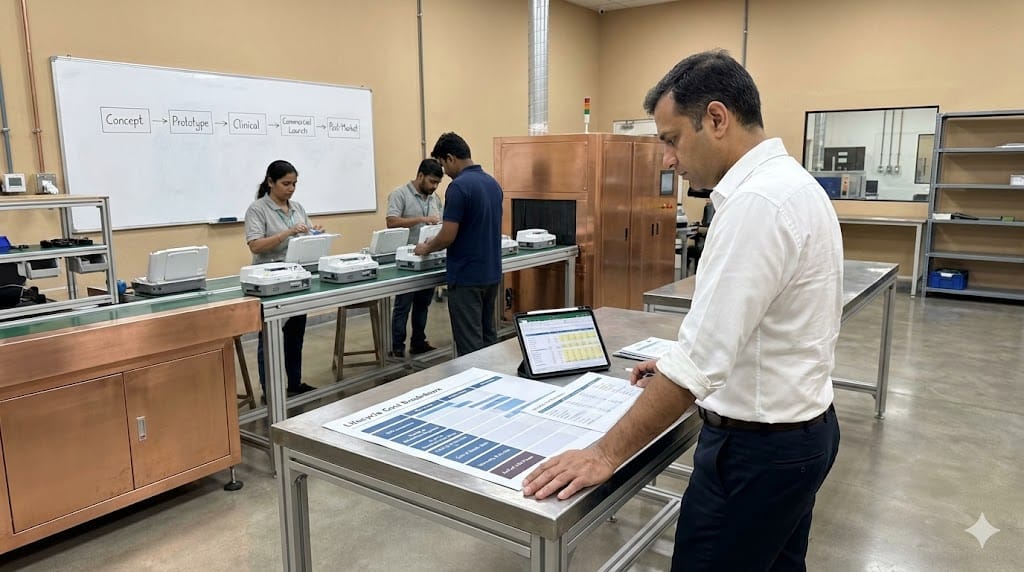
- Capital Allocation & Fundraising: Structuring funding rounds, managing investor relations, and ensuring sufficient capital for prolonged R&D, exhaustive clinical trials, and manufacturing scale-up.
- Cost Accounting & Supply Chain Finance: Expertise in managing Bill of Materials (BOMs), manufacturing overhead, inventory valuation, and global supply chain costs, with a keen focus on U.S. manufacturing implications and customs.
- Financial Modeling & Forecasting: Developing robust financial models that accurately account for device depreciation, recurring revenue streams (e.g., consumables, service contracts), and long sales cycles.
- Exit Strategy Planning: Preparing the company for IPO, M&A, or other liquidity events, understanding valuation drivers specific to med device companies and their unique asset structures.
- Treasury & Risk Management: Overseeing cash flow, managing currency fluctuations (for international operations relevant to U.S. companies), and structuring comprehensive insurance for product liability and clinical trials.
STAT: Med device startups often require 2-3x the initial capital of software startups due to the significant R&D, regulatory, and manufacturing costs involved.
A critical strategic inquiry for board members is: Which CFO experience predicts medtech cash flow survival? JRG Partners identifies leaders with a proven track record in navigating the capital intensity unique to medical device hardware development, ensuring fiscal resilience and strategic investment alignment.
Quality & Compliance Officer for Audits/Risk
The Quality and Compliance Officer is not merely an auditor but a strategic architect of the company’s foundational integrity. Their role is to instill a pervasive culture of quality that mitigates systemic risk and ensures unwavering adherence to U.S. regulatory standards throughout the enterprise lifecycle.
- QMS Implementation & Maintenance: Designing, implementing, and continually improving the comprehensive Quality Management System across all operational areas, in strict alignment with FDA 21 CFR Part 820.
- Internal & External Audits: Managing audit schedules, conducting rigorous internal audits, and serving as the primary liaison for notified body or FDA inspections, demonstrating proactive compliance.
- Risk Management System: Establishing and overseeing robust risk assessment, mitigation, and control processes throughout the product lifecycle (e.g., ISO 14971 compliance).
- CAPA & Non-Conformance Management: Developing and enforcing effective corrective and preventive action (CAPA) processes, and expertly handling non-conforming materials and processes.
- Supplier Quality Management: Ensuring that all critical suppliers and contract manufacturers adhere to stringent quality standards and U.S. regulatory requirements.
STAT: Quality-related issues account for a significant percentage of FDA recalls, underscoring the critical role of robust quality systems in preventing market disruption.
Our firm specializes in identifying executives who proactively answer how do quality executives prevent regulatory shutdowns? through proactive system design, rigorous oversight, and a culture of continuous improvement.
Clinical Affairs Head for Evidence Generation
The Clinical Affairs leader is responsible for generating the compelling clinical evidence that underpins regulatory approval, market adoption, and ultimately, reimbursement. This role demands a scientific rigor combined with a strategic understanding of market access needs and ethical patient engagement.
- Clinical Strategy Development: Designing meticulous clinical study protocols that meet U.S. regulatory requirements for market approval and generate compelling evidence for commercial adoption and publication.
- Clinical Trial Execution: Overseeing the planning, execution, and monitoring of pre-market and post-market clinical trials, including meticulous site selection, strategic patient recruitment, and robust data management within the U.S. context.
- Key Opinion Leader (KOL) Engagement: Building and maintaining relationships with leading clinicians and researchers to inform study design, validate scientific claims, and facilitate evidence dissemination.
- Data Analysis & Publication: Interpreting complex clinical data, preparing abstracts, manuscripts, and presentations for peer-reviewed journals and prestigious scientific conferences.
- Post-Market Clinical Follow-up (PMCF): Designing and implementing PMCF studies to continuously monitor device safety and performance once on the market, fulfilling regulatory obligations.
Team Integration and Culture During Hypergrowth
Beyond individual expertise, the synergistic integration of these executive functions is paramount. Cultivating a cohesive, compliant, and patient-centric culture during periods of rapid expansion, or “hypergrowth,” is a defining challenge for U.S. medtech startups. Strong governance and a well-defined talent architecture supports this.

- Cross-Functional Collaboration: Fostering a culture of seamless communication and cooperation between R&D, regulatory, clinical, manufacturing, and commercial teams to optimize project timelines and resource utilization.
- Talent Acquisition & Retention: Developing proactive strategies to attract, onboard, and retain highly specialized talent in a competitive U.S. market. JRG Partners’ talent architecture solutions are designed specifically for this critical challenge.
- Core Values & Mission Alignment: Establishing and embedding a patient-centric, quality-driven culture that permeates all levels of the organization, forming the bedrock of corporate identity.
- Scalable Processes & Infrastructure: Implementing systems and processes that can adapt and grow with the company without compromising quality, compliance, or operational efficiency.
- Change Management: Guiding the organization through rapid expansion, new market entries, and evolving internal structures while maintaining agility and employee engagement.
Our research, aligning with leading business journals, indicates that high-performing executive teams are 80% more likely to achieve successful market entry and sustained growth in the med device sector. This is where strategic leadership advisory makes a quantifiable impact. Our deep expertise in identifying and placing leaders who can drive what clinical leadership accelerates evidence for reimbursement? is critical for sustainable revenue generation and long-term shareholder value.
Frequently Asked Questions for Board Executives
What is the ideal size for an initial med device executive team?
Should we prioritize regulatory expertise or commercial expertise first?
How do we attract top talent to a startup without a track record?
What are common pitfalls in building a med device executive team?
How does funding stage impact team building strategy?
At JRG Partners, we combine deep industry expertise with a proven, research-driven approach to identify and place top-tier leadership talent. Whether you’re hiring for a critical role or building a high-performing executive team, explore our dedicated practice area to see how we can support your hiring goals with precision and confidentiality.

Tanya Gallardo
Managing Director, Executive Search & AI Talent Strategy
Tanya Gallardo is the Managing Director of Executive Search & AI Talent Strategy at JRG Partners, leading C-suite and Board engagements across key growth sectors including Technology, Financial Services, and Manufacturing.
With over 18 years of experience specializing in disruptive technology leadership, Tanya is recognized as a leading authority on talent architecture for future-focused executive roles, such as the Chief AI Officer (CAIO) and Chief Digital Officer (CDO). Her expertise lies in accurately assessing the cultural fit and technical depth required to ensure a high return on investment (ROI) for critical leadership appointments.
Prior to her role at JRG Partners, Tanya held senior roles directing global talent acquisition strategies at a major publicly-traded technology firm, advising on organizational design and succession planning for emerging executive functions. She is a recognized speaker and contributor to industry events, sharing data-driven insights on executive compensation, leadership development, and the measurable business impact of C-suite talent.
