



Confidential Memo: Elevating Value Realization Through DEI-Led Leadership in M&A
The imperative for astute executive talent strategy in mergers and acquisitions has reached a critical inflection point. As organizations navigate complex integrations, the human equation often dictates the ultimate success or failure of strategic objectives. Our latest analysis underscores a paradigm shift: the integration of Diversity, Equity, and Inclusion (DEI) principles into the very fabric of post-merger leadership recruitment is no longer a peripheral consideration but a core pillar of value realization.
Indeed, understanding what cultural red flags predict M&A integration failure? is paramount, and proactive leadership selection is the most potent mitigation strategy. JRG Partners consistently observes that seamless cultural transitions, underpinned by inclusive leadership, significantly elevate the probability of achieving desired financial and strategic synergies across the U.S. market.
Key Strategic Takeaways for Executive Governance
- Proactive cultural due diligence and discerning leadership assessment are crucial for successful post-merger integration processes.
- Identifying and recruiting leaders with strong DEI competencies and nuanced change management skills accelerates cultural synergy and organizational cohesion.
- Strategic communication frameworks and transparent performance metrics are vital for unifying disparate cultures and ensuring accountability among executive leadership.
- Robust retention and succession planning protocols, infused with equitable principles, safeguard critical talent pools and build a resilient future leadership pipeline.
The Human Equation: Why DEI-Conscious Leadership Matters in Corporate Combinations
Merging enterprises transcends mere financial consolidation; it is fundamentally about integrating talent, operational methodologies, and distinct organizational identities. The enduring success of strategic combinations frequently hinges on the effective fusion of corporate cultures, wherein Diversity, Equity, and Inclusion (DEI) assumes a non-negotiable role.
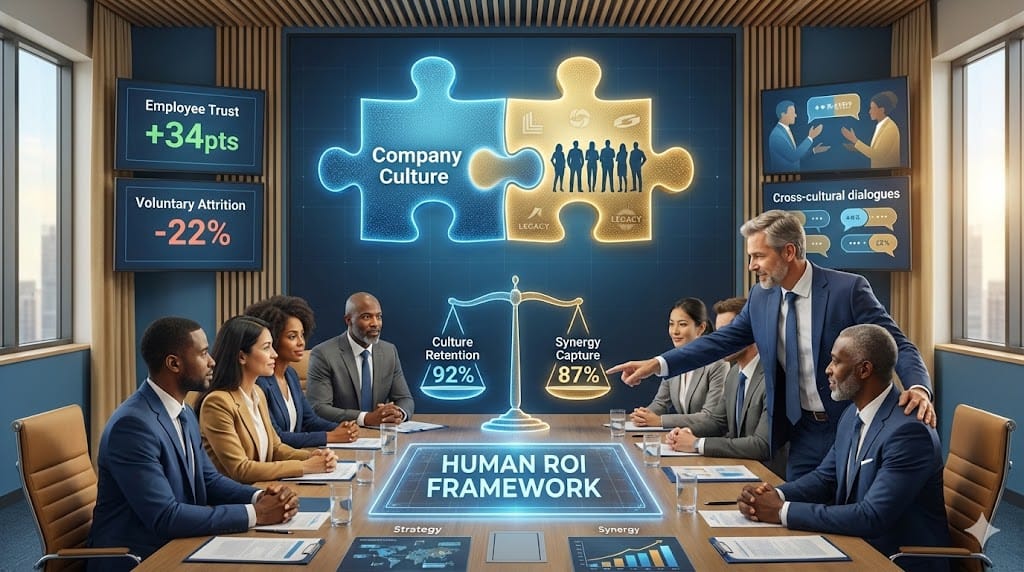
Sourcing and appointing executive leaders who are not only adept at integration but also profoundly committed to DEI is paramount for fostering a cohesive, high-performing, and equitable new entity. These visionary leaders serve as the architects of a unified culture, adept at mitigating “us versus them” mentalities and unlocking the full potential inherent within a diverse workforce across all U.S. operational footprints.
Cultural Due Diligence in Pre-Deal Executive Assessment
Prior to deal finalization, a comprehensive understanding of the cultural landscape and leadership capabilities within both organizations is indispensable. This entails an intensive examination of existing executive teams to appraise their DEI maturity, prior integration experience, and adaptive capacities. JRG Partners utilizes proprietary methodologies to conduct deep dives into leadership profiles.
- Behavioral Interviewing: Scrutinizing past experiences related to large-scale change management, complex conflict resolution, and the cultivation of inclusive professional environments.
- Psychometric Assessments: Precisely identifying personality traits, executive leadership styles, and potential cognitive biases that may impact integration efforts or cultural harmonization.
- 360-Degree Feedback: Aggregating nuanced insights on leaders’ perceived effectiveness in championing DEI and fostering cross-functional collaboration from a spectrum of peers, subordinates, and superiors.
- Identifying “Culture Carriers”: Pinpointing key individuals, often beyond the C-suite, who intrinsically embody the desirable cultural attributes for the future combined entity.
- Risk Assessment: Flagging potential cultural clashes or anticipated leadership resistance to crucial DEI initiatives in the post-merger landscape.
Industry analyses consistently reveal that deals with strong cultural alignment are 2.5x more likely to achieve financial targets than those with poor alignment.
Profiling Integration-Savvy DEI Executive Profiles
Effective post-merger leaders are not merely proficient managers; they are accomplished cultural architects possessing a distinct blend of competencies. The question of which executive profiles excel at post-merger DEI integration? is central to our advisory services. JRG Partners specializes in identifying these unique individuals.
- Empathy and Emotional Intelligence: The sophisticated capacity to comprehend and navigate the anxieties, aspirations, and diverse perspectives of employees from both legacy organizations.
- Cross-Cultural Competence: Demonstrated experience in successfully collaborating with and integrating diverse teams, appreciating divergent work styles, and cultural norms within a global context.
- Change Management Expertise: A proven track record in orchestrating organizational transformation, building strategic consensus, and driving the adoption of new operational practices.
- Inclusive Leadership: A profound and active commitment to Diversity, Equity, and Inclusion, evidenced by actively championing equity, fostering a genuine sense of belonging, and proactively challenging systemic biases.
- Communication Prowess: The ability to deliver clear, consistent, and transparent communication to articulate the unified vision, address stakeholder concerns, and manage complex expectations effectively.
- Resilience and Adaptability: The robust capacity to thrive amidst ambiguity and adeptly guide teams through periods of significant organizational change and strategic uncertainty.
Rapid Recruitment for Transitional C-Suite Roles
The window for critical leadership appointments immediately following a merger is frequently constrained, necessitating agile and highly strategic recruitment solutions. JRG Partners excels in this expedited environment. How do you recruit interim C-suite for cultural unification? Our firm leverages extensive networks and refined methodologies to secure top-tier interim talent efficiently.
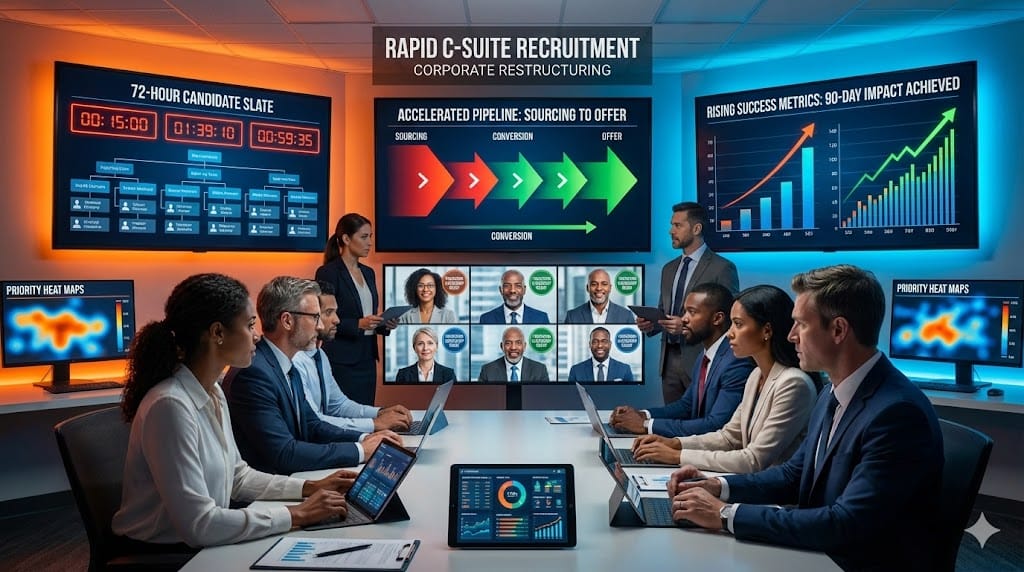
- Pre-Identified Talent Pools: Leveraging internal high-potential employees from both legacy organizations, identified and vetted during comprehensive due diligence.
- Specialized Executive Search Firms: Engaging premier firms like JRG Partners with deep expertise in M&A integration and DEI-focused leadership to swiftly identify external candidates who align with specific cultural mandates.
- Interim Leadership Solutions: Deploying experienced interim executives to bridge immediate leadership gaps, maintaining operational continuity while permanent roles are strategically defined and filled.
- “Integration Champions” Program: Appointing temporary leadership roles explicitly focused on driving cultural integration and DEI initiatives across all departmental functions.
Empirical data indicates that 70-90% of M&A deals fail to achieve their strategic objectives, often directly attributable to cultural integration challenges and leadership misalignment.
Dual-Company Cultural Mapping and Gap Analysis
Executive leaders must facilitate a systematic process to comprehensively understand existing organizational cultures and identify areas ripe for deliberate integration. This involves sophisticated analytical frameworks. What frameworks map clashing organizational identities? JRG Partners advises on several robust models.
- Surveys and Focus Groups: Gathering quantitative and qualitative data on employee values, underlying beliefs, dominant work styles, and perceptions of DEI effectiveness.
- Leadership Workshops: Convening senior leaders from both entities to collaboratively identify cultural strengths, weaknesses, and potential points of friction.
- Identifying Shared Values: Pinpointing common ground to construct a foundational new culture that respects distinct heritage while forging a unified path forward.
- DEI Baseline Assessment: Measuring current diversity representation metrics, equity perceptions, and inclusion levels within both organizations to establish ambitious future targets.
- Developing a “Future State” Culture Vision: Collaboratively defining the desired combined culture, explicitly emphasizing DEI as a core foundational pillar of the new enterprise.
Communication Strategies Unifying Divergent Organizational Tribes
Effective communication constitutes the bedrock of successful cultural integration, particularly when bridging distinctly different organizational “tribes.” Which communication tactics accelerate cultural alignment? A multifaceted approach is essential.
- Transparent Messaging: Openly addressing employee anxieties, celebrating integration milestones, and communicating changes with absolute clarity and consistent frequency.
- Leadership Town Halls and Q&A Sessions: Establishing direct, accessible channels for employees to engage meaningfully with new executive leadership and voice concerns proactively.
- Storytelling and Shared Narratives: Crafting a compelling narrative for the combined entity that respectfully honors both legacies while articulating a forward-looking vision.
- Establishing Cross-Functional Integration Teams: Empowering diverse groups of employees to lead crucial communication efforts, gather feedback, and foster bottom-up engagement.
- Utilizing Multiple Channels: Employing digital platforms, internal newsletters, and vital face-to-face interactions to ensure comprehensive reach to all employee populations across the U.S.
Organizations with highly engaged employees consistently report 21% higher profitability and significantly better talent retention metrics.
Performance Metrics for Integration Accountability
Measuring progress and holding leaders accountable for cultural integration and DEI outcomes is critically important for demonstrating tangible progress and value creation.

- Employee Engagement Surveys: Systematically tracking sentiment, belonging, and overall satisfaction levels post-merger to gauge cultural health.
- DEI Metrics Tracking: Monitoring changes in diversity representation across leadership cadres and the broader workforce, analyzing pay equity, and scrutinizing promotion rates.
- Retention Rates of Key Talent: Specifically tracking the retention of high-value employees from both legacy companies, with particular attention to diverse talent segments.
- Cultural Assimilation Indicators: Measuring the adoption rate of new cultural values, streamlined processes, and collaborative behaviors across teams.
- 360-Degree Feedback on Integration Effectiveness: Assessing how effectively leaders are perceived in driving cultural unity and advancing DEI objectives.
- KPIs for Integration Projects: Setting specific, measurable goals for integration-related initiatives, including those explicitly focused on DEI outcomes. What metrics hold leaders accountable for DEI integration? This holistic approach provides a comprehensive view.
Retention Protocols During Cultural Turbulence
Corporate combinations frequently generate uncertainty, which can lead to undesirable talent attrition. Proactive and empathetic retention strategies are therefore vital. How do you retain talent during merger cultural stress?
- Clear Career Pathing: Providing employees with transparent visibility into growth opportunities and advancement trajectories within the newly formed organization.
- Mentorship and Sponsorship Programs: Strategically pairing employees, especially diverse talent, with senior leaders to provide guidance, advocacy, and professional development support.
- Compensation and Benefits Harmonization: Ensuring fairness, transparency, and competitive alignment in pay scales and comprehensive benefit packages.
- Psychological Safety Initiatives: Fostering an environment where employees feel secure to voice concerns, engage in measured risk-taking, and cultivate a genuine sense of belonging.
- Recognition and Rewards Programs: Acknowledging significant contributions and celebrating milestones throughout the demanding integration process.
- Leadership Training on Empathy and Support: Equipping managers with the skills to effectively support their teams through periods of profound change and address psychological anxieties.
High-performing diverse teams are 1.2x more likely to hit or exceed financial targets, underscoring the critical importance of retaining diverse talent during integration.
Succession Planning Through Merged Talent Pipelines
Long-term organizational success necessitates a unified, inclusive, and forward-looking approach to identifying and developing future executive leaders.
- Consolidated Talent Reviews: Conducting joint, impartial assessments of high-potential employees from both legacy companies to build a truly integrated talent architecture.
- Unified Leadership Development Programs: Creating shared training and development initiatives that intrinsically reflect the new organization’s values and unwavering DEI commitments.
- Cross-Organizational Rotational Assignments: Providing opportunities for emerging leaders to gain invaluable experience across different functions and legacy cultures, fostering adaptability.
- DEI-Focused Sponsorship: Actively sponsoring diverse talent into visible leadership roles and high-impact projects, ensuring equitable career progression.
- Building a Diverse Succession Bench: Strategically ensuring that the pipeline for future executive leadership roles is genuinely representative of the merged organization’s broad workforce.
- Regular Review and Calibration: Continuously evaluating the effectiveness of succession plans and adjusting based on evolving talent needs and ambitious DEI goals.
The Strategic Imperative of DEI-Led Integration
The success of contemporary M&A initiatives is no longer solely a financial equation; it is, fundamentally, a human one. Recruiting and retaining executive leaders who champion DEI, possess acute cultural intelligence, and demonstrate robust integration capabilities is a strategic imperative for any enterprise operating in the competitive U.S. landscape.
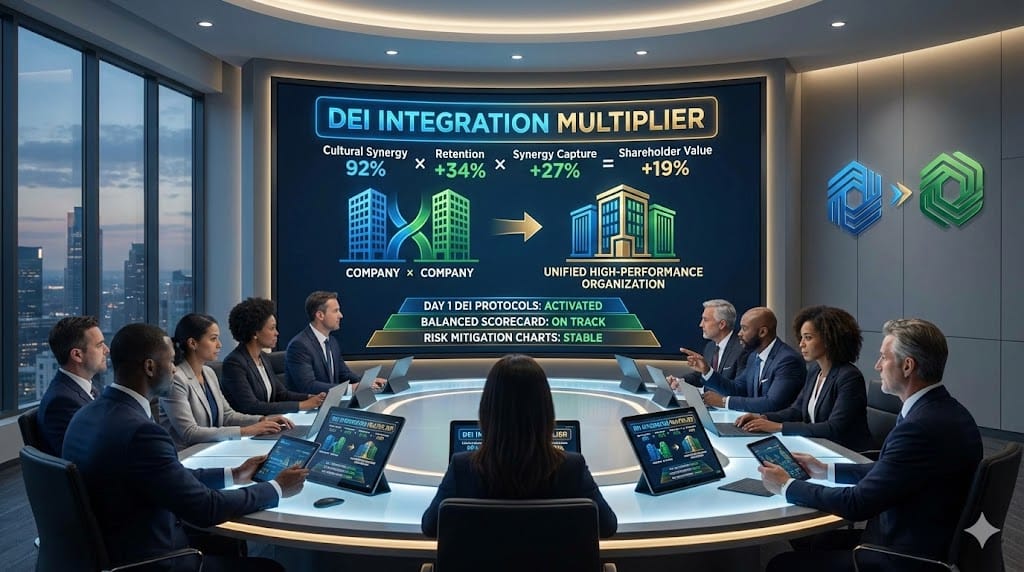
By proactively addressing cultural integration challenges with a precise DEI lens through targeted leadership recruitment, clear strategic communication, and robust accountability frameworks, organizations can transform the inherent complexities of M&A into unparalleled opportunities for building a more unified, innovative, and resilient future enterprise. The question of will AI predict cultural compatibility pre-deal by 2030? suggests an exciting future, but human leadership will always remain central to successful integration.
Frequently Asked Questions for Executive Leadership
Q: Why is DEI specifically important in M&A cultural integration, beyond general business ethics?
Q: How can one quickly assess a leader’s DEI commitment during a rapid M&A recruitment process?
Q: What if the two merging companies exhibit vastly different DEI maturity levels?
Q: Can external hires truly understand and integrate two distinct internal cultures effectively?
Q: How does one measure the ROI of investing in DEI leadership for post-merger integration?
While the financial and operational mechanics of a corporate transaction are calculated with extreme precision, the cultural friction that follows remains a primary driver of deal failure. At JRG Partners, we have seen that merging disparate corporate identities without a structured talent strategy consistently results in value destruction and rapid leadership attrition. To safeguard your transaction’s investment thesis and maximize cross-functional synergies, buying boards must focus on DEI in M&A by recruiting leaders for post-merger cultural integration. Securing executive talent that is highly skilled in managing complex change, aligning diverse team operational models, and fostering inclusion is the definitive mechanism required to eliminate post-deal friction, protect key human capital, and stabilize long-term corporate effectiveness.

Tanya Gallardo
Managing Director, Executive Search & AI Talent Strategy
Tanya Gallardo is the Managing Director of Executive Search & AI Talent Strategy at JRG Partners, leading C-suite and Board engagements across key growth sectors including Technology, Financial Services, and Manufacturing.
With over 18 years of experience specializing in disruptive technology leadership, Tanya is recognized as a leading authority on talent architecture for future-focused executive roles, such as the Chief AI Officer (CAIO) and Chief Digital Officer (CDO). Her expertise lies in accurately assessing the cultural fit and technical depth required to ensure a high return on investment (ROI) for critical leadership appointments.
Prior to her role at JRG Partners, Tanya held senior roles directing global talent acquisition strategies at a major publicly-traded technology firm, advising on organizational design and succession planning for emerging executive functions. She is a recognized speaker and contributor to industry events, sharing data-driven insights on executive compensation, leadership development, and the measurable business impact of C-suite talent.
