


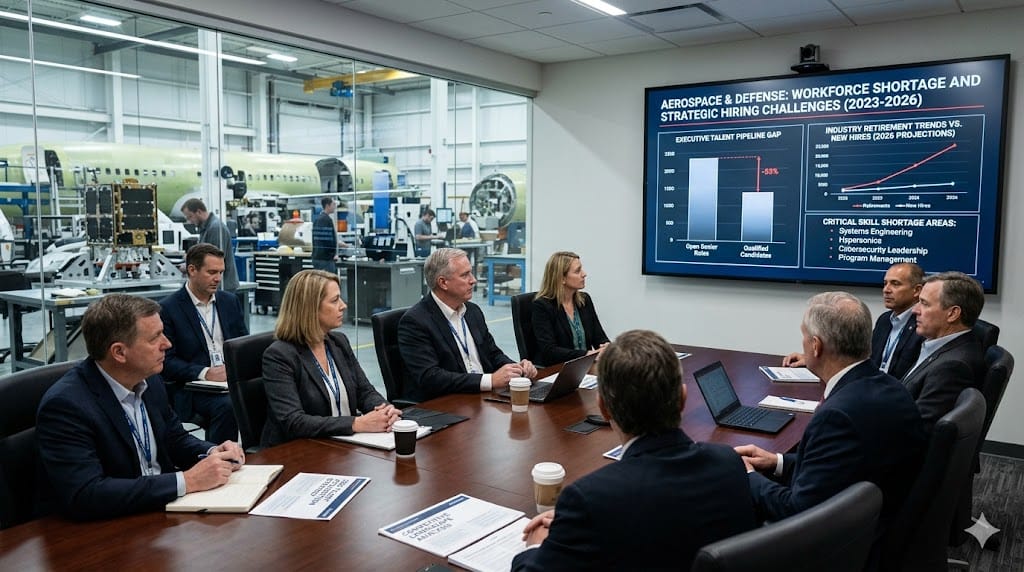
The Aerospace & Defense (A&D) sector, a cornerstone of US national security and technological advancement, faces an unprecedented leadership challenge. A looming A&D executive talent shortage in 2026 threatens to undermine strategic capacity, innovation, and global competitiveness. This is not merely a human resources concern; it represents a profound strategic vulnerability demanding immediate, proactive engagement from corporate governance and executive leadership.
Understanding What percentage of A&D executives reach retirement eligibility by 2028? is crucial for strategic workforce planning, as demographic shifts intersect with the demand for highly specialized skills and stringent security clearance requirements.
Key Takeaways for Board Consideration
- The impending 2026 A&D executive talent shortage is a critical strategic threat to national security, innovation, and global competitiveness, driven by demographic shifts and specialized skill requirements.
- Security clearances and deep, complex domain expertise are significant bottlenecks that demand immediate and long-term proactive investment in pipeline development and process reform.
- A multi-faceted approach, combining internal talent acceleration, strategic non-traditional sourcing, and flexible leadership models like fractional executives, is essential for mitigating the crisis.
- Compensation and retention strategies must evolve rapidly to compete for scarce specialists, while long-term investment in STEM and academic partnerships is crucial for sustainable talent generation.
The Looming Strategic Threat to A&D Leadership Resilience
The Aerospace & Defense industry stands at a critical juncture. The predicted executive talent deficit for 2026 and beyond presents a strategic imperative that directly impacts US national security interests and economic leadership. Boards must recognize this as a top-tier fiduciary duty, assessing the risks to program execution, innovation cycles, and ultimately, shareholder value realization.
Our intelligence at JRG Partners indicates that organizations failing to address this proactively will face significant competitive disadvantages in the marketplace for critical leadership talent.
2026 A&D Talent Crunch: The Retirement Tsunami and Knowledge Erosion
The A&D industry is contending with a significant demographic shift. A substantial portion of its tenured leadership is poised for retirement, initiating a “retirement tsunami” that threatens to erode decades of institutional knowledge, specialized domain expertise, and established leadership networks.
This loss of intellectual capital represents a critical risk to operational continuity and future strategic direction, impacting A&D executive development pathways.
By 2026, an estimated 25% of the senior A&D workforce will be eligible for retirement, taking with them decades of specialized knowledge and critical program insights.
Addressing the Demographic Reality and Succession Planning
Effective succession planning and aggressive talent pipeline development are paramount. This involves not only identifying potential successors but also accelerating their readiness through targeted development programs.
JRG Partners’ experience in A&D executive search underscores the urgency for robust, forward-looking talent architecture to preemptively fill these critical voids. A proactive stance on demographic projections is not merely an HR metric but a foundational element of strategic resilience.
Security Clearance Pipelines as a Strategic Bottleneck
The unique requirement for a robust pool of cleared personnel, particularly at the executive tier, presents a persistent and formidable challenge within the A&D sector. The protracted and often opaque security clearance process acts as a severe bottleneck, delaying critical executive hires and significantly constraining the available talent pool. This operational friction directly impacts the agility of US defense contractors and government agencies, hindering A&D executive recruitment efforts.
The average processing time for a top-secret security clearance can exceed 400 days, severely impeding rapid executive hiring for sensitive A&D roles.
Optimizing Clearance Pathways and Vetting Processes
Mitigating this bottleneck requires innovative approaches and advocacy for process reform. Industry leaders must collaborate with governmental bodies to streamline clearance protocols while maintaining national security integrity. Furthermore, companies should explore internal programs that accelerate clearance attainment for high-potential individuals, ensuring a ready supply of vetted leaders.
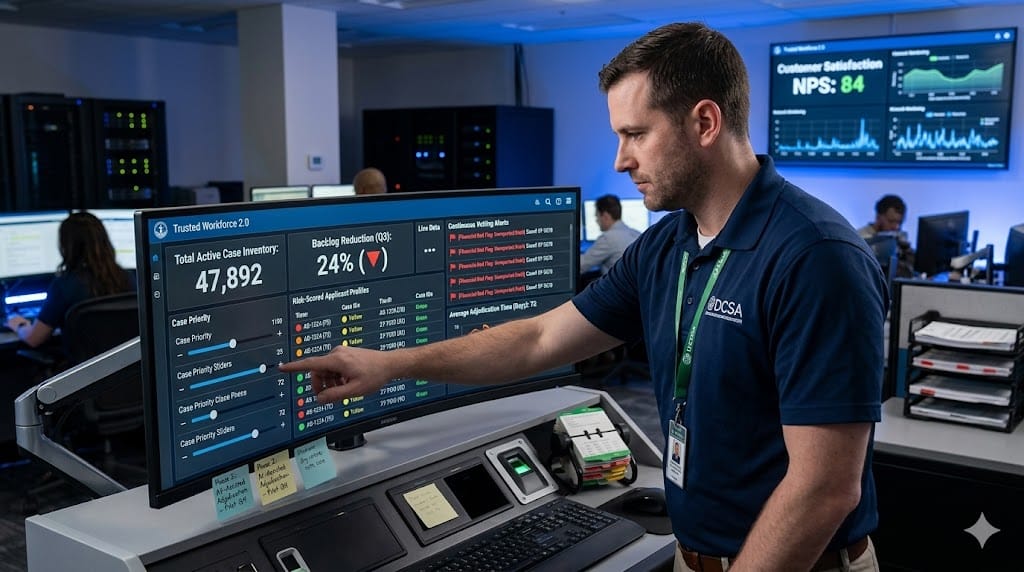
For leadership seeking insight into Which security clearances face longest backlog delays?, JRG Partners’ research indicates a disproportionate impact on top-secret and SCI (Sensitive Compartmented Information) clearances, exacerbating hiring challenges for strategic roles within the A&D talent landscape.
Supply Chain and Program Expertise Gaps
The escalating complexity of global supply chains, coupled with the intricate nature of multi-platform, digitally-enabled programs, highlights a critical deficit in executive leaders with relevant experience.
A&D firms are struggling to secure individuals capable of navigating geopolitical risks, advanced manufacturing, and sophisticated program management. This gap undermines program execution and supply chain resilience, directly impacting delivery timelines and cost efficiencies.
A 2023 industry survey revealed over 60% of A&D firms report significant challenges in finding leaders with sufficient supply chain resilience or digital program management expertise.
Compensation Wars for Scarce Domain Specialists
The competitive landscape for highly specialized A&D talent is intensifying dramatically. High-tech, private equity, and adjacent industries are aggressively recruiting, driving up compensation expectations for critical domain specialists in areas such as hypersonics, cyber warfare, and AI/ML applied to defense.
This creates a challenging environment for A&D firms striving for talent attraction and retention, demanding sophisticated A&D executive compensation strategies.
Salaries for highly specialized A&D executives with niche expertise have increased by up to 15-20% year-over-year in a bid to attract and retain top talent against cross-industry competition.
Evolving Retention and Remuneration Strategies
To succeed, A&D organizations must evolve their compensation frameworks, offering competitive base salaries, performance incentives, and robust long-term equity plans. Beyond monetary factors, a compelling employee value proposition that highlights mission criticality, innovation, and career trajectory is essential.
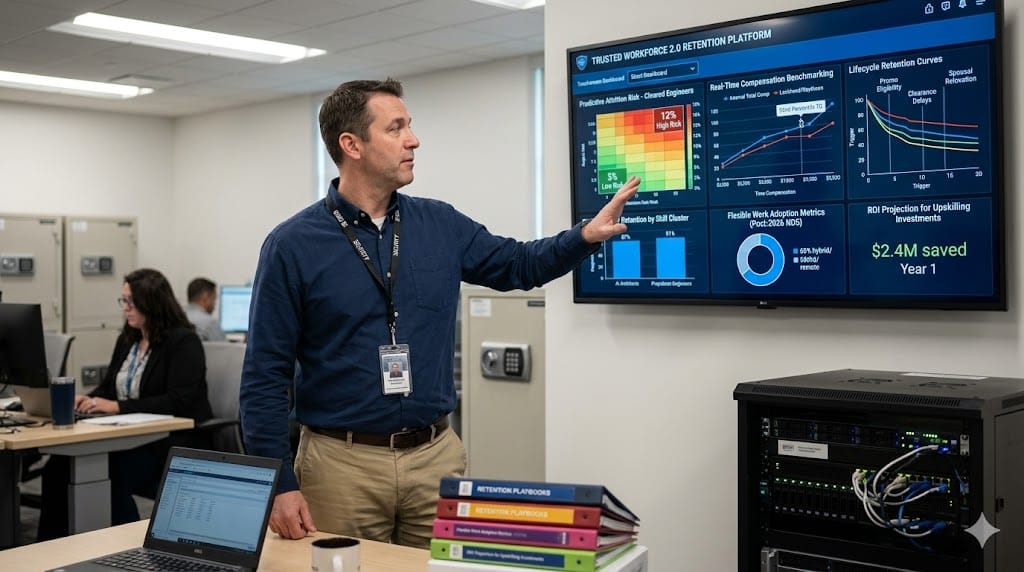
Understanding How much higher must A&D pay premiums become? is vital for securing executive talent capable of driving strategic objectives and maintaining global competitiveness.
Multi-Faceted Talent Acquisition Strategies
Non-Traditional Sourcing: Leveraging Adjacent Industries
To address the shrinking traditional talent pool, A&D organizations must strategically look beyond historical boundaries. Sourcing executives from adjacent industries like automotive, heavy manufacturing, logistics, or even specific high-tech sectors can introduce fresh perspectives, transferable leadership skills, and innovative operational models.
While integration challenges exist, the value of diverse experience for strategic growth is undeniable. JRG Partners has successfully placed numerous executives from these sectors, proving the viability of this approach to A&D talent solutions.
Currently, only 15% of A&D executives originate from non-defense adjacent industries, indicating a largely untapped talent reservoir for leadership roles.
For boards keen to understand Which adjacent sectors hide A&D-ready executive talent?, our research highlights advanced manufacturing, complex systems engineering, and highly regulated industries as prime hunting grounds for transferable leadership capabilities and executive talent acquisition.
Internal Acceleration for Critical Roles
Developing existing talent through accelerated leadership programs, rigorous mentorship, and strategic rotational assignments is a critical component of any comprehensive talent strategy.
Identifying high-potential individuals earlier in their careers and equipping them with the necessary skills, exposure, and security clearances can help fill critical executive roles from within, building loyalty and institutional knowledge. Our data at JRG Partners underscores the ROI of such investments in internal talent development.
Organizations with robust internal leadership development programs are 3x more likely to fill critical executive roles internally than those relying solely on external recruitment.
Forward-thinking organizations are implementing bespoke What internal programs accelerate clearance attainment? for promising future leaders, thereby addressing a fundamental bottleneck in the talent pipeline. This proactive investment is a hallmark of strong corporate governance and strategic talent management.
Fractional Executives Bridging Leadership Voids
The rise of fractional or interim executives offers a flexible and potent solution for immediate leadership gaps, specialized project needs, or transitional periods. These highly experienced professionals can provide instant expertise in areas like M&A integration, digital transformation, or specialized engineering, without the long-term commitment.

This model is particularly useful for niche strategic initiatives or organizational transformations, offering agility and precise skill-matching. Understanding When do fractional executives deliver highest ROI in A&D? is critical for agile resource deployment and mitigating immediate leadership voids.
The demand for fractional A&D executives for strategic projects has grown by over 30% in the past two years, particularly for roles requiring M&A, digital transformation, or specialized engineering expertise.
Long-Term Talent Factory Development: Building the Future Pipeline
A truly sustainable solution to the A&D talent crisis necessitates a fundamental commitment to building a robust talent pipeline from the ground up. This involves enhanced partnerships with academia (focusing on STEM programs and research grants), robust internship and apprenticeship initiatives, and early career development programs designed to cultivate future leaders. This long-term investment is a strategic imperative, not merely a CSR initiative, crucial for sustainable talent generation.
Investing in university partnerships and K-12 STEM initiatives can yield a 5-year ROI of over 200% in terms of talent pipeline strength and innovation capacity for the A&D sector.
Furthermore, anticipating How will digital natives reshape A&D leadership by 2030? is crucial. Their innate technological fluency and agile mindsets will be transformative, requiring current leaders to foster environments that attract and empower this emerging cohort, ensuring future-ready leadership.
Conclusion: Strategic Imperative for A&D Resilience
The A&D executive talent shortage is a strategic imperative that demands immediate, comprehensive, and board-level attention. Failure to address these challenges proactively will not only hinder innovation and economic growth but also pose significant risks to national security and global leadership.
A diversified, agile, and forward-looking talent strategy is no longer optional; it is foundational to the future resilience of the A&D sector and a core component of fiduciary responsibility. Addressing What supply chain expertise gaps cripple A&D programs? is central to maintaining operational effectiveness and competitive advantage in a complex global landscape, ensuring the sustained value realization of critical defense projects.
FAQs for Executive Leadership
- How will the executive talent shortage impact critical national security programs and future defense capabilities?
- What immediate steps can A&D companies take in 2024-2025 to mitigate the predicted 2026 crunch?
- Is it feasible to significantly accelerate security clearance processes without compromising national security?
- How can smaller A&D firms compete for scarce executive talent against larger prime contractors and other high-tech industries?
- What role does digital transformation and AI adoption play in both exacerbating and potentially alleviating this talent shortage?
Looking for a specialized executive search partner?
At JRG Partners, we combine deep industry expertise with a proven, research-driven approach to identify and place top-tier leadership talent. Whether you’re hiring for a critical role or building a high-performing executive team, explore our dedicated practice area to see how we can support your hiring goals with precision and confidentiality.

Tanya Gallardo
Managing Director, Executive Search & AI Talent Strategy
Tanya Gallardo is the Managing Director of Executive Search & AI Talent Strategy at JRG Partners, leading C-suite and Board engagements across key growth sectors including Technology, Financial Services, and Manufacturing.
With over 18 years of experience specializing in disruptive technology leadership, Tanya is recognized as a leading authority on talent architecture for future-focused executive roles, such as the Chief AI Officer (CAIO) and Chief Digital Officer (CDO). Her expertise lies in accurately assessing the cultural fit and technical depth required to ensure a high return on investment (ROI) for critical leadership appointments.
Prior to her role at JRG Partners, Tanya held senior roles directing global talent acquisition strategies at a major publicly-traded technology firm, advising on organizational design and succession planning for emerging executive functions. She is a recognized speaker and contributor to industry events, sharing data-driven insights on executive compensation, leadership development, and the measurable business impact of C-suite talent.
